

Commentary
In an interview, Ian Lustick and Eli Clifton discuss their new book on why a prominent ally has so much influence in America.
Michael Young
{
  "authors": [
    "Zhang Lihua"
  ],
  "type": "questionAnswer",
  "centerAffiliationAll": "",
  "centers": [
    "Carnegie Endowment for International Peace",
    "Carnegie China"
  ],
  "collections": [
    "China’s Foreign Relations"
  ],
  "englishNewsletterAll": "",
  "nonEnglishNewsletterAll": "",
  "primaryCenter": "Carnegie China",
  "programAffiliation": "",
  "programs": [],
  "projects": [
    "Window Into China"
  ],
  "regions": [
    "East Asia",
    "China"
  ],
  "topics": [
    "Foreign Policy"
  ]
}
Source: Getty
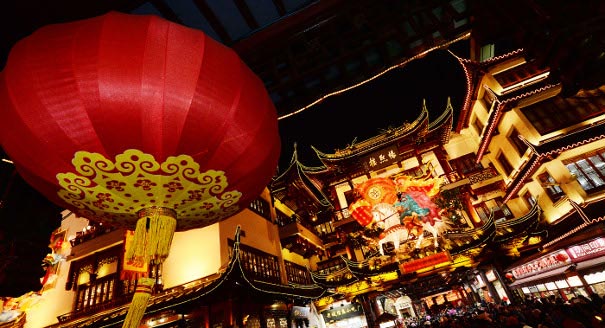
Chinese President Xi Jinping vowed this year to increase China’s soft power and cultural diplomacy and to promote a favorable image of the country abroad.
Chinese President Xi Jinping gave a speech in January 2014 vowing to increase China’s soft power and cultural diplomacy and to promote a favorable image of the country abroad. In this Q&A, Zhang Lihua explains why and how China intends to make soft power a key national priority.
I think Xi is focusing on soft power for three reasons.
First, improving China’s soft power will help the country achieve Xi’s “Chinese dream.” The president expressed a hope that the great rejuvenation of the Chinese nation would be realized in the second half of the twenty-first century. The rejuvenation of China as envisioned in this concept consists not only of economic growth but also of cultural strength.
The country has already made great progress on the economic front—China’s economy currently ranks second in the world in terms of GDP. And although there has been no official statement to this effect, I believe China has become a great power in terms of comprehensive strength. But to complete the process of national revitalization, China will also have to increase its cultural power.
Second, the world is currently experiencing a historical revolution as power shifts from West to East, and soft power will play a key role in this process. This transfer of power, in which emerging Eastern countries are gaining strength, is different from previous power shifts. It is accompanied by exchanges, cooperation, and integration in the fields of economics, politics, and culture rather than by war, violence, and looting. Therefore, the role of soft power will be great during this shift, and China’s strength in this area will decide whether it is qualified to be a world power.
Third, China has a long historical tradition of cultural influence that Xi would like to recapture. For example, during the the Han and Tang dynasties, Chinese culture radiated throughout the East Asian and Southeast Asian regions, forming a “Chinese culture rim.”
With the improvement of China’s comprehensive economic strength, the Chinese government hopes to once again spread the thinking of peace and harmony that is characteristic of Chinese culture. In its rule of law, Beijing has always pursued the ideology of “governing with virtue” that stems from the Confucian culture. Disseminating this ideology will allow the world to understand China and help China to integrate into the international community.
Before China began a process of reform in the late 1970s, the Western media labeled the country an autocracy and a dictatorship. In the years since this opening up, although media coverage about China has changed somewhat, Western media reports have called the government in Beijing authoritarian and referred to China as a country in market transformation, a state undergoing a modernization drive, or a newly emerging power. According to Xi, if China can successfully disseminate a different national image, then the West’s impression of China will be considerably changed.
In Xi’s mind, the national image of China includes two parts: one is the image of a powerful civilization, and the other is the image of a large socialist country.
The first aspect of China’s image will display its profound history as a great power marked by the pluralistic integration of different nationalities and the harmonious coexistence of various cultures. The second will project its commitment to socialist values and its identity as a country that is more open than ever before and is full of hope and vigor.
Xi mentioned that he would like to “[disseminate] modern Chinese values” by explaining to the world China’s outlook. This perspective includes three aspects: Marxist core values of justice and equality; modern Western core values, such as freedom and the rule of law; and traditional Chinese cultural values, including peace and integrity.
He also intends to “show [the] charm of the Chinese culture to the world,” which refers to publicizing the Chinese perspective on traditional values that still play an active role in Chinese culture, such as peaceful coexistence and pursuing harmony but not uniformity. This outlook is different from the Western one, which stresses the “law of the jungle” of competition and struggle. Traditional Chinese culture emphasizes mutual benefits and win-win situations. These values can apply to relationships between people as well as between countries, and they have significance for the promotion of world peace and the development of mankind.
For the past ten years, the government in Beijing has been trying to enhance the efficiency and competitiveness of China’s cultural institutions. The Ministry of Culture has carried out a reform program in which state-owned cultural organizations are pushed into the market to make their own management decisions and take full responsibility for their own profits and losses. The government has greatly reduced its financial subsidies to these institutions, which has encouraged them to create novel, unique works of art that will succeed on the free market. Some of these products—such as the Yangshengtang, or Lecture on Health Preservation, by Beijing Television—have been very popular with the domestic Chinese audience.
These reforms have also opened up Chinese culture to an international audience and increased the country’s ability to project its culture around the world by making it easier for cultural institutions to reach out to foreign audiences. In the past, only with the permission of the government could cultural organizations give performances abroad. Today, these entities are in contact with foreign countries and looking for global markets.
These actors will play a key role in both China’s cultural diplomacy and its foreign cultural exchanges, two processes central to improving the country’s soft power.
Cultural diplomacy refers to all foreign cultural activities launched, led, or supported by the government. Foreign cultural exchange, by contrast, refers to the activities supported by actors not affiliated with the state, both individuals and groups. China’s civil society, which emerged after the country’s reform and opening up and continues to develop, often takes the lead in the field of foreign cultural exchange.
However, regardless of who sponsors the initiatives, the participants in both activities are the same—civil society organizations, the public, and the media. Cultural outreach is performed by Chinese citizens and social groups, and the media covers these activities, which include the Shanghai World Expo in 2010 and Chinese author Mo Yan’s receipt of the Nobel Prize in Literature in 2012.
Against the background of the rapid development of China’s comprehensive national strength, the public’s sense of national pride will surely increase and nationalist sentiment will inevitably rise. The Chinese government should emphasize maintaining a harmonious culture to prevent nationalist sentiment from becoming extreme.
The Chinese value of harmony stresses that going beyond the limit is as bad as falling short, so when anything reaches the extreme it should reverse its course. Effectively disseminating the yin and yang dialectics and the importance of harmony in traditional Chinese culture will restrain nationalist sentiment to within the scope of rational, patriotic national revitalization and will protect and guard the nation by preventing extreme nationalist sentiment from running rampant.
This article was published as part of the Window into China series

Zhang Lihua
Former Resident Scholar, Carnegie-Tsinghua Center for Global Policy
Zhang Lihua was a resident scholar at the Carnegie-Tsinghua Center until June 2020.
Carnegie does not take institutional positions on public policy issues; the views represented herein are those of the author(s) and do not necessarily reflect the views of Carnegie, its staff, or its trustees.

In an interview, Ian Lustick and Eli Clifton discuss their new book on why a prominent ally has so much influence in America.

Michael Young

By failing to address Palestinian representation, the current process is bound to lead to just another temporary arrangement.

Nathan J. Brown

Just look at Iraq in 1991.

Marwan Muasher

A coalition of states is seeking to avert a U.S. attack, and Israel is in the forefront of their mind.
Michael Young

Baku may allow radical nationalists to publicly discuss “reunification” with Azeri Iranians, but the president and key officials prefer not to comment publicly on the protests in Iran.

Bashir Kitachaev