

Q&A
Eugene Rumer
{
  "authors": [
    "Eugene Rumer"
  ],
  "type": "commentary",
  "centerAffiliationAll": "",
  "centers": [
    "Carnegie Endowment for International Peace",
    "Carnegie Russia Eurasia Center"
  ],
  "collections": [],
  "englishNewsletterAll": "",
  "nonEnglishNewsletterAll": "",
  "primaryCenter": "Carnegie Endowment for International Peace",
  "programAffiliation": "",
  "programs": [],
  "projects": [],
  "regions": [
    "East Asia",
    "China",
    "Russia"
  ],
  "topics": [
    "Economy",
    "Trade",
    "Climate Change",
    "Foreign Policy"
  ]
}
Source: Getty
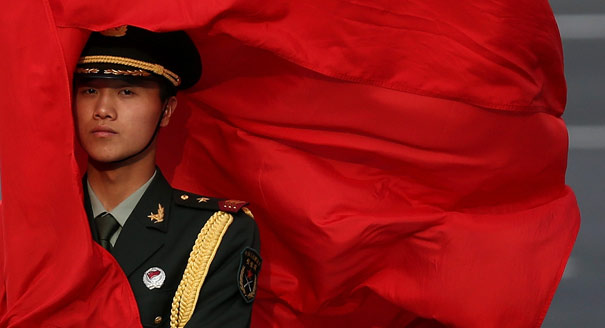
Putin’s travel to China should demonstrate that Russia is not alone, and, no doubt, this visit will be a success. However, China can call the shots in the upcoming gas deal. If a deal is concluded on favorable terms, this will signal a big step toward securing the strategic partnership between the two countries.
With the crisis in Ukraine in full force, it is difficult to see who in the end will gain as a result of it. For Russia, the annexation of Crimea may yet turn out to be a financial burden with questionable returns. For Ukraine, the crisis has been a disaster in every respect. For the United States it represents a frustrating distraction from the path charted by President Barack Obama—to shift the focus of U.S. foreign policy from Europe, expected to finally take care of its own security long after the end of the Cold War—to Asia, where growing U.S. economic and security interests call for greater U.S. attention and resources. For Europe, the crisis is an unwelcome burden, a reminder to pay more attention to its defenses at a time when the continent’s economic recovery is still fragile and the prospect of a new Cold War in the east is highly unwelcome. Yet, there is one indisputable winner in this crisis—China.
The next major turning point in the relationship comes later this month, when President Vladimir Putin will travel to China. Needless to say, at a time of Russia’s estrangement from the West, the visit to Beijing will serve as an important demonstration that Russia is not alone and has important partners elsewhere who will stand by it. But the centerpiece of the visit is expected be the long-promised gas deal to bring nearly 40 billion cubic meters of gas (BCM) from fields in Eastern Siberia to China. The project is not new, it has been the subject of active negotiations for a decade. The problem is the price. Russia wants more than China—a notoriously tough negotiator—has been willing to pay.
Needless to say, a lot has changed in the decade or so that these negotiations have dragged on. The shale revolution. The growing number of LNG plants. Europe’s third energy package. The crisis in Ukraine that has breathed new life in Europe’s discussions about decreasing its dependence on Russian gas supplies. Combined, these changes have shifted the balance in the relationship between energy suppliers and consumers to favor the latter. It has been a gradual shift, and this relationship is not going to change radically overnight, but energy consumers suddenly—historically a decade is not a long time—have a lot more options than they did early in this century. For China the alternatives include Turkmenistan, Myanmar, Australia, as well as Qatar.
As a result, Russia’s hand is weaker, and China’s hand is stronger. Russia’s hand is also weaker because of the effects of Western sanctions, not even those that have already been imposed, but the threat of new ones, and the risks that are associated with lending to it in an uncertain geopolitical environment. This in turn makes Russia more dependent on China as a source of financing that may no longer be available from Western banks.
There is no doubt, President Putin’s visit will be a success—both sides have a stake in demonstrating to the world and to Washington in particular the strength of their relationship. The only question is how generous Beijing is prepared to be toward Moscow, which is finding itself in difficult circumstances. Beijing’s hard bargain will undoubtedly contribute to Russian resentment below the surface and feed long-standing Russian fears of being China’s junior partner. But a deal concluded on favorable terms could help patch up the cracks in the relationship and signal a big step toward securing the strategic partnership. A friend in need is a friend indeed.
Director and Senior Fellow, Russia and Eurasia Program
Rumer, a former national intelligence officer for Russia and Eurasia at the U.S. National Intelligence Council, is a senior fellow and the director of Carnegie’s Russia and Eurasia Program.
Recent Work
Eugene Rumer
Eugene Rumer
Carnegie does not take institutional positions on public policy issues; the views represented herein are those of the author(s) and do not necessarily reflect the views of Carnegie, its staff, or its trustees.

Huawei pushed hard to enter the Egyptian data centers market, until the Americans made a better offer.

Angie Omar

By failing to address Palestinian representation, the current process is bound to lead to just another temporary arrangement.

Nathan J. Brown

The armed forces champion a form of capitalism that is generating revenue, but its reliance on rent faces diminishing returns, leaving the country with massive sunk costs and deferred returns, deepening dependency on external borrowing.

Yezid Sayigh

Morocco and Algeria, each in its own way, are having to navigate the global economic fallout of the U.S.-Israeli military campaign against Iran.

Yasmine Zarhloule
Across the Middle East and North Africa, climate stress interacts with economic fragility, governance failures, social marginalization, and conflict.

Camille Ammoun