

Article
Frederic Wehrey, Charles H. Johnson
{
  "authors": [
    "Frederic Wehrey"
  ],
  "type": "legacyinthemedia",
  "centerAffiliationAll": "dc",
  "centers": [
    "Carnegie Endowment for International Peace",
    "Malcolm H. Kerr Carnegie Middle East Center"
  ],
  "collections": [],
  "englishNewsletterAll": "menaTransitions",
  "nonEnglishNewsletterAll": "",
  "primaryCenter": "Carnegie Endowment for International Peace",
  "programAffiliation": "MEP",
  "programs": [
    "Middle East"
  ],
  "projects": [],
  "regions": [
    "North Africa",
    "Libya",
    "Maghreb"
  ],
  "topics": [
    "Security",
    "Foreign Policy"
  ]
}
Source: Getty
The real story of Libya is that there is no one faction that can really compel or coerce the others.
Source: PBS Newshour
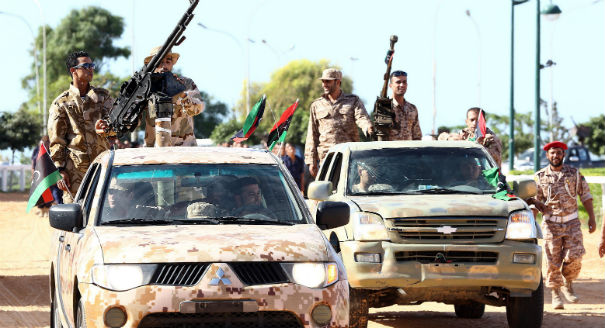
Speaking to Jeffrey Brown on PBS NewsHour, Carnegie’s Frederic Wehrey discussed the deteriorating situation in Libya, where violence has escalated between rival factions. The very complex web of dynamics and alliances has finally arrived to Tripoli, Wehrey said, where fighting has intensified over control of the airport.
Under Qaddafi, Libya didn’t have state institutions, an army, or police. It’s only gotten worst since the revolution, Wehrey said. “The militias are getting funding from Libya’s oil wealth and they’ve really mushroomed. They’ve become their own entities,” he argued. “The real story of Libya is that there’s no one faction that can really compel or coerce the others.”
In Washington, there’s a sense that there’s no partner on the other side, Wehrey explained. They want to help the Libyans but the Libyans first have to help themselves. “I do think the Libyans themselves need to step up to the plate before the outside community can help,” he argued.

Senior Fellow, Middle East Program
Frederic Wehrey is a senior fellow in the Middle East Program at the Carnegie Endowment for International Peace, where his research focuses on governance, conflict, and security in Libya, North Africa, and the Persian Gulf.
Recent Work
Frederic Wehrey, Charles H. Johnson
Frederic Wehrey, Charles H. Johnson
Carnegie does not take institutional positions on public policy issues; the views represented herein are those of the author(s) and do not necessarily reflect the views of Carnegie, its staff, or its trustees.

By failing to address Palestinian representation, the current process is bound to lead to just another temporary arrangement.

Nathan J. Brown

The armed forces champion a form of capitalism that is generating revenue, but its reliance on rent faces diminishing returns, leaving the country with massive sunk costs and deferred returns, deepening dependency on external borrowing.

Yezid Sayigh

Morocco and Algeria, each in its own way, are having to navigate the global economic fallout of the U.S.-Israeli military campaign against Iran.

Yasmine Zarhloule
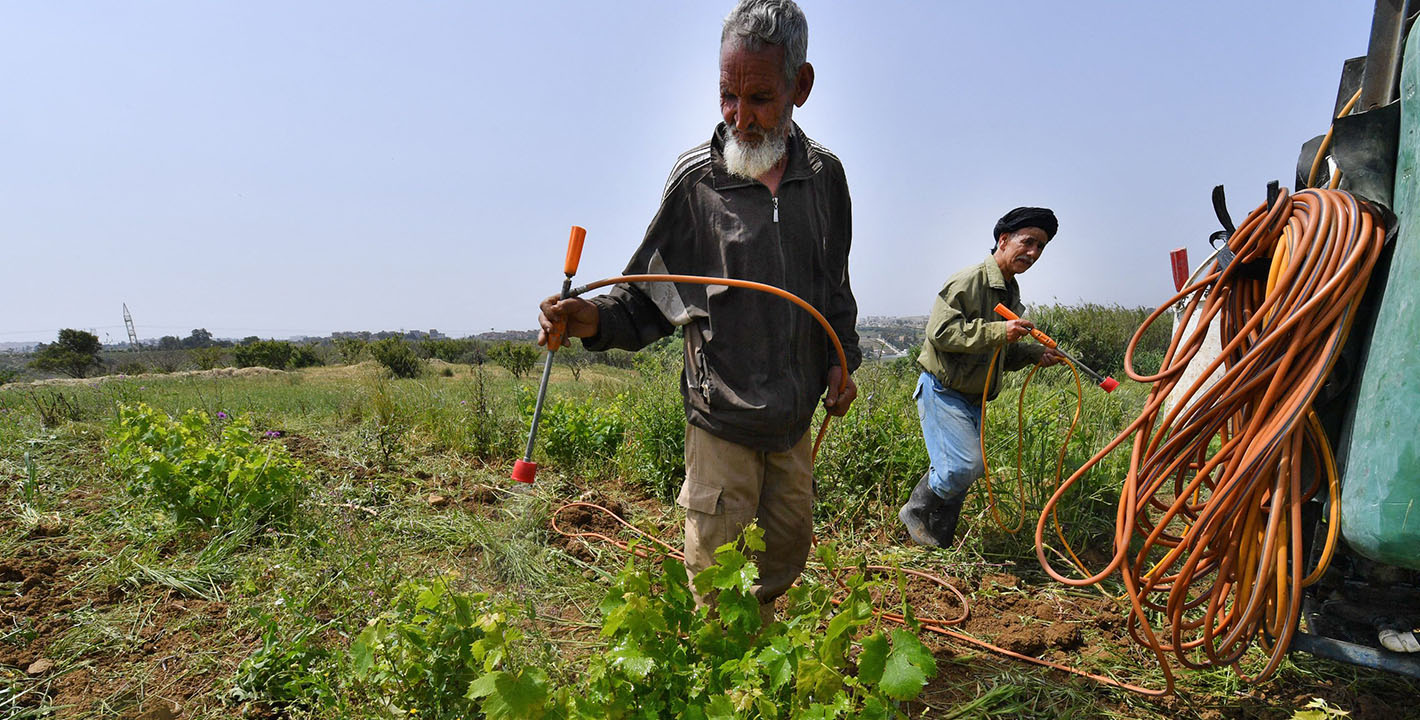
Understanding how farmers in the Oued Sahel-Soummam Valley grapple with climate change is essential for addressing the paradoxes through which adaptation, operating at both individual and institutional levels, deepens the region’s vulnerability and erodes the social fabric and agrarian identity that once defined life.
Ilyssa Yahmi
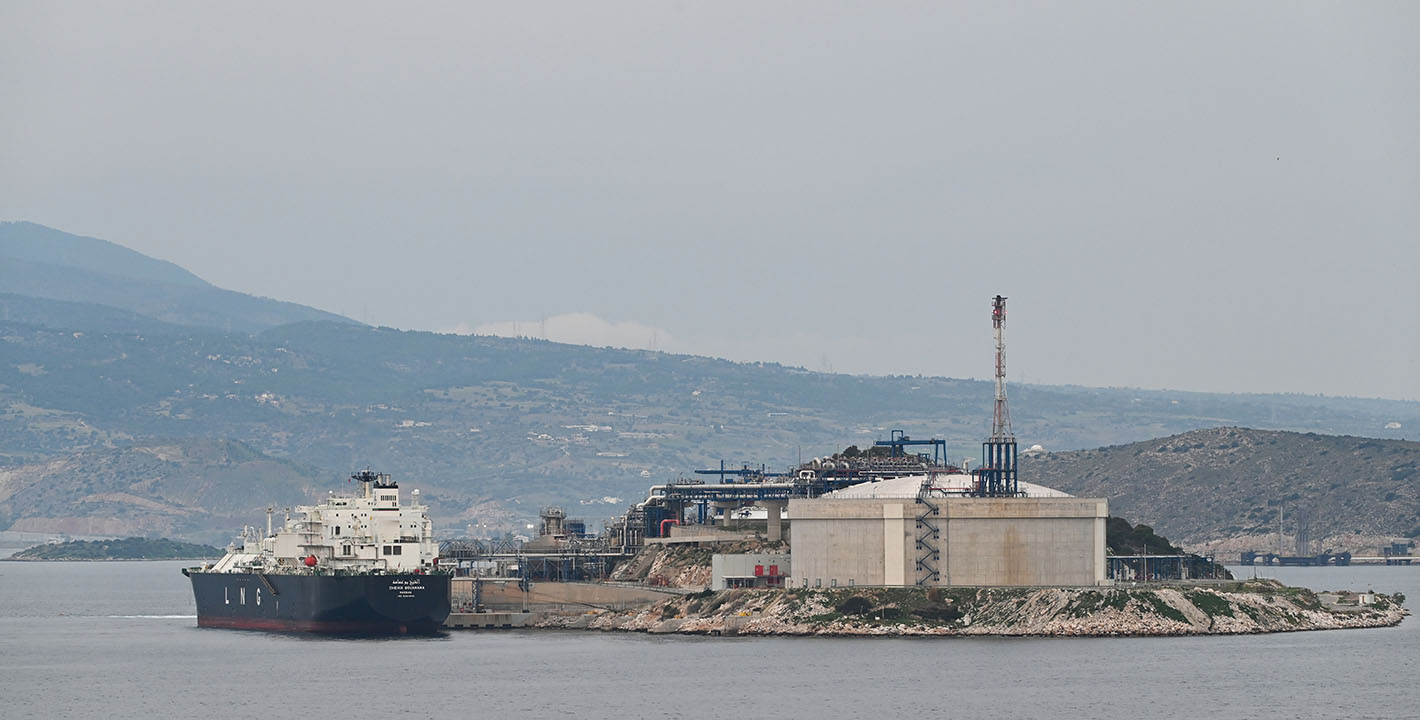
Unless the European Union-led energy transition provides economic development to Algeria, Morocco, and Tunisia, the process may be perceived as a new form of extraction.
Yasmine Zarhloule