

Article
Thomas de Waal
{
  "authors": [
    "Thomas de Waal"
  ],
  "type": "commentary",
  "centerAffiliationAll": "",
  "centers": [
    "Carnegie Endowment for International Peace",
    "Carnegie Europe",
    "Carnegie Russia Eurasia Center"
  ],
  "collections": [],
  "englishNewsletterAll": "",
  "nonEnglishNewsletterAll": "",
  "primaryCenter": "Carnegie Europe",
  "programAffiliation": "",
  "programs": [],
  "projects": [],
  "regions": [
    "Caucasus",
    "Azerbaijan",
    "Armenia"
  ],
  "topics": [
    "Security",
    "Foreign Policy"
  ]
}
Source: Getty
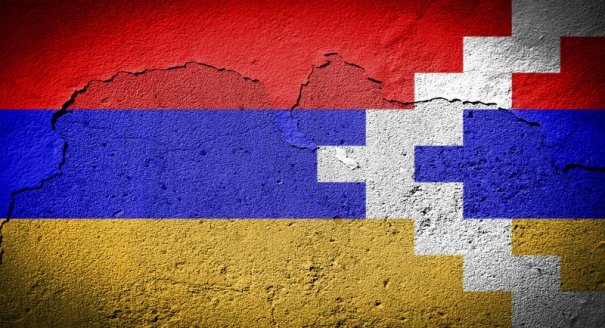
A worsening pattern of violence on the Karabakh ceasefire line increases the danger of a war by miscalculation in 2015.
Will there be war this year in Nagorny Karabakh? Every year since the 1994 ceasefire that halted the fighting, the answer to that question has been “No.” Armenians and Azerbaijanis have exchanged fire across the so-called Line of Contact and made threatening noises. But neither side has shown any willingness to push things back over the brink.
This year, the signals are much more worrying. At the Munich Security Conference, the OSCE issued its third alarmed statement in two weeks. January is usually a quiet month on the ceasefire line but this time 12 dead and 18 wounded were recorded.
The logic is still good, but the fear is growing of war by miscalculation on the Line of Contact. What was once a muddy zone of trenches and poorly-armed soldiers is now bristling with heavy weapons and aircraft. The journalist and analyst Emil Sanamyan estimates that in 2014 72 men—39 Azerbaijanis and 33 Armenians, died--making it by far the worst year since the ceasefire.
On November 12 Azerbaijani soldiers shot down an Armenian helicopter in the no-man's land between the two armies, killing three men on board. The helicopter was not attacking Azerbaijani positions but had apparently broken into an informal five-kilometer no-fly zone the two sides had agreed on.
Furthermore, the violence has spread from the area outside Karabakh to the Armenian-Azerbaijani frontier both in the north and next to the exclave of Nakhichevan. If a conflict does ever break out again, it will be a full-scale war between the states of Armenia and Azerbaijan.
The Azerbaijani side is militarily far stronger than it was 10 years ago and the ceasefire line is almost the only place where it has leverage over the Armenians. Over the years, Azerbaijani officials have rejected proposals to strengthen the ceasefire—by, for example, withdrawing snipers from the front line or instituting an incident investigation mechanism—saying that would normalize the status quo that is unacceptable.
On January 27, the three main mediators, the OSCE Minsk Group co-chairs, were unusually blunt in singling out Baku for criticism, saying, “We called on Azerbaijan to observe its commitments to a peaceful resolution of the conflict.” In Munich, President Ilham Aliyev pushed back, saying, “So, my message to Armenia is: end the occupation. As soon as you stop the occupation, we will have peace, cooperation and reconciliation. And the reason why it is not happening is because the Armenian soldier is still in Agdam and Fizuli.”
For their part, the Armenians periodically like to demonstrate to Baku, the world and their own public that they still have a powerful military and can mount operations of their own. This is what appears to have happened on July 31 last year: after multiple smaller incidents from the Azerbaijanis, the Armenians ordered a three-pronged operation across Azerbaijani lines. That was the start of a week of terrible bloodshed. Recently, Armenian President Serzh Sargsyan warned ominously, “we reserve the right to carry out preventative strikes.”
All of this makes the situation around Karabakh more menacing—without even mentioning the fallout of Ukraine and the gloomy geopolitical context. Urgent attention needs to be paid to dampen down the situation before spring arrives and a potentially long hot and dangerous summer.

Senior Fellow, Carnegie Europe
Thomas de Waal is a senior fellow at Carnegie Europe, specializing in Eastern Europe and the Caucasus.
Recent Work
Thomas de Waal
Thomas de Waal
Carnegie does not take institutional positions on public policy issues; the views represented herein are those of the author(s) and do not necessarily reflect the views of Carnegie, its staff, or its trustees.

By failing to address Palestinian representation, the current process is bound to lead to just another temporary arrangement.

Nathan J. Brown
In an interview, Sergei Melkonian discusses Armenia’s and Azerbaijan’s careful balancing act among the United States, Israel, and Iran.

Armenak Tokmajyan

Just look at Iraq in 1991.

Marwan Muasher

A coalition of states is seeking to avert a U.S. attack, and Israel is in the forefront of their mind.

Michael Young

Baku may allow radical nationalists to publicly discuss “reunification” with Azeri Iranians, but the president and key officials prefer not to comment publicly on the protests in Iran.

Bashir Kitachaev