

Commentary
Thomas de Waal
{
  "authors": [
    "Thomas de Waal"
  ],
  "type": "legacyinthemedia",
  "centerAffiliationAll": "dc",
  "centers": [
    "Carnegie Endowment for International Peace",
    "Carnegie Europe"
  ],
  "collections": [],
  "englishNewsletterAll": "ctw",
  "nonEnglishNewsletterAll": "",
  "primaryCenter": "Carnegie Europe",
  "programAffiliation": "russia",
  "programs": [
    "Russia and Eurasia"
  ],
  "projects": [],
  "regions": [
    "Middle East",
    "Türkiye",
    "Caucasus",
    "Armenia"
  ],
  "topics": []
}
Source: Getty
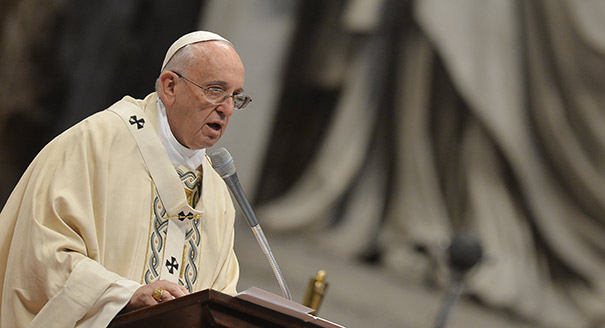
Pope Francis reignited a debate that has smoldered for a hundred years: Whether the deaths of more than a million Armenians were caused by a policy of genocide by the Turks.
Source: WAMU’s Diane Rehm Show
Pope Francis reignited a debate that has smoldered for a hundred years: Whether the deaths of more than a million Armenians were caused by a policy of genocide by the Turks. In a mass on Sunday, the Pope called the massacre “the first genocide of the 20th century.” The Turkish government responded quickly, labeling the pope’s comments unacceptable. Turkey maintains that the death toll was exaggerated, and that many of the Christian Armenians who died in 1915 were the victims of civil war.
Carnegie Endowment Senior Associate Thomas de Waal joined the Diane Rehm Show to discuss why the fate of Armenians in Turkey a century ago remains a passionate issue today.
This interview was originally broadcast on WAMU’s Diane Rehm Show.

Senior Fellow, Carnegie Europe
Thomas de Waal is a senior fellow at Carnegie Europe, specializing in Eastern Europe and the Caucasus.
Recent Work
Thomas de Waal
Thomas de Waal
Carnegie does not take institutional positions on public policy issues; the views represented herein are those of the author(s) and do not necessarily reflect the views of Carnegie, its staff, or its trustees.

As the U.S. stumbles in its war with Iran, we are likely to see an acceleration of its disengagement from the region.

Michael Young

The accord represents a pivotal moment in the region to avert a security vacuum in the Gulf.


Azeema Cheema, Mohanad Hage Ali

In an interview, Jason Burke discusses his sweeping account of the “revolutionists” who so shaped the 1970s and early 1980s.
Michael Young
This will be the region’s most representative tournament, amid broad changes in its footballing landscape.

Issam Kayssi
In an interview, Sergei Melkonian discusses Armenia’s and Azerbaijan’s careful balancing act among the United States, Israel, and Iran.

Armenak Tokmajyan