

Commentary
By failing to address Palestinian representation, the current process is bound to lead to just another temporary arrangement.
Nathan J. Brown
{
  "authors": [
    "Dmitri Trenin",
    "Yu Bin"
  ],
  "type": "legacyinthemedia",
  "centerAffiliationAll": "dc",
  "centers": [
    "Carnegie Endowment for International Peace",
    "Carnegie Russia Eurasia Center"
  ],
  "collections": [],
  "englishNewsletterAll": "ctw",
  "nonEnglishNewsletterAll": "",
  "primaryCenter": "Carnegie Russia Eurasia Center",
  "programAffiliation": "russia",
  "programs": [
    "Russia and Eurasia"
  ],
  "projects": [],
  "regions": [
    "East Asia",
    "China",
    "Russia"
  ],
  "topics": [
    "Economy",
    "Trade",
    "Foreign Policy"
  ]
}
Source: Getty
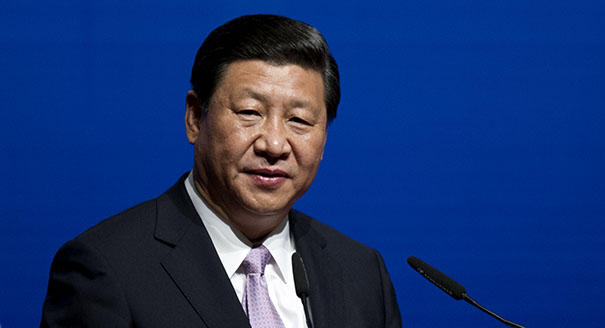
Xi Jinping’s visit to Russia has high value in the wake of the Ukraine crisis and the West’s response.
Source: China Radio International’s People In the Know
China’s President Xi Jinping is going to Russia for his fourth visit to the country since he became the Chinese president in 2013. His main agendas in Russia include an attendance at the 70th anniversary celebration of Russia’s victory in World War II. The visit is also expected to bring forth now cooperative initiatives between the two neighbors bonded by an ever deeper strategic partnership.
On China Radio International, Carnegie Moscow Center’s Dmitri Trenin discussed Xi Jinping’s visit to Russia with Zheng Chenguang. He was joined by Yu Bin, a professor of political science at the Wittenberg University in the United States.
The visit has high symbolic value in the wake of the Ukraine crisis and the West’s response, Trenin said. He added that Russia regards China as a potential replacement for the sanction regime losses as well as an opportunity to reform its own economy through joint projects in infrastructure and science and technology.
This interview was originally broadcast on China Radio International.
Former Director, Carnegie Moscow Center
Trenin was director of the Carnegie Moscow Center from 2008 to early 2022.
Yu Bin

By failing to address Palestinian representation, the current process is bound to lead to just another temporary arrangement.

Nathan J. Brown

The armed forces champion a form of capitalism that is generating revenue, but its reliance on rent faces diminishing returns, leaving the country with massive sunk costs and deferred returns, deepening dependency on external borrowing.

Yezid Sayigh

Morocco and Algeria, each in its own way, are having to navigate the global economic fallout of the U.S.-Israeli military campaign against Iran.

Yasmine Zarhloule

Just look at Iraq in 1991.

Marwan Muasher

A coalition of states is seeking to avert a U.S. attack, and Israel is in the forefront of their mind.

Michael Young