

Article
C. Raja Mohan, Darshana M. Baruah
{
  "authors": [
    "C. Raja Mohan"
  ],
  "type": "legacyinthemedia",
  "centerAffiliationAll": "dc",
  "centers": [
    "Carnegie Endowment for International Peace",
    "Carnegie India"
  ],
  "collections": [],
  "englishNewsletterAll": "ctw",
  "nonEnglishNewsletterAll": "",
  "primaryCenter": "Carnegie India",
  "programAffiliation": "SAP",
  "programs": [
    "South Asia"
  ],
  "projects": [],
  "regions": [
    "Asia",
    "South Asia",
    "India",
    "Pakistan",
    "East Asia",
    "China"
  ],
  "topics": [
    "Foreign Policy"
  ]
}
Source: Getty
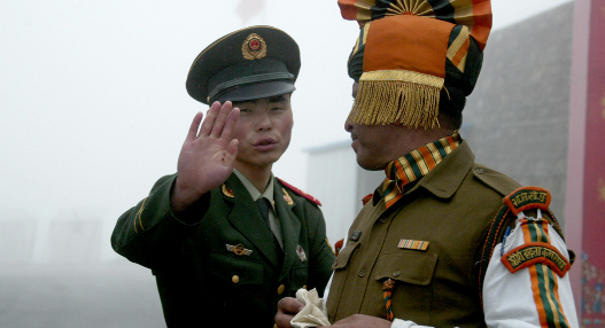
The geopolitical legacies of Partition remain the biggest drag on India’s larger global aspirations. China has benefited from the division and its penetration of the subcontinent is becoming increasingly difficult to counteract.
Source: Indian Express
The occasional reflections on the tragedies of Partition rarely include the consideration of its geopolitical consequences. The sundering of the political space in the Subcontinent gets a lot less attention in the narratives of independent India’s international relations than the sentimental accounts of Delhi’s non-alignment and moralpolitik.
Even today, it is not easy for the Indian elites to recognise that the geopolitical legacies of Partition remain the biggest drag on India’s larger global aspirations. None of it more important than the fact that China has turned out to be the biggest long-term beneficiary from the division of the Subcontinent.
Nothing illustrates the different geopolitical evolution of India and China since the mid 20th century than the simple question of territorial consolidation. Consider the following: India was divided in 1947 and China was united in 1949. The Subcontinent’s great partition locked the successor states — India and Pakistan — in a perennial conflict. China overcame an era of fragmentation to come together as a strong nation.
If the British Raj emerged as a powerful state by generating a measure of political and administrative coherence to the Subcontinent, its dissolution accompanied by division resulted in the strategic diminution of its successor states, India and Pakistan.
The combination of British power and the massive resources of an undivided Subcontinent created what came to be known as the “India Centre” that dominated the geopolitics of Asia and the Indian Ocean. Indian capital and labour, its armies and administrative systems were central to political stability, economic globalisation and the spread of modernising ideologies in the eastern hemisphere.
Before Partition, India’s energies — economic and military — radiated outwards. After Partition, the Subcontinent’s energies turned inward in defence of the new political borders. If the Anglos are widely seen as the main villains behind Partition — the British for their divide and rule tactics and the American integration of Pakistan into the Cold War politics — it is hard to see how the West benefited from Partition.
The Anglo-American initiatives to replace the India Centre with such new regional security structures as SEATO and CENTO flopped. For there was no real possibility of effective regional security without the participation of India. The efforts by Washington and London to mediate between India and Pakistan in order to generate a more coherent bastion against international communism, for example in the wake of the 1962 war between India and China, did not succeed either.
To make matters even more interesting, the communist giants, Russia and China fell apart at the turn of the 1960s and opened the door for the American strategic partnership with China that would contribute enormously to Beijing’s rise as a great power. China was not only good at exploiting the great power conflicts to its own benefit, its leaders also clearly saw the strategic implications of Partition. They also saw the opportunities to probe independent India’s limitations in sustaining primacy in the Subcontinent and the Indian Ocean that it had inherited from the Raj.
In the early decades after Partition, China seemed relatively marginal to South Asian geopolitics. India’s energies were focused on opposing the Anglo-American co-option of Pakistan into the Cold War alliance system and the supply of Western arms to the Pakistan military. India bet that it could manage the inherent contradictions with China through a conscious befriending of Beijing. But the outcomes abound in paradoxes.
Given the anti-Communist orientation of CENTO and SEATO, you would have thought China would view Pakistan with suspicion and embrace an India that chose to remain non-aligned and refused to support the Cold War alliances. China, however, found it hard to reciprocate India’s love — wrapped in the slogans of Panchsheel and Asian solidarity against Western imperialism. Instead Beijing built an all-weather partnership with Rawalpindi that would grow from strength to strength and remain the one constant feature of the Subcontinent’s international politics.
If India could not stop seeing China through an ideological prism even after 1962, Beijing consistently viewed Rawalpindi through a geopolitical lens. For one, the Chinese leaders saw no real contradictions with Pakistan, despite its pro-Western orientation. Beijing also rightly assessed that ideological slogans are not adequate to overcome major disputes over territorial sovereignty with Delhi.
Even more important, China understood that strong support to Pakistan was a critical element in limiting any future challenges from India. Hence the bilateral deal with Pakistan on Kashmir in the early 1960s, nuclear cooperation in the 1970s and 1980s following India’s first nuclear test in 1974, the transfer of missile technology in the 1990s, and the effective integration of Pakistan’s structures into China’s own military planning on defence production, interoperability and power projection over the last two decades.
For China, Partition is a gift that continues to give. Meanwhile, its growing economic resources, military capabilities and political influence have dramatically improved Beijing’s ability to exploit India’s difficulties with its smaller neighbours as well. Whether it is trade and investment, creation of infrastructure or the supply of armaments, it is China the looms large over the Subcontinent. After years trying to limit Western influences in its neighbourhood, India now finds halting China’s penetration of the Subcontinent will need a lot more political will and strategic purpose.
This article was originally published in the Indian Express.
Former Nonresident Senior Fellow, Carnegie India
A leading analyst of India’s foreign policy, Mohan is also an expert on South Asian security, great-power relations in Asia, and arms control.
Recent Work

C. Raja Mohan, Darshana M. Baruah


Alexander Gabuev, Paul Haenle, C. Raja Mohan, …
Carnegie does not take institutional positions on public policy issues; the views represented herein are those of the author(s) and do not necessarily reflect the views of Carnegie, its staff, or its trustees.

By failing to address Palestinian representation, the current process is bound to lead to just another temporary arrangement.

Nathan J. Brown

Just look at Iraq in 1991.

Marwan Muasher

A coalition of states is seeking to avert a U.S. attack, and Israel is in the forefront of their mind.

Michael Young

Baku may allow radical nationalists to publicly discuss “reunification” with Azeri Iranians, but the president and key officials prefer not to comment publicly on the protests in Iran.

Bashir Kitachaev
The country’s leadership is increasingly uneasy about multiple challenges from the Levant to the South Caucasus.

Armenak Tokmajyan