

Article
C. Raja Mohan, Darshana M. Baruah
{
  "authors": [
    "C. Raja Mohan"
  ],
  "type": "legacyinthemedia",
  "centerAffiliationAll": "dc",
  "centers": [
    "Carnegie Endowment for International Peace",
    "Carnegie India"
  ],
  "collections": [],
  "englishNewsletterAll": "ctw",
  "nonEnglishNewsletterAll": "",
  "primaryCenter": "Carnegie India",
  "programAffiliation": "SAP",
  "programs": [
    "South Asia"
  ],
  "projects": [],
  "regions": [
    "South Asia",
    "Afghanistan",
    "Pakistan",
    "India"
  ],
  "topics": [
    "Foreign Policy",
    "Security",
    "Military"
  ]
}
Source: Getty
India will inevitably have to do more in Afghanistan, since the United States will not bear the security burden forever. Any substantive India-U.S. strategic coordination, however, could presage a major change in the regional politics of South Asia.
Source: Indian Express
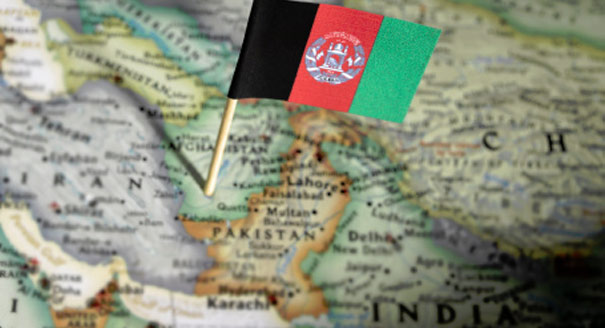
The question of a larger Indian role in securing Afghanistan is expected to figure prominently in the talks between the visiting US Defense Secretary James Mattis and the Indian leadership. That Washington and Delhi are talking about collaboration in Afghanistan marks an important shift in the international relations of South Asia. If the Afghan theatre had decisively shaped the geopolitics of the Subcontinent in the last four decades, India and the United States tended to be on opposing sides.
The developments in Afghanistan in the 1970s and 1980s saw the United States deepen its partnership with Pakistan to the dismay of India. Since the early 2000s, when the US warmed up to India, Afghanistan remained an area of disagreement. Whichever way one looks at it, a higher level of Indian involvement in Afghanistan with active US support, is likely to have significant long-term consequences for the region.
In a major speech last month on the new administration’s policy towards South Asia, President Donald Trump demanded that Pakistan end forthwith its destabilisation of Afghanistan by providing safe havens to the Taliban and other terror networks. He also singled out India among the neighbours of Pakistan to play a larger role in Afghanistan.
Trump’s emphasis in the speech was indeed on India stepping up its economic and development assistance to Afghanistan. What he did not refer to was the on-going conversation between Washington and Delhi on expanding India-US security cooperation in Afghanistan. The visit of Mattis is likely to give a concrete shape to these discussions.
India and the US are fully aware that without stronger external military support to the government in Kabul, which is fighting a rearguard battle against the Pakistan-backed Taliban, the talk of development could become increasingly futile. In short, security is a precondition for development in Afghanistan today.
As Delhi debates a larger security role in Afghanistan in addition to its developmental partnership, far too much attention has been devoted to the question of India putting boots on the ground in Afghanistan. Neither Kabul nor Washington is pressing Delhi to send combat troops to join the International Security Assistance Force in Afghanistan. But short of that there may be a lot India can do shore up the Afghan government’s military capabilities.
The proposition that Delhi could help Kabul on the security front might be new coming from the Trump Administration. But it was very much part of India’s own declared policy. The 2011 Strategic Partnership Agreement between Delhi and Kabul explicitly called for security cooperation, including the transfer of military equipment. Four factors, however, seemed to restrain India from fulfilling that promise despite repeated calls from Kabul for intensive Indian engagement on the security front.
For one, Delhi did not want deeper security cooperation with Afghanistan that could cast a shadow over its ties with Pakistan. India’s restraint in Afghanistan, however, may not have reassured Pakistan army. Prime Minister Shahid Khaqan Abbasi was obviously conveying Rawalpindi’s concerns when he told the UN last week that Pakistan does not want any role — none at all, political, economic or military — for India in Afghanistan. The government of Narendra Modi may have recognised that doing less than what is possible in Afghanistan was not get India much political credit in Pakistan.
A second constraint has been geography. The lack of physical access has imposed substantial limitations on Delhi’s military role in Afghanistan. This geographic limitation has reinforced India’s traditional reluctance to take risks in its security policy. It was no surprise then that Delhi stuck to a developmental programme, training of armed forces, and limited non-lethal military assistance to Afghanistan all these years. Delhi, however, has begun to overcome this caution by supplying four combat helicopters to Afghanistan.
A third constraint on India has been the US resistance to a larger Indian security footprint in Afghanistan. To be sure, Washington welcomed Indian economic presence in Afghanistan and often tried, unsuccessfully, to promote regional economic cooperation between Delhi, Islamabad and Kabul. The US was convinced that any Indian military role in Afghanistan would grate Pakistan’s political sensitivities. President Trump has now turned that policy on its head. He is actively encouraging India to take greater responsibilities in Afghanistan.
Trump’s Indo-Pak inversion may or may not be sustainable over the long-term. Many in Washington would want to go back to the default option of avoiding confrontation with Pakistan in Afghanistan. Yet, Delhi has good reasons to see Trump’s current policy as a consequential moment in India-US relations as well the geopolitics of the Subcontinent. Any substantive India-US strategic coordination in Afghanistan and Pakistan’s inevitable reaction to it could presage a major change in the regional politics of South Asia.
After all is said and done about Trump’s new approach to the Subcontinent, there should be no illusion in Delhi that America will forever bear the burden of security of Afghanistan. As a regional power with high stakes in stabilising its north western frontiers, Delhi will inevitably have to do more in Afghanistan. The question is now is how much more and what the US could do to facilitate a larger Indian security role in Afghanistan.
This article was originally published in the Indian Express.
Former Nonresident Senior Fellow, Carnegie India
A leading analyst of India’s foreign policy, Mohan is also an expert on South Asian security, great-power relations in Asia, and arms control.
Recent Work

C. Raja Mohan, Darshana M. Baruah


Alexander Gabuev, Paul Haenle, C. Raja Mohan, …
Carnegie does not take institutional positions on public policy issues; the views represented herein are those of the author(s) and do not necessarily reflect the views of Carnegie, its staff, or its trustees.

By failing to address Palestinian representation, the current process is bound to lead to just another temporary arrangement.

Nathan J. Brown

The armed forces champion a form of capitalism that is generating revenue, but its reliance on rent faces diminishing returns, leaving the country with massive sunk costs and deferred returns, deepening dependency on external borrowing.

Yezid Sayigh

Just look at Iraq in 1991.

Marwan Muasher

A coalition of states is seeking to avert a U.S. attack, and Israel is in the forefront of their mind.

Michael Young

Baku may allow radical nationalists to publicly discuss “reunification” with Azeri Iranians, but the president and key officials prefer not to comment publicly on the protests in Iran.

Bashir Kitachaev