

Commentary
In an interview, Rozina Ali discusses her new book on the rise and manifestations of Islamophobia in the United States.
Michael Young
{
  "authors": [
    "James M. Acton",
    "Nicholas Blanchette"
  ],
  "type": "legacyinthemedia",
  "centerAffiliationAll": "dc",
  "centers": [
    "Carnegie Endowment for International Peace"
  ],
  "collections": [
    "U.S. Nuclear Policy",
    "Entanglement"
  ],
  "englishNewsletterAll": "ctw",
  "nonEnglishNewsletterAll": "",
  "primaryCenter": "Carnegie Endowment for International Peace",
  "programAffiliation": "NPP",
  "programs": [
    "Nuclear Policy"
  ],
  "projects": [],
  "regions": [
    "North America",
    "United States",
    "Middle East",
    "Israel",
    "North Africa",
    "Egypt"
  ],
  "topics": [
    "Foreign Policy",
    "Nuclear Policy",
    "Arms Control"
  ]
}
Source: Getty
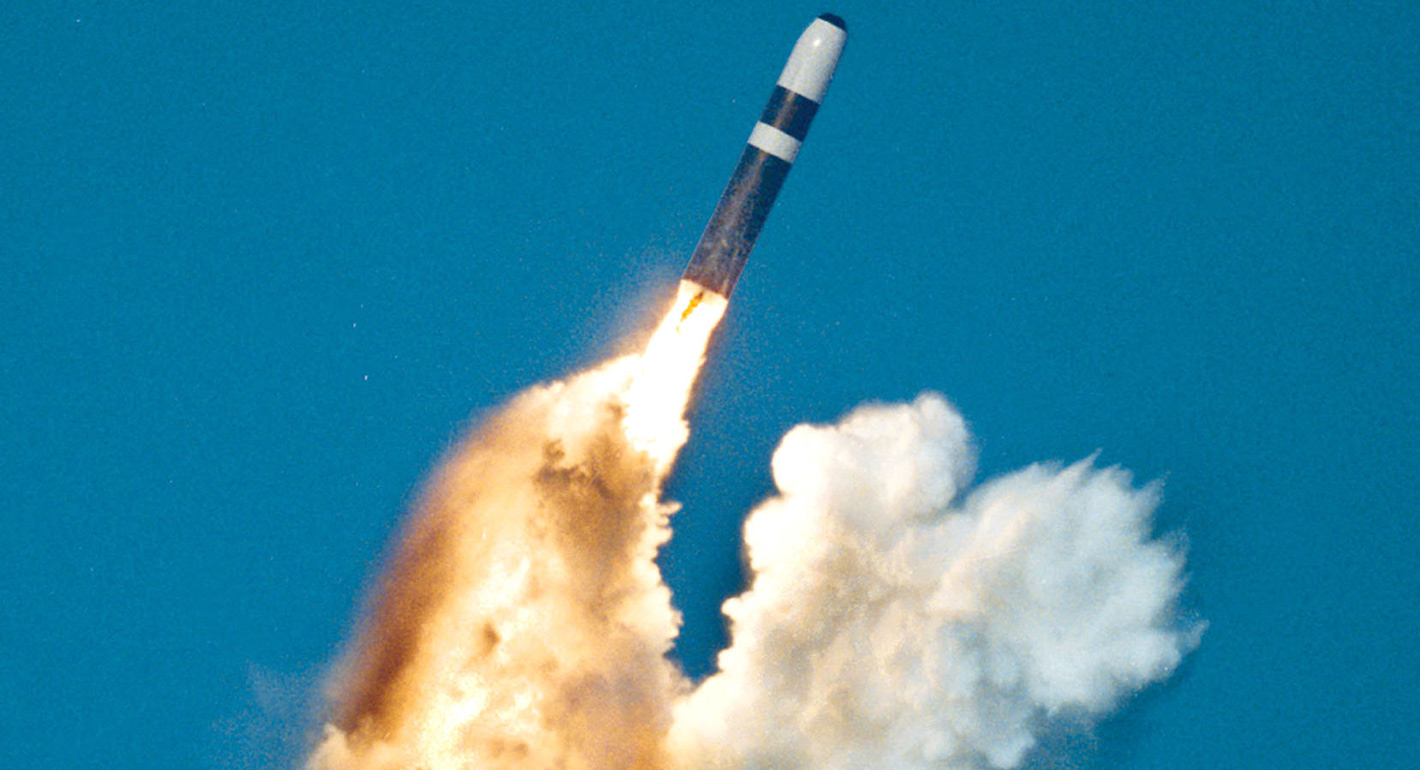
New evidence from the Yom Kippur War shows how growing entanglement between nuclear and non-nuclear weapons could lead to dangerous escalation spirals to nuclear war.
Source: Foreign Policy
In October 1973, an unreliable radiation detector could have caused the end of the world. The setting was the Yom Kippur War between Israel and a coalition of Arab states, and the superpowers found themselves being sucked into the conflict. In the war’s febrile final days, the United States detected what appeared to be radiation from a Soviet freighter headed for Egypt and concluded—almost certainly incorrectly—that Moscow was transferring nuclear warheads to Cairo. Partly in response, on Oct. 24, Washington placed its nuclear forces on a global alert for only the fourth time in history—a step it has taken only twice since. The U.S. alert prompted the Soviet Union to reportedly issue a preliminary order to begin the alerting of its own nuclear forces.
This chain of events, which could have culminated in a nuclear war, provides a timely warning. The United States’ ability to detect and track nuclear warheads has improved immeasurably over the last 46 years, making an exact replay of 1973 unlikely. However, growing entanglement between nuclear and nonnuclear weapons is exacerbating closely related dangers. In particular, nuclear-armed states are relying ever more heavily on dual-use weapons, which can accommodate nuclear or nonnuclear warheads, thus exacerbating the risk that one side might wrongly conclude that another had deployed nuclear weapons. In a crisis or conflict, the result could be an escalation spiral that, unlike in 1973, spins all the way to nuclear devastation...

Jessica T. Mathews Chair, Co-director, Nuclear Policy Program
Acton holds the Jessica T. Mathews Chair and is co-director of the Nuclear Policy Program at the Carnegie Endowment for International Peace.
Nicholas Blanchette
Former Research Assistant, Nuclear Policy Program
Nicholas Blanchette was a research assistant in the Carnegie Nuclear Policy Program.
Carnegie does not take institutional positions on public policy issues; the views represented herein are those of the author(s) and do not necessarily reflect the views of Carnegie, its staff, or its trustees.

In an interview, Rozina Ali discusses her new book on the rise and manifestations of Islamophobia in the United States.

Michael Young

In an interview, Ian Lustick and Eli Clifton discuss their new book on why a prominent ally has so much influence in America.
Michael Young

As the U.S. stumbles in its war with Iran, we are likely to see an acceleration of its disengagement from the region.
Michael Young

It is improbable that Israel’s forthcoming elections will alter much in terms of how the country thinks about security.

Nathan J. Brown

Middle Eastern states should welcome an accelerated U.S. disengagement from their region.
Michael Young