

Commentary
In an interview, Ian Lustick and Eli Clifton discuss their new book on why a prominent ally has so much influence in America.
Michael Young
{
  "authors": [
    "Paul Haenle",
    "Alexander Gabuev",
    "Li Mingjiang"
  ],
  "type": "questionAnswer",
  "centerAffiliationAll": "",
  "centers": [
    "Carnegie Endowment for International Peace",
    "Carnegie China"
  ],
  "collections": [
    "Carnegie China Commentaries"
  ],
  "englishNewsletterAll": "",
  "nonEnglishNewsletterAll": "",
  "primaryCenter": "Carnegie China",
  "programAffiliation": "",
  "programs": [],
  "projects": [],
  "regions": [
    "East Asia",
    "China",
    "Russia"
  ],
  "topics": [
    "Foreign Policy"
  ]
}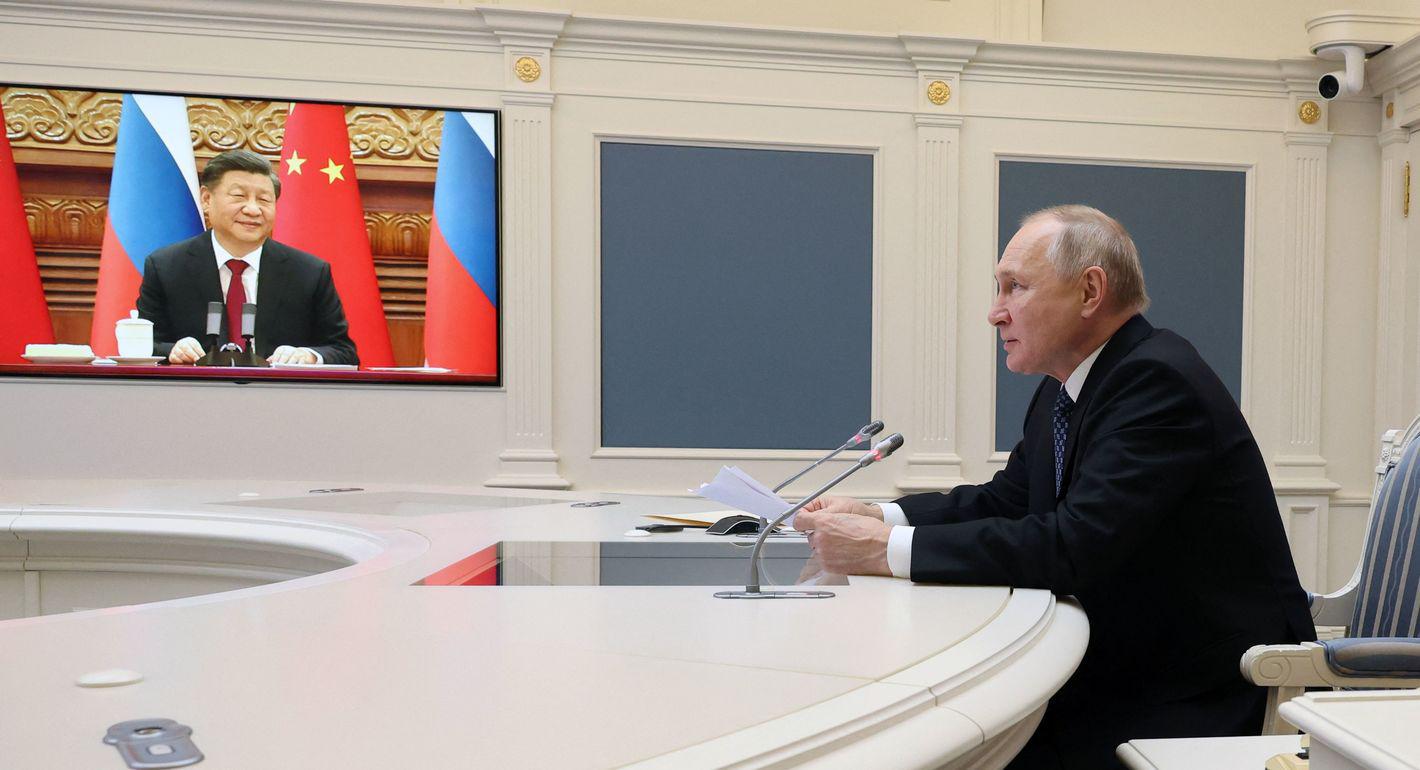
Source: Getty
Recent reports indicate that Chinese state-owned defense companies are shipping navigation equipment, jamming technology, and jet-fighter parts to sanctioned Russian government-owned defense companies.
This Q&A has been adapted from a Carnegie live event assessing China-Russia relations one year into the war in Ukraine.
Paul Haenle: Over the course of the past year, we have seen China straddle several competing objectives with respect to the war in Ukraine: maintaining its strategic partnership with Russia, blaming the outbreak of the war on NATO, not criticizing Russian actions in Ukraine, while simultaneously trying to minimize the damage to its relations with the United States and Europe. Despite the frustration that this position may have caused in Washington D.C., the Biden administration has pressed China on two main concerns: there will be consequences if China undermines the international sanctions levied against Russia and there will be consequences if China provides military armaments to Russia. Some Chinese companies have faced sanctions by U.S. authorities for providing Russia with dual-use technology. New reports from the Wall Street Journal suggest that Chinese state-owned defense companies are shipping navigation equipment, jamming technology, and jet-fighter parts to sanctioned Russian government-owned defense companies. You hear concerns in Washington about potential slippage here. Combine that with the recent visit to Russia by Chinese Vice Foreign Minister Ma Zhaoxu, the meeting next week between the two foreign ministers, and the potential for Xi Jinping to travel to Moscow later this year. Given questions of how important it may be for China that Putin not lose the war in Ukraine, there is potential that new information could emerge that will put more pressure on the U.S.-China relationship. Do recent revelations indicate slippage on the Chinese side? Are we beginning to see changes regarding China’s potential sanctions evasion and military support for Russia?
Alexander Gabuev: First, I think we need to define what defeat for Russia means. Russia is still a nuclear power. Unfortunately, we are not off the hook of Russia potentially using nuclear weapons in Ukraine if Vladimir Putin believes that his regime, legacy, and personal survival are under threat on the battlefield. It is easy to assume that somewhere in Putin’s brain there is a magic line that tells him “here is Russia proper, and here is Ukraine,” and because Crimea was chopped off illegally in 2014, if Ukraine retakes it, it would not constitute a major challenge to the territorial sovereignty of Russia. This is a big risk. We don’t know the answer. All the evidence points to the fact that Mr. Putin believes that having Crimea inside Russia has sacrosanct meaning for his legitimacy and legacy and that he will not take any option off of the table to prevent Ukraine from retaking Crimea.
Dealing with a nuclear superpower is hard. Complete defeat–meaning that Russia faces reparations, returns all of Ukrainian internationally recognized territory, and that Mr. Putin and his friends and all of the people who looted, raided and killed in Bucha and Irpin travel to the Hague–is very unlikely. And I think that China knows this very well. So China does not need to put in any extra effort to maintain the stalemate in Ukraine.
What China is doing is continuing as normal practice everything beyond the scope of the sanctions. It’s not illegal to buy Russian oil. India does it. Malaysia does it. Many countries do it. When it comes to the shipments reported recently by the Wall Street Journal, if you look carefully, these are the execution of contracts that predate the war in Ukraine. They are between Chinese-sanctioned entities and Russian-sanctioned entities. They have been on the Specially Designated Nationals and Blocked Persons List (SDN List) for quite some time, before the war in Ukraine. It is hard to imagine what the United States can do about this, since it is a Chinese-sanctioned military-industrial giant trading with a Russian-sanctioned entity via transborder rail shipments. The United States could slap sanctions on intermediaries but this would be like cutting hydra’s heads; they will grow somewhere else.
The question for U.S. policymakers is: do we design a special sanctions program targeting other parts of the Chinese economy because of these transactions? The problem is that the United States already put very significant export controls on chips and AI through executive order in October. Beijing sees this action and thinks, “You are sanctioning us anyways. You are doing this because we are China not because some company is sending jamming equipment to Russia.” So it is very unlikely to me that China will stop this kind of trade with Russia, although it is pretty small scale to begin with.
Paul Haenle: Even though these are Chinese-sanctioned entities selling equipment to Russia-sanctioned entities, I suspect that these sorts of sales need to receive the political approval of senior leaders in the Chinese Communist Party. And there’s a political signal that is sent when they do this. Mingjiang, you mentioned earlier that part of the leadership’s goal in China is to preserve as much of its relationship with the United States and the EU as possible. These kinds of moves, even if done by companies already sanctioned by the United States, would have a political impact on the U.S.-China and the EU-China relationships. Do you see slippage here and, if so, what political impact might it have?
Li Mingjiang: First of all, it has been one year since the war in Ukraine broke out and, as we have seen, the Chinese government and Chinese companies have been very cautious to do business with Russia. China’s major shipping companies, for instance, have intentionally avoided and basically refused to ship Russian oil. Chinese banks have made it very clear that they will not get involved in currency transactions with Russian entities. I have been asked by Chinese business people: “If I sell some machinery to Russia and Russian counterparts use those machines to produce military armaments, is that a violation of the international sanctions on Russia?”
What I am trying to say is that Chinese corporate entities are very cautious. They have learned a very important lesson from Huawei and ZTE. Certainly, there will always be some loopholes. There will be some small companies that have already been sanctioned by the United States that might take the risk to make money by selling to Russia. But overall a lot of evidence suggests that China at the official level does not want to get involved and does not want to be accused of supporting Russia by providing military equipment.

Former Maurice R. Greenberg Director’s Chair, Carnegie China
Paul Haenle held the Maurice R. Greenberg Director’s Chair at the Carnegie Endowment for International Peace and is a visiting senior research fellow at the East Asian Institute, National University of Singapore. He served as the White House China director on the National Security Council staffs of former presidents George W. Bush and Barack Obama.

Director, Carnegie Russia Eurasia Center
Alexander Gabuev is director of the Carnegie Russia Eurasia Center. Gabuev’s research is focused on Russian foreign policy with particular focus on the impact of the war in Ukraine and the Sino-Russia relationship. Since joining Carnegie in 2015, Gabuev has contributed commentary and analysis to a wide range of publications, including the Financial Times, the New York Times, the Wall Street Journal, and the Economist.
Nonresident Scholar, Carnegie China
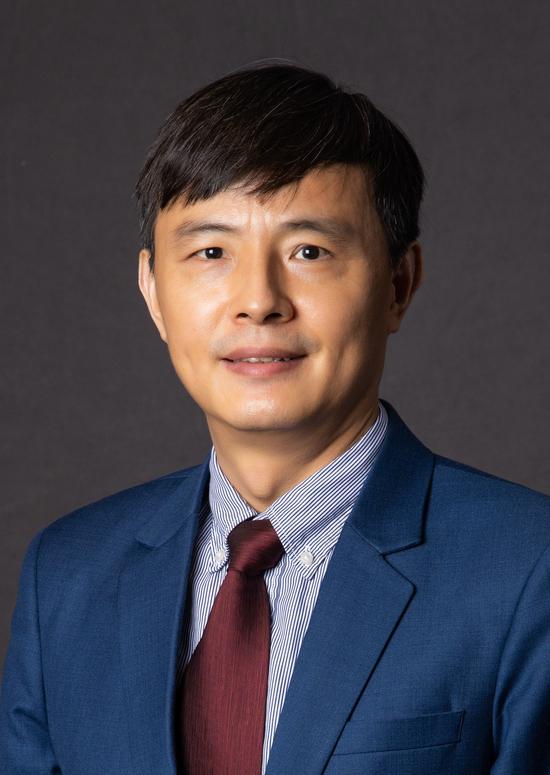
Li Mingjiang’s main research interests include Chinese foreign policy, China-ASEAN relations, Sino-U.S. relations, global governance, and Asia-Pacific security.
Carnegie does not take institutional positions on public policy issues; the views represented herein are those of the author(s) and do not necessarily reflect the views of Carnegie, its staff, or its trustees.

In an interview, Ian Lustick and Eli Clifton discuss their new book on why a prominent ally has so much influence in America.

Michael Young

By failing to address Palestinian representation, the current process is bound to lead to just another temporary arrangement.

Nathan J. Brown

Just look at Iraq in 1991.

Marwan Muasher

A coalition of states is seeking to avert a U.S. attack, and Israel is in the forefront of their mind.
Michael Young

Baku may allow radical nationalists to publicly discuss “reunification” with Azeri Iranians, but the president and key officials prefer not to comment publicly on the protests in Iran.

Bashir Kitachaev