

Q&A
John Hewko

REQUIRED IMAGE
The philosophical framework the international development community has traditionally used to carry out its legislative and institutional reform efforts in the post-communist countries of Eastern Europe and the former Soviet Union is incomplete and has failed to take into account several critical concepts and factors.
Source: Carnegie Paper No. 26
John Hewko analyzes the relationship of foreign direct investment and the rule of law. He takes a hard look at what has become a familiar article of common wisdom in international aid circles: the proposition that developing and transitional countries must establish a well-functioning rule of law to attract foreign direct investment. Hewko argues that the philisophical framework the international devleopment community has traditionally used to carry out its legislative and institutional reform efforts in the post-communist countries of Eastern Europe and the former Soviet Union is incomplete and has failed to take into account several critical concepts and factors. He also explores the other, less-accepted side of the causal chain: the ways in which foreign investment can stimulate positive change in the rule of law.
About the Author
John Hewko is a visiting scholar in the Democracy and Rule of Law Project. His research focuses on rule-of-law issues relating to post-communist transitions, including the role of foreign investment in facilitating legal reform, macro versus micro reform issues, and the impact of rule-of-law aid programs. Hewko is a partner in the law firm of Baker & McKenzie, and has spent the past 12 years practicing law in Moscow, Kiev, and, most recently, Prague.
Former Nonresident Senior Associate, Democracy and Rule of Law Program
Hewko was a nonresident senior associate with the Carnegie Endowment’s Democracy and Rule of Law Program. His research focuses on international development issues, democracy promotion, and the countries of the former Soviet Union.
Recent Work
John Hewko
Carnegie does not take institutional positions on public policy issues; the views represented herein are those of the author(s) and do not necessarily reflect the views of Carnegie, its staff, or its trustees.

In an interview, Ian Lustick and Eli Clifton discuss their new book on why a prominent ally has so much influence in America.

Michael Young

By failing to address Palestinian representation, the current process is bound to lead to just another temporary arrangement.

Nathan J. Brown

The armed forces champion a form of capitalism that is generating revenue, but its reliance on rent faces diminishing returns, leaving the country with massive sunk costs and deferred returns, deepening dependency on external borrowing.

Yezid Sayigh

Morocco and Algeria, each in its own way, are having to navigate the global economic fallout of the U.S.-Israeli military campaign against Iran.

Yasmine Zarhloule
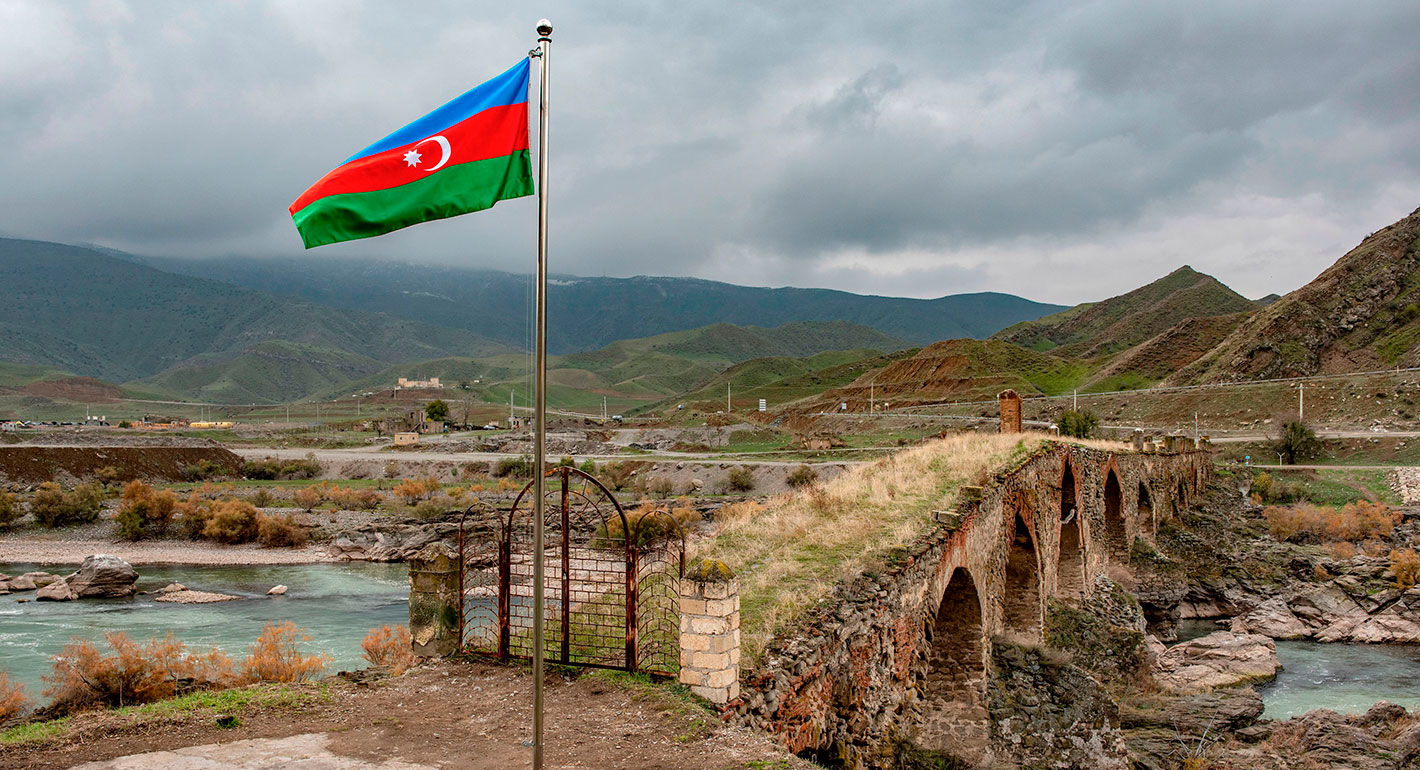
In an interview, Sergei Melkonian discusses Armenia’s and Azerbaijan’s careful balancing act among the United States, Israel, and Iran.

Armenak Tokmajyan