

Commentary
In an interview, Ian Lustick and Eli Clifton discuss their new book on why a prominent ally has so much influence in America.
Michael Young

REQUIRED IMAGE
Source: Carnegie Endowment
Russia has been in the process of seeking membership in the World Trade Organization (WTO) since June 1993. Currently, the United States is the only major economic power that has yet to finalize a bilateral market access agreement with the Russian Federation. Most observers of the situation concur that the enforcement of intellectual property rights laws remains, along with agriculture, one of the two major hurdles to Russian accession to the World Trade Organization.
This paper seeks to elucidate the challenges and policy options that Russia faces on enforcing intellectual property rights, highlighting lessons learned from the experiences of China and Ukraine. Its goal is to advance the United States–Russia dialogue on accession and to help achieve the kind of progress desired by all parties.
Click on icon above for the full text of this Carnegie Paper.
Sherman E. Katz is a senior associate at Carnegie Endowment for International Peace. His research focuses on WTO global trade negotiations in the Doha Round, implications of Chinese accession to the WTO, and the distribution of benefits from U.S. Free Trade Agreements.
Matthew Ocheltree has been a research assistant with the Trade, Equity and Development Project since February 2006.
Former Senior Associate
Matthew Ocheltree
Carnegie does not take institutional positions on public policy issues; the views represented herein are those of the author(s) and do not necessarily reflect the views of Carnegie, its staff, or its trustees.

In an interview, Ian Lustick and Eli Clifton discuss their new book on why a prominent ally has so much influence in America.

Michael Young

By failing to address Palestinian representation, the current process is bound to lead to just another temporary arrangement.

Nathan J. Brown

The armed forces champion a form of capitalism that is generating revenue, but its reliance on rent faces diminishing returns, leaving the country with massive sunk costs and deferred returns, deepening dependency on external borrowing.

Yezid Sayigh

Morocco and Algeria, each in its own way, are having to navigate the global economic fallout of the U.S.-Israeli military campaign against Iran.

Yasmine Zarhloule
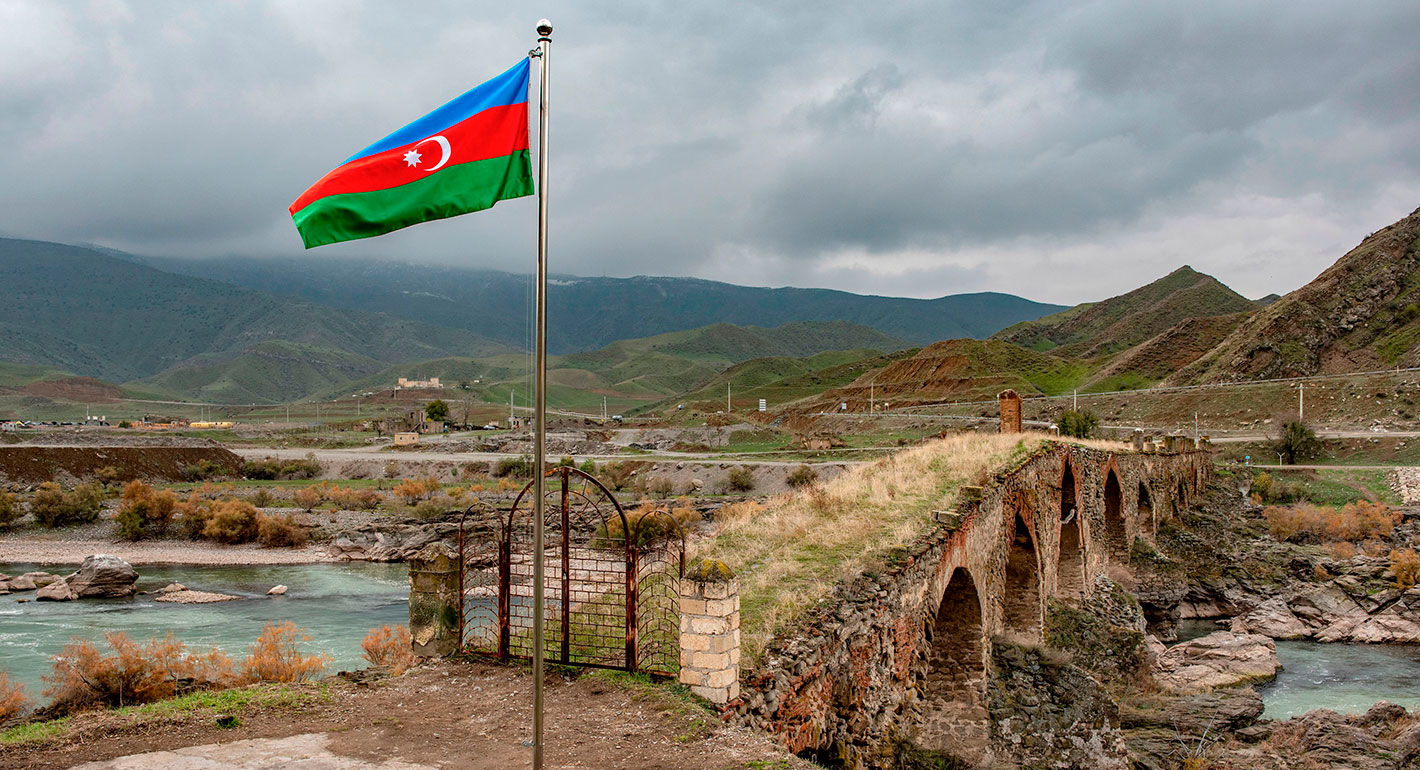
In an interview, Sergei Melkonian discusses Armenia’s and Azerbaijan’s careful balancing act among the United States, Israel, and Iran.

Armenak Tokmajyan