

Commentary
Just look at Iraq in 1991.
Marwan Muasher
Source: Getty
As globalization continues to accelerate, a rising China will exert greater influence on the world.
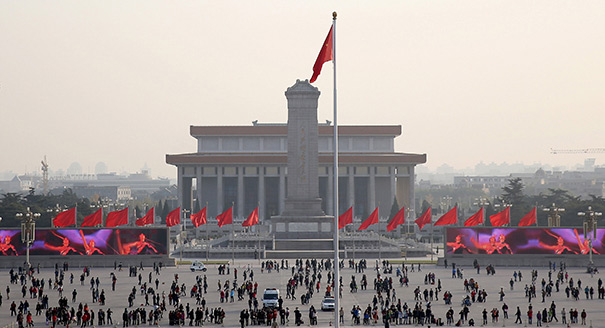
As globalization continues to accelerate, a rising China will exert greater influence on the world. The traditional values of Chinese culture, which promote harmony, coexistence, and mutual prosperity, have the potential to contribute to world peace. But China must first communicate these values to the international community, and especially to Europeans, who often misunderstand China’s culture and values. To do so, Beijing must improve its public diplomacy toward Europe.
China has made great progress in public diplomacy since the 1990s. The number of international broadcasters and television channels has gradually increased, and Confucius Institutes have been established in over 100 countries. In addition, China is actively holding large “Chinese Culture Year” exhibitions and performances.
Yet, problems and deficiencies remain. The Chinese government lacks experience with public diplomacy and strategy. A number of Chinese officials are not adept at public relations and have difficulty communicating with foreigners. Some foreign affairs professionals in China are not familiar with European religious etiquette and customs, which causes problems in China’s international cultural communications. Some Chinese people unfortunately act in a way that Europeans consider impolite or unhygienic during social encounters, which impairs China’s image. However, there are a number of ways in which China can address these deficiencies and improve its public diplomacy toward European countries.
European countries have their own long histories and rich cultures. In modern times, Britain, France, and Germany have all shown their respective strength. The British and French bourgeois revolutions destroyed feudal monarchies and systems while advocating the values of freedom, equality, democracy, rule of law, and human rights. These values have remained important and have been adjusted to Europeans’ demands for increased productivity, industrialization, and modernization. They have been widely accepted by people all around the world. Although different classes understand them from different perspectives, these values have undoubtedly played an active role in modern progress.
China should absorb these advanced values of the modern world and merge them with the advanced values in Chinese traditional culture to build up a new system of socialist core values. Therefore, the Chinese government should energetically promote cultural communication with Europe that will help European and Chinese people learn from each other, seek common ground, resolve differences, and realize coexistence and mutual prosperity.
Europeans know little about China, so at times they are influenced by one-sided media reports. There is a conspicuous gap in the exchange of information between the two regions.
The Chinese government should support groups from the Chinese social sector and NGOs in communicating with their European counterparts. Chinese organizations should both invite European groups to China and go abroad to meet them so that the Europeans can understand Chinese culture and the real situation on the ground. At the same time, the Chinese government should encourage and support organizations working in the areas of Chinese culture, education, science, and society to promote mutual understanding and clear up common misconceptions through greater cultural communication.
Media diplomacy is an essential element of public diplomacy. Chinese audiences should be open and receptive to foreign media reports and comments. Except in the cases of malicious slander and rumormongering, China should react to critical comments calmly and quietly.
China should also make the best use of its media capabilities to disseminate the advanced values of Chinese culture and moral consciousness, which will help Europeans understand the extent and profundity of Chinese culture. China should be more open to foreign media, allowing journalists to more freely gather and report news in the country and inviting mainstream European journalists to visit and explore China.
The relationship between China and Europe is marked by differences and commonalities in culture, contradictions and areas for cooperation, and conflicts and opportunities for mutual benefit. The Chinese government should carry out public diplomacy toward European countries in the spirit of what former Chinese premier Wen Jiabao called “harmony without sameness” and in accordance with the principle described by former premier Zhou Enlai of “seeking common ground while shelving differences.” When facing contradictions, problems, and conflicts, the Chinese government should actively seek political dialogue and try to solve them through communication and negotiation.
A longer version of this article was originally published in Chinese in the Journal of Liaoning University (Philosophy and Social Science Edition).
This article was published as part of the Window into China series

Zhang Lihua
Former Resident Scholar, Carnegie-Tsinghua Center for Global Policy
Zhang Lihua was a resident scholar at the Carnegie-Tsinghua Center until June 2020.
Carnegie does not take institutional positions on public policy issues; the views represented herein are those of the author(s) and do not necessarily reflect the views of Carnegie, its staff, or its trustees.

Just look at Iraq in 1991.

Marwan Muasher

A coalition of states is seeking to avert a U.S. attack, and Israel is in the forefront of their mind.

Michael Young

Baku may allow radical nationalists to publicly discuss “reunification” with Azeri Iranians, but the president and key officials prefer not to comment publicly on the protests in Iran.

Bashir Kitachaev

The country’s leadership is increasingly uneasy about multiple challenges from the Levant to the South Caucasus.

Armenak Tokmajyan
The countries of the region have engaged in sustained competition that has tested their capacities and limitations, while resisting domination by rivals. Can a more stable order emerge from this maelstrom, and what would it require?


Hamza Meddeb, Mohamed Ali Adraoui