

Article
Internet service providers can facilitate internet access but also draconian control.
Irene Poetranto
{
  "authors": [
    "Steve Feldstein",
    "Brian Kot"
  ],
  "type": "legacyinthemedia",
  "centerAffiliationAll": "",
  "centers": [
    "Carnegie Endowment for International Peace"
  ],
  "collections": [
    "Tech and Democracy"
  ],
  "englishNewsletterAll": "",
  "nonEnglishNewsletterAll": "",
  "primaryCenter": "Carnegie Endowment for International Peace",
  "programAffiliation": "",
  "programs": [],
  "projects": [],
  "regions": [],
  "topics": []
}
Source: Getty
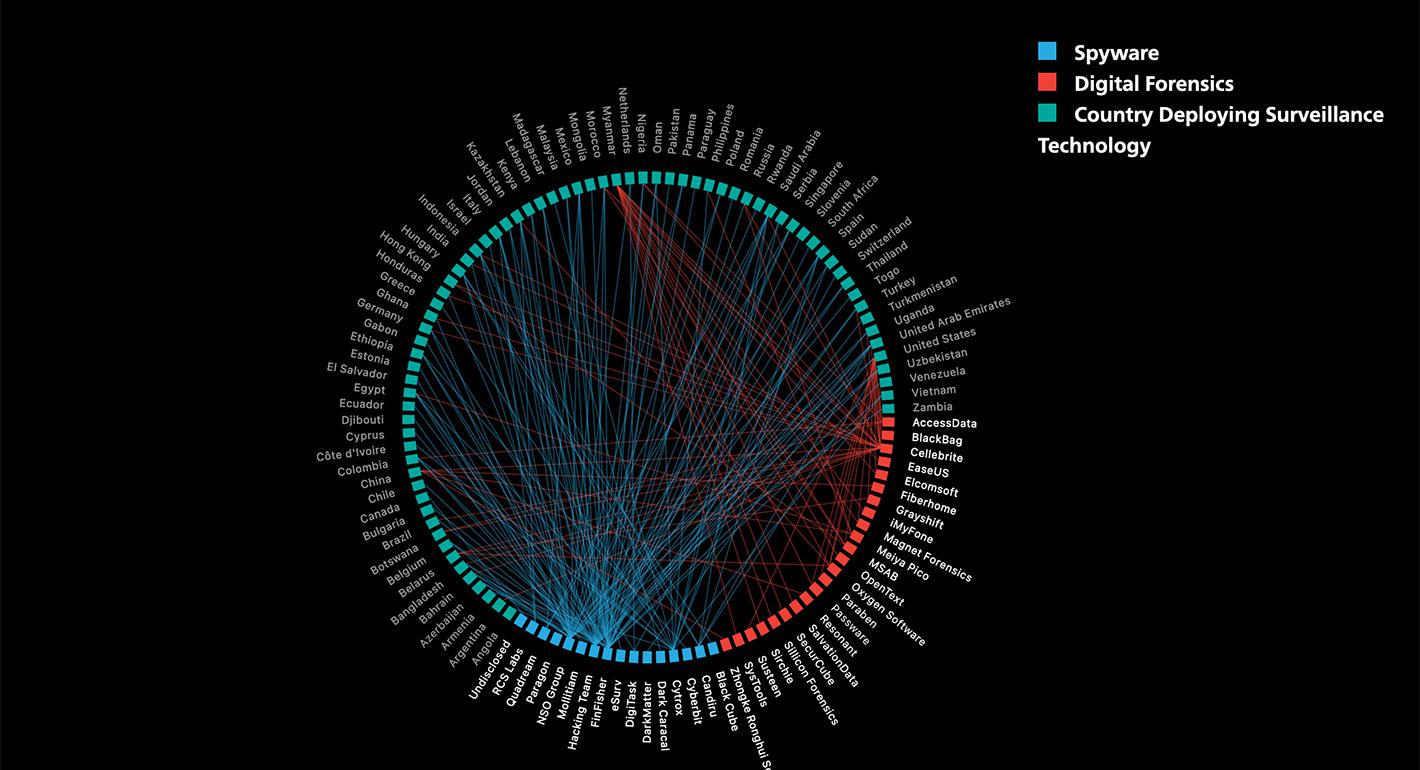
The global spyware and digital forensics industry is equipping democratic and authoritarian governments with advanced intrusive capabilities. Now, more information about this opaque industry is coming to light following an array of surveillance scandals.

Senior Fellow, Democracy, Conflict, and Governance Program
Steve Feldstein is a senior fellow at the Carnegie Endowment for International Peace in the Democracy, Conflict, and Governance Program. His research focuses on technology, national security, the global context for democracy, and U.S. foreign policy.
Brian Kot
Former Research Assistant, Democracy, Conflict, and Governance Program
Brian (Chun Hey) Kot was a research assistant in Carnegie’s Democracy, Conflict, and Governance Program.
Carnegie does not take institutional positions on public policy issues; the views represented herein are those of the author(s) and do not necessarily reflect the views of Carnegie, its staff, or its trustees.

Internet service providers can facilitate internet access but also draconian control.

Irene Poetranto

Censorship in China spans the public and private domains and is now enabled by powerful AI systems.
Nathan Law

Two experts discuss how drone technology is shaping yet another conflict and what the United States can learn from Ukraine.

Steve Feldstein, Dara Massicot

From Sudan to Ukraine, UAVs have upended warfighting tactics and become one of the most destructive weapons of conflict.

Jon Bateman, Steve Feldstein

The age of technological disruption in warfare is here.
Steve Feldstein, Matthew Ford