


Diet-Appointed Panel Says Fukushima Accident Was "Man-Made"
IN THIS ISSUE: Diet-appointed panel says Fukushima accident was "man-made" disaster, Iran submarine plan may fuel Western nuclear worries, Report sheds light on North Korean nuclear program, Finding a plan for safely storing nuclear waste, Belgian cabinet agrees slower phase-out of nuclear power, Poll shows Iranians don’t support nuclear enrichment
Diet-Appointed Panel Says Fukushima Accident Was "Man-Made" Disaster Kyodo News
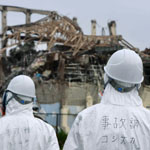
A Diet-appointed panel investigating the Fukushima Daiichi nuclear power plant disaster said Thursday that plant operator Tokyo Electric Power Co. and regulators failed to take proper safety steps amid cozy ties, calling it "clearly a man-made disaster."
|


 | |
|
Fredrik Dahl | Reuters
Iran's announcement that it plans to build its first nuclear-powered submarine is stoking speculation it could serve as a pretext for the Islamic state to produce highly enriched uranium and move closer to potential atom bomb material. Western experts doubt that Iran - which is under a U.N. arms embargo - has the capability any time soon to make the kind of sophisticated underwater vessel that only the world's most powerful states currently have. Full Article
Steve Herman | Voice of America
Japanese newspapers are reporting North Korea's late leader gave explicit instructions to mass produce uranium-based weapons. The country contends it is enriching uranium solely for power generation. The Mainichi Shimbun and Tokyo Shimbun published excerpts from writings purported to expose the North Korean leader's order to mass produce nuclear weapons fueled with highly-enriched uranium. Full Article
New York Times
Lawmakers and policy planners must revive the search for safe ways to store used fuel rods from nuclear power reactors. The long-term solution favored by most experts, which we endorse, is to bury the material in geologically stable formations capable of preventing leakage far into the future.But no politically acceptable site has yet been found, and leaving the used fuel rods at each reactor — more than 62,000 metric tons had accumulated across the country by the end of 2009 — seems increasingly problematic. Full Article
Robin Sayles | Platts
Belgium's cabinet voted Wednesday to close the 433 MW Doel 1 and 2 nuclear reactors from 2015 but prolong the lifespan of the 962 MW Tihange 1 unit to 2025, a spokeswoman for the energy ministry said. In October, the coalition government decided to phase out nuclear power, reverting back to a law from 2003 which requires the three oldest plants at Doel and Tihange to shut from 2015, provided replacing capacity could be found. Full Article
Omid Memarian | The Daily Beast
Is it myth or reality that Iranians support the government’s policy of pursuing the enrichment of uranium that has brought the country severe sanctions and international isolation? In a country where the state controls all means of communications, and where anybody who challenges the state’s official narrative faces persecution, that’s not easy to find out. But citizens’ responses to a survey that appeared on the website of Iran’s state TV on Tuesday might be revealing. Full Article
|
Carnegie does not take institutional positions on public policy issues; the views represented herein are those of the author(s) and do not necessarily reflect the views of Carnegie, its staff, or its trustees.