


Prince Al-Faisal: Saudi Arabia Will Build Nuclear Weapons if Iran Gets Them
IN THIS ISSUE: Riyadh will build nuclear weapons if Iran gets them, German parliament approves nuclear shutdown, nuke plant inspections find flaws, Bulava trial launch proceeds, new US and Russian views on nuclear weapons, West queries China over Pakistan atom ties.
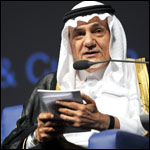
Riyadh Will Build Nuclear Weapons if Iran Gets Them, Saudi Prince Warns Jason Burke | The Guardian
A senior Saudi Arabian diplomat and member of the ruling royal family has raised the spectre of nuclear conflict in the Middle East if Iran comes close to developing a nuclear weapon.
|


 | |
|
|
Associated Press
German lawmakers overwhelmingly approved on Thursday plans to shut the country's nuclear plants by 2022, putting Europe's biggest economy on the road to an ambitious build-up of renewable energy. The lower house of parliament voted 513-79 for the shutdown plan drawn up by Chancellor Angela Merkel's government after Japan's post-earthquake nuclear disaster. Most of the opposition voted in favor; eight lawmakers abstained. Full Article
John Sullivan | ProPublica
A special inspection of U.S. nuclear plants after the Fukushima disaster in Japan revealed problems with emergency equipment and disaster procedures that are far more pervasive than publicly described by the Nuclear Regulatory Commission, a review of inspection reports by ProPublica shows. While the deficiencies don't pose an immediate risk and are relatively easy to fix, critics say they could complicate the response to a major disaster and point to a weakness in NRC oversight. Full Article
Global Security Newswire
Russia on Tuesday conducted a successful trial flight of its experimental submarine-launched Bulava ballistic missile, the Defense Ministry announced. "Today the nuclear-powered missile-carrying strategic submarine ... Yuri Dolgoruky under Capt. 1st Class Vladimir Shirin carried out a test launch of the intercontinental ballistic missile Bulava from the White Sea. The launch was successful by all parameters," Defense Ministry spokesman Col. Igor Konashenkov told ITAR-Tass. Full Article
Joseph Cirincione | New America Foundation
The United States and Russia possess 95 percent of the world's nuclear weapons. How these two nuclear superpowers configure and view their nuclear forces has a profound impact on how the other nuclear-armed states perceive the value of their weapons and how seriously other nations consider acquiring or not acquiring their own nuclear arsenals. This paper briefly summarizes the development of US and Russian views on nuclear weapons over the past 30 years and offers practical policy recommendations for how both nations can achieve their stated goal of reducing the role of nuclear weapons in national security strategies. Full Article
Fredrik Dahl | Reuters
Western nations pressed China at closed-door nuclear talks to provide more information and help address concerns about its plans to expand an atomic energy plant in Pakistan, diplomatic sources said on Wednesday. But China showed no sign of reconsidering its position on building two more reactors at the Chashma nuclear power complex in Pakistan's Punjab region, said the sources who attended a June 23-24 meeting of the Nuclear Suppliers Group (NSG). Full Article
|
Carnegie does not take institutional positions on public policy issues; the views represented herein are those of the author(s) and do not necessarily reflect the views of Carnegie, its staff, or its trustees.