

Commentary
Andrey Pertsev
{
  "authors": [
    "Andrey Pertsev"
  ],
  "type": "commentary",
  "blog": "Carnegie Politika",
  "centerAffiliationAll": "dc",
  "centers": [
    "Carnegie Endowment for International Peace",
    "Carnegie Russia Eurasia Center"
  ],
  "collections": [],
  "englishNewsletterAll": "ctw",
  "nonEnglishNewsletterAll": "",
  "primaryCenter": "Carnegie Russia Eurasia Center",
  "programAffiliation": "russia",
  "programs": [
    "Russia and Eurasia"
  ],
  "projects": [],
  "regions": [
    "Russia",
    "Caucasus"
  ],
  "topics": [
    "Political Reform",
    "Economy",
    "Domestic Politics"
  ]
}
Source: Getty
A combination of military failures and Putin’s short attention span means that Russian officials who hoped for quick career advancement by taking positions in Russia-controlled Ukraine have been left deeply disappointed.
Ambitious Russian officials embraced the full-scale invasion of Ukraine. Many thought that demonstrative participation in military operations or taking a job in Russia-occupied territories would be a career springboard. President Vladimir Putin was deeply invested in events in eastern Ukraine, the logic ran, so anyone involved on the ground would be sure to catch his eye. However, that window of opportunity closed quickly. Russia failed to seize large amounts of Ukrainian territory it has attempted to occupy, and eastern Ukraine became just one topic among many for Putin. Now the chances of building a successful career there are non-existent.
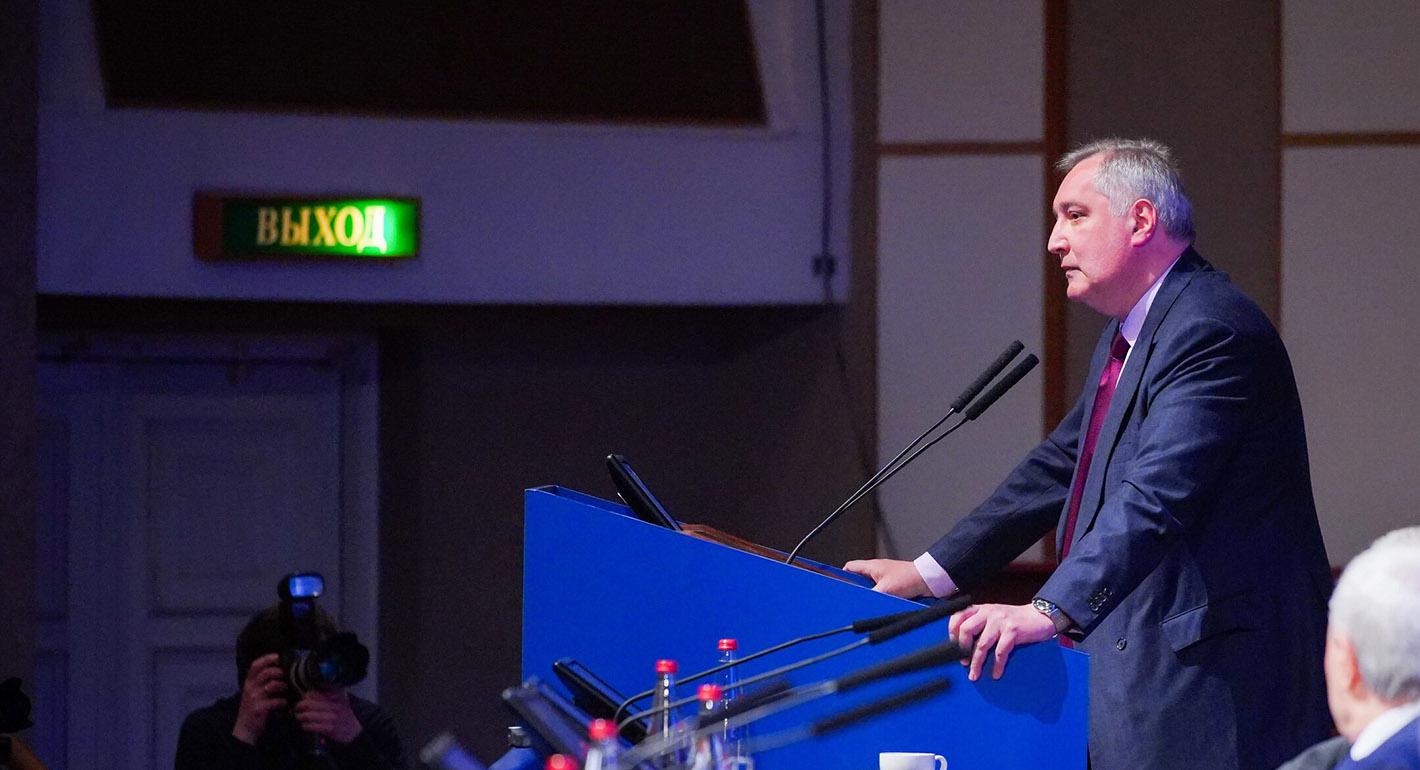
Perhaps the best illustration of this dynamic is Dmitry Rogozin, a former deputy prime minister and ex-head of the state space corporation Roscosmos, who is now a Federation Council senator representing the partially occupied Zaporizhzhia region. Rogozin enlisted as a military advisor in Ukraine in the hope of getting a plum job. He was even publicly promised a promotion by none other than Prime Minister Mikhail Mishustin.
That, however, was back in the summer of 2022, when the Kremlin still hoped to fully conquer Ukraine’s Donetsk, Zaporizhzhia, and Kherson regions and combine them into a new federal district. Rogozin would have been a leading candidate to become the presidential envoy to this new entity, putting him in frequent contact with Putin. Instead, the Russian military’s failure means Rogozin has wound up in political retirement in the Federation Council, the upper chamber of the Russian parliament.
Rogozin’s story is typical of Russian officials who went to occupied Ukraine seeking promotion. At best, their advancement was put on hold. At worst, they dropped off the Kremlin’s radar.
Sergei Sokol, a member of the United Russia ruling party, is another good example. Sokol has spent a decade trying to be appointed a governor in Russia. Most recently, he was seeking the governorship of Khakassia, an impoverished region heavily dependent on Moscow’s subsidies.
Mindful of past disappointments, Sokol signed up to fight in Ukraine, hoping military service would be an ironclad guarantee of securing the role. But things didn’t go according to plan. He withdrew from the race in Khakassia when it became obvious he would not defeat the Communist Party incumbent. Instead, Sokol was made speaker of Khakassia’s legislative assembly. His time at the front proved to be a career hiatus, not a boost.
Numerous other officials have gotten trapped in a Ukrainian limbo. The former mayor of the southern Russian city of Krasnodar, Andrei Alekseyenko, was head of the Russia-occupied Kharkiv region government before it was recaptured by Ukraine, and now leads the Russia-appointed government in the Kherson region. Neither position has the same gravitas as being in charge of a major Russian city.
Dmitry Berdinkov, former mayor of Irkutsk and deputy chair of the government of Yakutia, was made the deputy head of occupied Mariupol’s city government, then deputy prime minister of the self-proclaimed Donetsk People’s Republic (DNR). As in the case of Alekseyenko, these positions are also far less prestigious than his previous roles.
The deputy head of government in Russia’s western Kaliningrad region, Sergei Yeliseyev, was Alekseyenko’s predecessor in Kherson before returning to Kaliningrad to a post of the same rank. Even war injuries are no guarantee of promotion: Alexander Sapozhnikov, head of the Far Eastern city of Chita, was wounded after volunteering to fight in Ukraine. For his troubles, he was made a deputy in the Zabaikalsky Krai’s legislative assembly—actually dropping down the political hierarchy a rung, maybe even two.
So far, only two officials who have served in occupied eastern Ukraine have managed to land a governorship in Russia. Former DNR prime minister Vitaly Khotsenko was appointed to run Siberia’s Omsk region, and ex-deputy prime minister of the Luhansk People’s Republic (LNR) Vasily Kuznetsov was given the same role in Chukotka in Russia’s Far North. Admittedly, both men had seemed destined for governorship even before the war.
The Kremlin has tried to present working in Russia-occupied territories as a career elevator, yet all evidence indicates that it is in fact a career graveyard. There are several reasons for this. First, Russia’s battlefield reversals have kept it from fully capturing the Donetsk, Zaporizhzhia, and Kherson regions. In the case of Kherson and Zaporizhzhia, Russia does not control any major cities and Ukraine is retaking ground as part of its counteroffensive.
Second, the Kremlin has preferred to appoint locals to official jobs in occupied regions, which has inevitably reduced the number of prestigious posts up for grabs.
Finally, early expectations that the situation would stabilize turned out to be wrong. Enterprising officials hoped to participate in the reconstruction and rebuilding process, meeting regularly with federal-level interlocutors and staying on the president’s radar. But the top issue now is repelling Ukraine’s counteroffensive and holding on to the territory Russia still controls.
Many forgot that Putin quickly tires of his pet projects. Take the All-Russia People’s Front (ONF) organization, or Crimea, annexed by Russia in 2014. At one point, they were both reliable career springboards: ex-ONF functionary Alexander Brechalov was made governor of the region of Udmurtia in central Russia, while the former governor of the Crimean city of Sevastopol, Sergei Menyailo, became the presidential envoy to the Siberian Federal District. But Putin soon moved on to other things, and now nobody expects to leap from the ONF or Crimean government to a prestigious federal-level job.
Moreover, the difficult situation at the front has not given officials in occupied eastern Ukraine much of a chance to show what they can do. Time has passed, and now even the deadly fighting has become a routine matter for Putin. Those arriving to do jobs in the occupied regions are now seen as regular pen-pushers, not superheroes.
Ambitious officials are trapped. They can’t abandon their posts in the occupied regions: to the Kremlin, that would be tantamount to weakness, even desertion. If they’re lucky, they will keep their current jobs. If they aren’t, they will slip down the career ladder. In either case, their hopes for rapid career advancement have been dashed.

Andrey Pertsev is a journalist with Meduza website.
Recent Work
Andrey Pertsev
Andrey Pertsev
Carnegie does not take institutional positions on public policy issues; the views represented herein are those of the author(s) and do not necessarily reflect the views of Carnegie, its staff, or its trustees.

Russia spent years building a “sovereign internet,” concentrating web infrastructure exclusively within Russian territory. Ukrainian drone attacks have shown how vulnerable that approach has left the Russian internet.

Maria Kolomychenko

Putin’s conservative staffing policies and search for ever greater control have cemented parliament’s transformation into a bureaucratic appendage of the executive branch.
Andrey Pertsev

Russia’s AI-driven propaganda campaigns operate in a fragmented, chaotic, and often illogical manner. That’s not necessarily a problem for the Kremlin, though: It’s much easier to mimic genuine public debate that way.

Ilya Klishin

Russian strikes are weakening the economy sustaining Ukraine’s war effort. Closing the growing funding gap will require more European support and politically contentious reforms in Kyiv.

Balázs Jarábik

Ex-president Gurbanguly Berdimuhamedov remains interested in politics, but his son Serdar, Turkmenistan’s current president, is becoming increasingly independent and willing to break with his father’s legacy. If their covert rivalry goes too far, both risk losing power.

Galiya Ibragimova