

Commentary
Andrey Pertsev
{
  "authors": [
    "Andrey Pertsev"
  ],
  "type": "commentary",
  "blog": "Carnegie Politika",
  "centerAffiliationAll": "dc",
  "centers": [
    "Carnegie Endowment for International Peace",
    "Carnegie Russia Eurasia Center"
  ],
  "collections": [],
  "englishNewsletterAll": "ctw",
  "nonEnglishNewsletterAll": "",
  "primaryCenter": "Carnegie Russia Eurasia Center",
  "programAffiliation": "russia",
  "programs": [
    "Russia and Eurasia"
  ],
  "projects": [],
  "regions": [
    "Russia",
    "Caucasus"
  ],
  "topics": [
    "Political Reform",
    "Economy",
    "Domestic Politics"
  ]
}
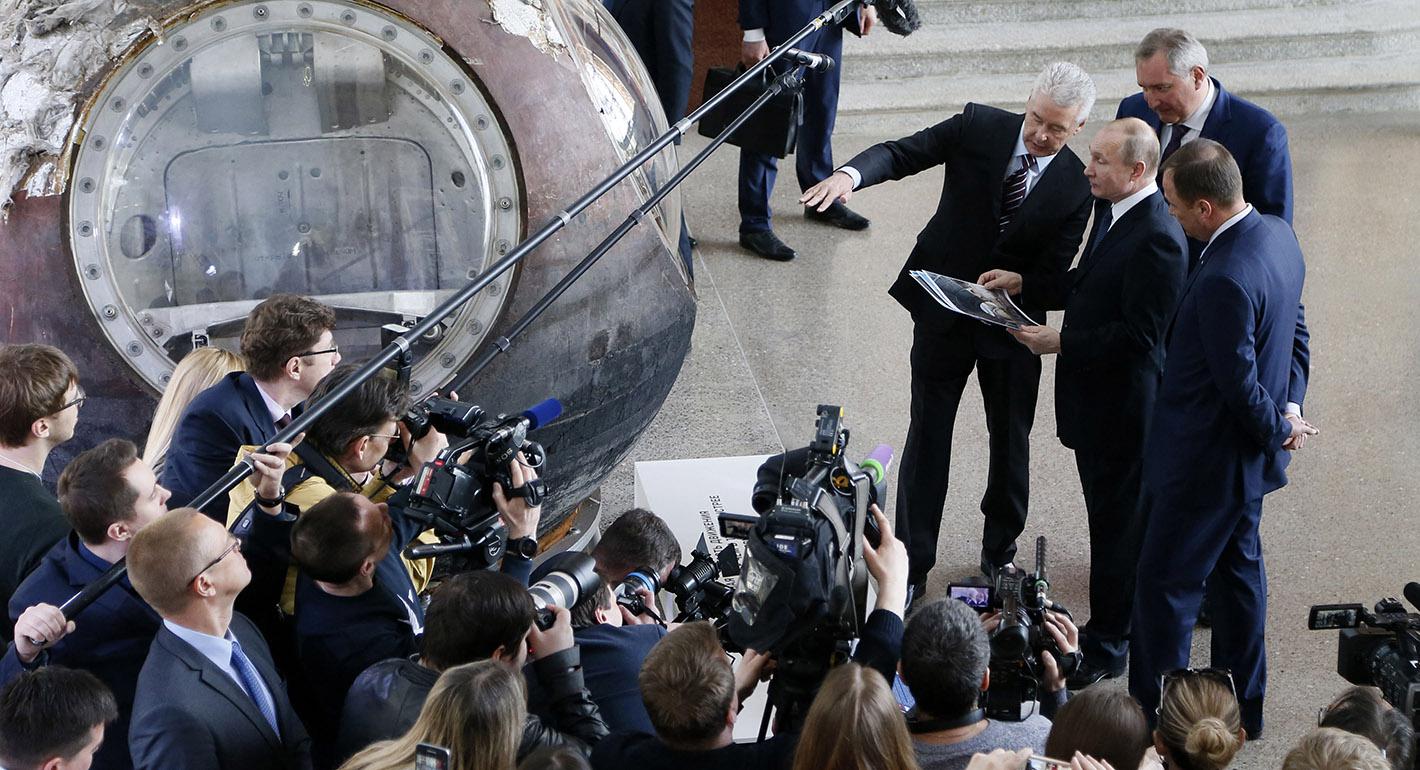
Source: Getty
The Kremlin will seek to diffuse the public’s attention through a barrage of events, distracting people from economic problems and rumors of further mobilization.
Russia’s 2024 presidential election looks set to be one of President Vladimir Putin’s busiest and most expensive reelection campaigns ever. The vote will take place against a backdrop of events including a huge exhibition showcasing the achievements of the Putin era, a months-long patriotic competition, and a World Youth Festival.
All of this is being organized by Kremlin deputy chief of staff Sergei Kiriyenko, who oversees domestic politics. It is designed to create the theatrical backdrop of a supposedly flourishing country while sustaining the illusion of a genuinely democratic election, thereby helping to legitimize the official results, which will undoubtedly deliver a big win for Putin.
An exhibition laconically titled “Russia” is set to open on November 4 in the All-Russia Exhibition Center, a Stalin-era exhibition park consisting of dozens of individual pavilions in Moscow. It will run until April, and the Kremlin has made no secret of the fact that it’s expected to play a key role in Putin’s campaign (though it is not being funded by the official reelection campaign). The organizing committee is headed by Kiriyenko himself.
With a focus on technology, the displays for the exhibition have been assembled by Russian regions, state corporations, and other large companies. As well as trumpeting achievements (however dubious), they also appear to have been tailored to what an elderly Russian—say Putin—might imagine when they think of the IT and high-tech sector. They are full of crude imitations of advanced technology, including fantastical means of transport, endless interactive screens, and chances to experience augmented reality.

Governors, celebrities, and state-owned news channels are all busy advertising the exhibition. The goal is clear: as the election approaches, Russians need to be convinced that Putin has made their country a developed, high-tech Mecca where standards of living are rising and infrastructure is practically perfect. In effect, the exhibition organizers are trying to build a virtual version of Russia itself.
Competitions and lotteries will also be rolled out in the coming months on an unprecedented scale. Previously, the lure of prizes had been used occasionally to boost turnout in regional elections. Now it is being deployed at the federal level.
A months-long national competition titled “It Runs in the Family” and resembling a TV show for all ages will get under way on the same day as the “Russia” exhibition. According to officials, hundreds of thousands of people have already registered for the competition, which will include both patriotic activities (such as creating a family tree) and entertainment segments (like cooking dishes according to recipes devised by celebrities).
The prizes up for grabs include thirty apartments each worth 5 million rubles (about $53,000), 300 trips around Russia, and many other smaller rewards. As with the exhibition, celebrities have been recruited to help advertise the competition. Schools and other state institutions are also helping to raise public awareness, including via social media.
Another major event set to take place ahead of the election is the World Youth Festival in the Black Sea resort city of Sochi. Its website claims it will be the “largest youth event in the world.” Once again, the head of the organizing committee is none other than Kiriyenko. The seemingly indefatigable deputy chief of staff is also involved in putting on a cultural program over the winter that will see performers and theater troupes loyal to the authorities sent on tour around Russia.
No such rash of events took place during Putin’s previous reelection campaigns in 2012 and 2018. True, the Kremlin did try to highlight the role of volunteers in past campaigns, but to little effect. Similarly, celebrities, artists, and sports stars who were on Team Putin were never widely promoted or involved in major events. While there was a World Festival of Youth and Students in late 2017, it had been forgotten by the time of the 2018 elections.
Instead, for his previous campaigns, Putin used the tried and tested formula: “I’m busy with work—and working is the best form of campaigning.” While he won all those elections, it’s hard to judge the effectiveness of this approach, as the outcomes of Russian elections are determined by far more important factors: from a lack of real competition and state-organized drives to boost turnout among public officials to widespread electoral fraud.
On the surface, it would appear that nothing has changed to justify a shift to a new, event-oriented campaign. Polls predict an easy win for Putin, while Kremlin tactics to increase turnout and manipulate results—especially online voting—have been honed to perfection in recent years.
In other words, there are no electoral reasons to organize such a flood of events. So why is the Kremlin running a campaign as though Putin were taking part in competitive elections? And why are political managers seeking to politicize society by drawing attention to the electoral race?
The answer is that while Russians will see all this political activity as attempts by the authorities to curry favor, officials like Kiriyenko are not putting in the hours for Russian society as a whole, but for just one man in the Kremlin. Kiriyenko and his team are now little more than an events agency for Putin, having turned Russia’s political system into a series of events long ago.
Accordingly, all the displays at the All-Russia Exhibition Center have been designed with the well-known fact in mind that Putin is a fan of the pseudo-high tech. When he tours the displays, Putin will be able to spend a few hours in the wonderful Russia of the future, and wallow in the illusion that a real election campaign is under way.
While the Kremlin’s election strategy may lend Putin some legitimacy in the short term, what comes after the vote will be very different. The Kremlin is diffusing the public’s attention through a barrage of events, distracting people from economic problems and rumors of mobilization. If things get worse after Putin’s victory, all the positive mood music will have been in vain. Instead, the talk will be of how artificial intelligence was used to construct the same old Potemkin villages.

Andrey Pertsev is a journalist with Meduza website.
Recent Work
Andrey Pertsev
Andrey Pertsev
Carnegie does not take institutional positions on public policy issues; the views represented herein are those of the author(s) and do not necessarily reflect the views of Carnegie, its staff, or its trustees.

The truth of the strategic situation is that Europe and Russia are extremely unlikely to be able to “turn the page” on their confrontation within the next two decades.
Arkady Moshes

Russia spent years building a “sovereign internet,” concentrating web infrastructure exclusively within Russian territory. Ukrainian drone attacks have shown how vulnerable that approach has left the Russian internet.

Maria Kolomychenko

Putin’s conservative staffing policies and search for ever greater control have cemented parliament’s transformation into a bureaucratic appendage of the executive branch.
Andrey Pertsev

Russia’s AI-driven propaganda campaigns operate in a fragmented, chaotic, and often illogical manner. That’s not necessarily a problem for the Kremlin, though: It’s much easier to mimic genuine public debate that way.

Ilya Klishin

Russian strikes are weakening the economy sustaining Ukraine’s war effort. Closing the growing funding gap will require more European support and politically contentious reforms in Kyiv.

Balázs Jarábik