

Commentary
Andrei Kolesnikov
{
  "authors": [
    "Andrei Kolesnikov"
  ],
  "type": "commentary",
  "blog": "Carnegie Politika",
  "centerAffiliationAll": "dc",
  "centers": [
    "Carnegie Endowment for International Peace",
    "Carnegie Russia Eurasia Center"
  ],
  "collections": [],
  "englishNewsletterAll": "ctw",
  "nonEnglishNewsletterAll": "",
  "primaryCenter": "Carnegie Russia Eurasia Center",
  "programAffiliation": "russia",
  "programs": [
    "Russia and Eurasia"
  ],
  "projects": [],
  "regions": [
    "Russia",
    "Caucasus"
  ],
  "topics": [
    "Political Reform",
    "Economy",
    "Domestic Politics"
  ]
}
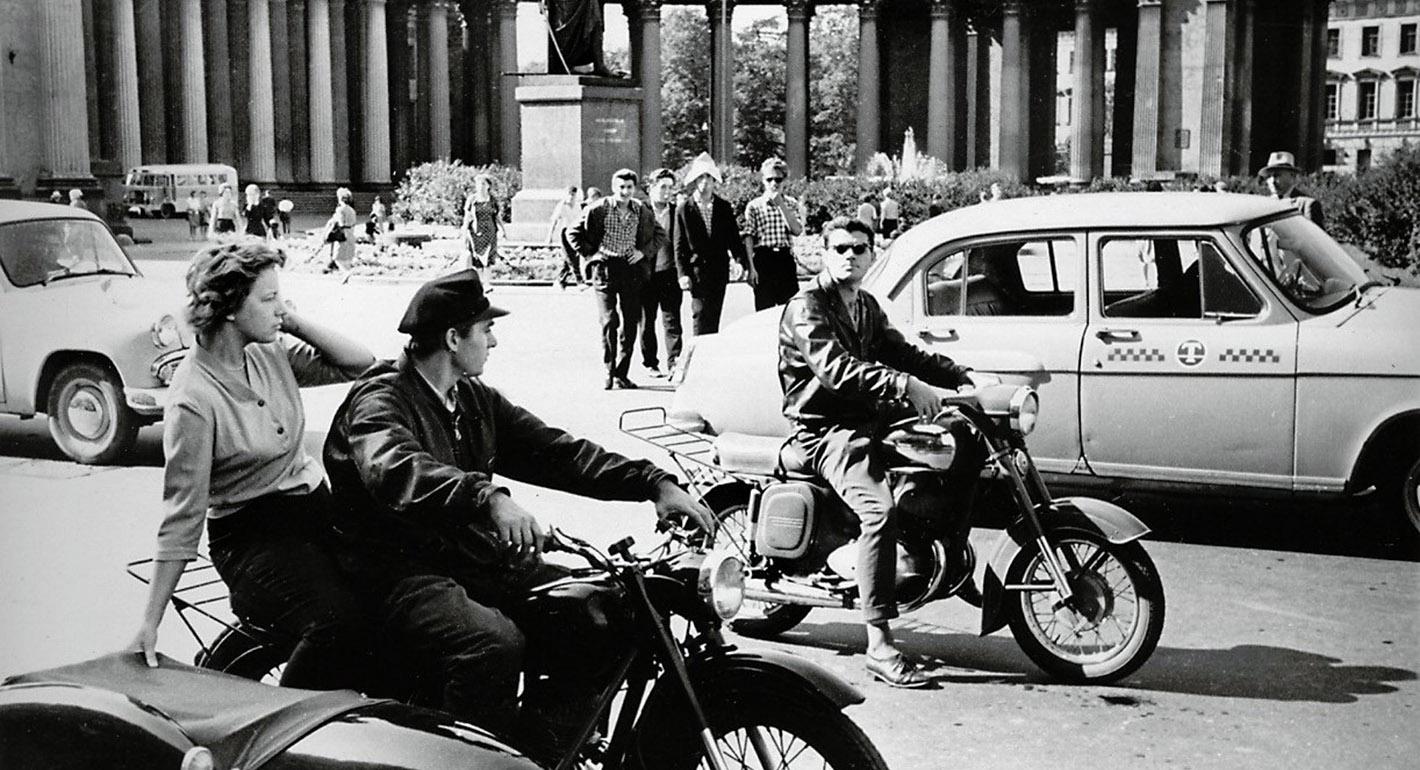
Source: Getty
Author Sergei Chuprinin teases out historical parallels in his book, Thaw: Characters, which explores the relative freedoms enjoyed under the Soviet leader Nikita Khrushchev.
The history of Russia is a history of the failure of liberalization. The Georgian philosopher Merab Mamardashvili once remarked that despotic regimes are the norm for Russia, and brief periods of freedom are the exception—and that these brief periods of freedom tend to implode because of a lack of knowledge of how to use them.
The period known as the thaw under Joseph Stalin’s successor Nikita Khrushchev—which continued by inertia under his own successor, Leonid Brezhnev, until troops were sent into Czechoslovakia in 1968—was a period of contradictions. As well as liberalization, it saw repression, bans, and Stalinist regressions. It spanned the 1956 invasion of Hungary, the 1962 Novocherkassk massacre when Soviet soldiers fired on peaceful demonstrators, the Cuban Missile Crisis, and the persecution of Doctor Zhivago author Boris Pasternak.
In fact, Khrushchev’s “thaw” is better characterized as modernized Stalinism accompanied by attempts to understand the past, return to a semblance of normality, and adapt to new socioeconomic conditions, including booming higher education and rapid urbanization. Looking back to this epoch today is in some ways envy-inducing. But it also confirms the worldview that all good things in Russia come to an end, to be inevitably followed by dark times.
In his three books, Thaw: Events. March 1953–August 1968 (2020), Thaw: Characters (2023), and Thaw as Defiance (2023), Sergei Chuprinin, a critic and chief editor of the Russian liberal literary journal Znamya, has tried to take apart the puzzle of the period and put it back together again. The essence of an epoch can often be found in anecdotes, rather than in attempts at high-brow generalizations, and Chuprinin’s recognition of this is one of the delights of his titanic labor of love.

Like in today’s Russia, some were surprised at what others could get away with. The philosopher Igor Blauberg refused to sign a letter “against a statement of the U.S. press,” and suffered no consequences, despite expectations that such behavior would result in being fired from work or kicked out of the Communist Party.
Paradoxically, the system was not very systematic—although it was less chaotic and unpredictable than today’s repressive machine. Most people were passive and pliable conformists, with occasional manifestations of aggressive conformism motivated by fear stemming from the recent experience of the Stalinist regime.
The writer Vera Panova, for example, went from Leningrad to Moscow specifically to participate in a public attack on Pasternak, even as others found themselves called away on urgent work trips or claimed to be ill. She explained herself by saying she was sure another Stalinist Great Terror was imminent.
Many chose to remain in their jobs, opting for “silent resistance.” The writer Zinovy Paperny, who was famous in bohemian Moscow for his literary parodies, said going to party meetings was like “raiding the enemy’s rear.” Many also follow this sort of logic in modern Russia, sacrificing everything for their professional calling.
Others, of course, chose “freedom.” They included Alexander Galich, one of the symbols of the thaw. The poet and singer-songwriter gave up not only his material well-being, but eventually also his homeland: he lived in three countries after being forced to emigrate, before being found dead in Paris just three years after he left. “It remains a mystery,” writes Chuprinin, “why this successful bon vivant and cynic with a touch of arrogance decided to tear his life apart so suddenly.”
Chuprinin’s work is a monument to one of the most important periods in Russian history. Inevitably, there isn’t room for everyone in the book, and there are plenty of important figures who deserve separate biographies, but appear only fleetingly. The human rights activist Larisa Bogoraz, who took part in a protest against the 1968 invasion of Czechoslovakia on Red Square, is a major symbol of the era, but is mentioned only once by Chuprinin. Many other prominent figures are also absent.
The thaw freed the minds of Soviet people and paved the way—intellectually, morally, and emotionally—for Mikhail Gorbachev’s reforms in the 1980s, and, to some extent, even the post-Soviet reforms of the following decade. But Chuprinin’s book bears witness to the fact that this period of freedom was too short, too full of compromise, and too self-contradictory for either a liberal consciousness or democratic institutions to take root. The authorities were repeatedly paralyzed by an instinctive fear of the consequences of step-by-step liberalization. A major similarity between the Khrushchev era and the era of President Boris Yeltsin in the 1990s is that they both ended in the triumph of total, unconditional autocracy.
Today, Russian history has entered a new cycle, and no one knows whether it will end in a new round of liberalization. After all, a thaw can precede either a deep freeze or the coming of a warmer season. In 2013, the Russian director Valery Todorovsky filmed a TV series set in 1961 and titled The Thaw. In the series’ theme song, the chorus ends: “I thought it was spring / But it’s just a thaw.”
Former Senior Fellow, Carnegie Russia Eurasia Center
Kolesnikov was a senior fellow at the Carnegie Russia Eurasia Center.
Recent Work
Andrei Kolesnikov
Andrei Kolesnikov
Carnegie does not take institutional positions on public policy issues; the views represented herein are those of the author(s) and do not necessarily reflect the views of Carnegie, its staff, or its trustees.

A leak of Russian gas price data helps establish that China is paying Russia far less than Central Asian countries and Gazprom’s former European customers.

Sergey Vakulenko

Japan’s long-term security policy is driven by concerns about China, and there is little appetite for (or interest in) pursuing a confrontation with Moscow.

James D.J. Brown

The truth of the strategic situation is that Europe and Russia are extremely unlikely to be able to “turn the page” on their confrontation within the next two decades.

Arkady Moshes
Russia spent years building a “sovereign internet,” concentrating web infrastructure exclusively within Russian territory. Ukrainian drone attacks have shown how vulnerable that approach has left the Russian internet.

Maria Kolomychenko

Putin’s conservative staffing policies and search for ever greater control have cemented parliament’s transformation into a bureaucratic appendage of the executive branch.

Andrey Pertsev