

Commentary
Maxim Starchak
{
  "authors": [
    "Maxim Starchak"
  ],
  "type": "commentary",
  "blog": "Carnegie Politika",
  "centerAffiliationAll": "",
  "centers": [
    "Carnegie Endowment for International Peace",
    "Carnegie Russia Eurasia Center"
  ],
  "englishNewsletterAll": "",
  "nonEnglishNewsletterAll": "",
  "primaryCenter": "Carnegie Russia Eurasia Center",
  "programAffiliation": "",
  "programs": [],
  "projects": [],
  "regions": [
    "Russia",
    "Ukraine",
    "United States"
  ],
  "topics": [
    "Security",
    "Military",
    "Arms Control",
    "Nuclear Policy",
    "NATO"
  ]
}
Source: Getty
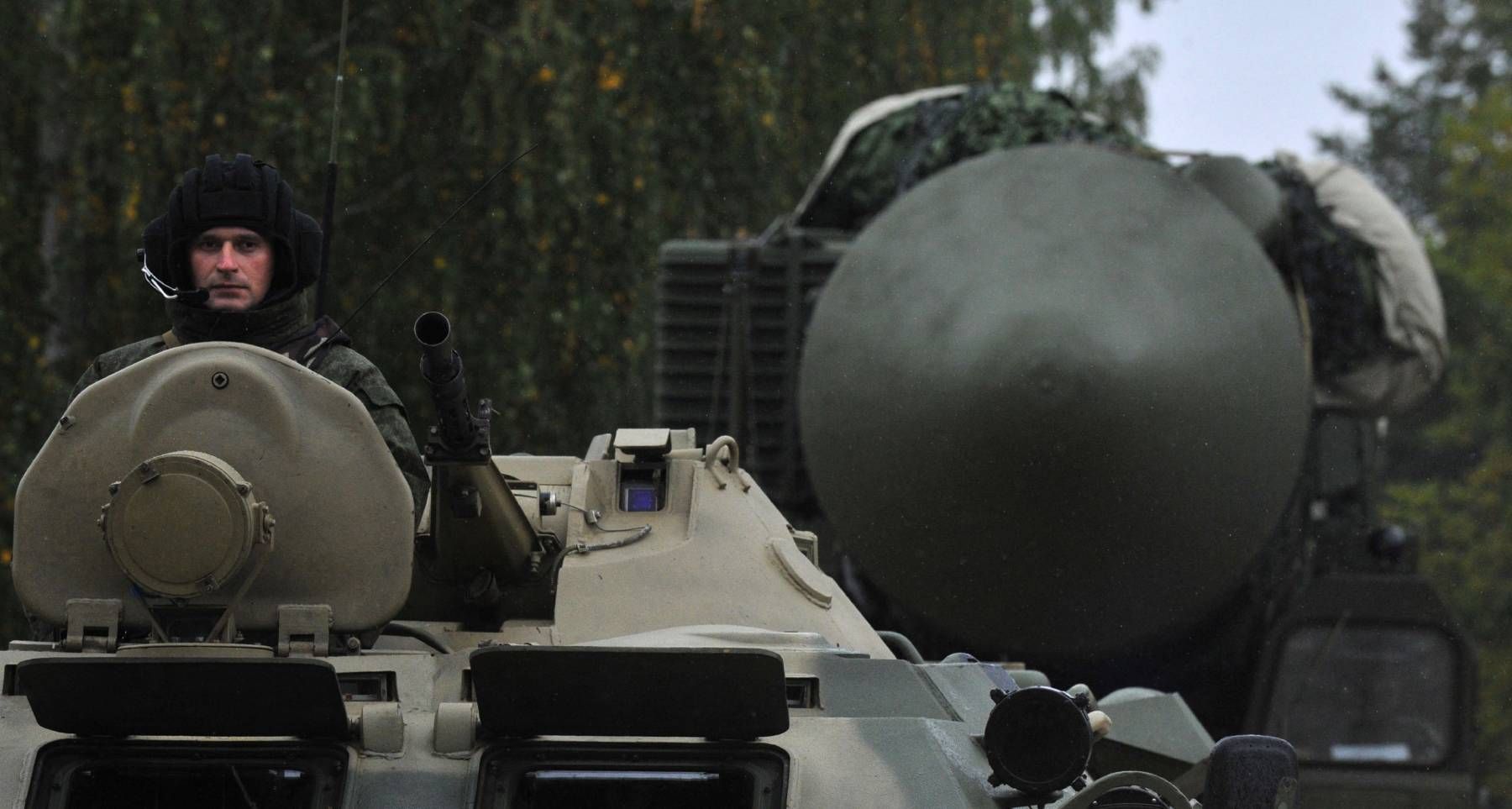
The military value of Russia’s strike on Ukraine using the new Oreshnik missile was limited. The Kremlin’s real intent was to intimidate Europeans.
Russia’s November 21 attack on the Ukrainian city of Dnipro was the first ever use in combat of a ballistic missile with multiple independently guided warheads. While newspaper headlines screamed about the risks of nuclear escalation, there was a debate about the exact nature of the missile. Initial reports suggested it was an RS-26 Rubezh, but President Vladimir Putin announced it was actually a new missile called the Oreshnik. Ukrainian intelligence agencies said it was part of the Russian mobile missile system Kedr.
According to Putin’s spokesman Dmitry Peskov, the “main message” of the Dnipro attack was as an answer to the West’s decision to allow Ukraine to fire long-range conventional missiles into Russia. In other words, it was a logical response to Ukraine’s use of U.S. ATACMS and UK Storm Shadow missiles to hit internationally recognized Russian territory.
Putin himself said that Ukraine’s use of ATACMS and Storm Shadow would not have any impact on the battlefield. In that case, launching the Oreshnik was an answer for answer’s sake, designed to show that Russia had bigger and more powerful missiles. Using such an experimental weapon was not supposed to undermine Ukraine’s military potential per se, but to frighten Europeans into pressuring their governments to cut a deal with the Kremlin. Putin also hinted that other new weapons could be trialled in Ukraine.
In other words, Russian ballistic missiles are apparently now supposed to be a deterrent for the West. However, even Russian commentators who advocate this approach point out that a large stockpile of such missiles is needed for them to actually work that way. As the Oreshnik is currently undergoing testing, Russia cannot have many of them in service.
Cost is also important. The bigger the missile, the more expensive it is, and missiles with hypersonic capabilities are particularly pricey. From an economic point of view, it makes no military sense to attack Dnipro with an Oreshnik—the impact would have been similar using cheaper Iskander missiles.
Nor is trialling weapons in combat the best idea. Testing sites are equipped to collect data as missiles approach their targets, monitoring trajectory, warheads, and onboard systems. Firing a missile at Ukraine means a lot of this sort of data was lost to Russia. Put simply, despite all the threatening talk from Russian officials about “testing in combat,” the attack on Dnipro was more attention-seeking than anything else.
Missiles like the Oreshnik were banned under the Cold War-era Intermediate-Range Nuclear Forces Treaty (INF), which collapsed after the U.S. withdrawal from it in 2019. Since then, Moscow has had the legal right to develop missiles with a range of 500–5,500 kilometers.
Even before 2019, Russia—which has many neighbors with large militaries and advanced missile programs—saw the INF (which only applied to the United States and Russia) as unfair. According to U.S. information, Russia actually spent many years secretly developing land-based intermediate-range missiles. Immediately after the INF was declared defunct in 2019, those projects became official. It was initially expected that the new missiles would be developed by 2020, but nothing was known about their status until the Russian Foreign Ministry stated in 2024 that in response to U.S. actions, Russia was going to begin the production of intermediate-range missiles.
The RS-26 Rubezh was likely developed by Russia in the 2010s as an intermediate-range missile. As the INF was still in force, however, Russia initially referred to it as an intercontinental ballistic missile, testing it at ranges over 5,500 kilometers. Development of the RS-26 Rubezh was apparently discontinued in 2018. But after the strike on Dnipro, the Pentagon said the Oreshnik was actually based on the RS-26 Rubezh.
According to Putin, Russia is currently developing other missile systems similar to the Oreshnik. Given the Russian president’s track record of commenting on this subject, he’s likely referring to the resumption of discontinued missile projects. We might, for example, see work start up again on the development of the Zmeyevik anti-ship ballistic missile.
Moreover, from Putin’s recent statements, it’s clear Moscow has lifted a self-imposed moratorium on the deployment of short-range and intermediate-range missiles. Putin had previously said Russia could deploy those missiles in response to a similar deployment by the United States; now he’s saying it depends on the further actions of the United States.
Russia’s updated nuclear doctrine suggests the Kremlin is no longer particularly interested in observing arms control agreements itself. It does, however, want to make use of the fact that the United States values the remaining arms control system. Even now, Washington continues to test the water for a resumption of negotiations on the New START treaty, whose current extension expires in February 2026. Typically, the Russian response is that the topic of arms control can only be resolved in conjunction with the issues of the conflict in Ukraine and Europe’s security architecture.
The missile attack on Dnipro was a new form of Kremlin blackmail, designed to push the West toward making a deal with Russia. The West is being told that if it wants arms control, then it needs to meet Russia’s demands in Ukraine, otherwise there will be more nuclear missiles in Europe. Moscow still remembers the 1970s, when a Soviet deployment of intermediate-range Pioneer missiles to Belarus helped push European leaders to the negotiating table.
The Kremlin appears convinced that by allowing Ukraine to target Russian territory with long-range missiles, NATO is entering into competition with Moscow. It believes that, like in 1979, it will be able to propose negotiations after engaging in threats and missile escalation.
But ATACMS and Storm Shadow are a long way from the iconic Cold War-era U.S. Pershing II missiles. Pershing II were nuclear capable and could hit targets over 1,800 kilometers away, while ATACMS and Storm Shadow are conventional missiles with a range of up to 300 kilometers. In other words, ATACMS and Storm Shadow are not a critical threat to Russia. NATO is not boosting its nuclear missile capabilities, it’s not taking part in a nuclear arms race, and it’s refusing to play Moscow’s games. Russia’s threats are being left unanswered, meaning the world is still relatively safe from a nuclear apocalypse.

Expert on Russian nuclear policy
Recent Work
Maxim Starchak
Maxim Starchak
Carnegie does not take institutional positions on public policy issues; the views represented herein are those of the author(s) and do not necessarily reflect the views of Carnegie, its staff, or its trustees.

A leak of Russian gas price data helps establish that China is paying Russia far less than Central Asian countries and Gazprom’s former European customers.

Sergey Vakulenko

Japan’s long-term security policy is driven by concerns about China, and there is little appetite for (or interest in) pursuing a confrontation with Moscow.

James D.J. Brown
The truth of the strategic situation is that Europe and Russia are extremely unlikely to be able to “turn the page” on their confrontation within the next two decades.

Arkady Moshes

Russia spent years building a “sovereign internet,” concentrating web infrastructure exclusively within Russian territory. Ukrainian drone attacks have shown how vulnerable that approach has left the Russian internet.

Maria Kolomychenko

Putin’s conservative staffing policies and search for ever greater control have cemented parliament’s transformation into a bureaucratic appendage of the executive branch.

Andrey Pertsev