

Commentary
Konstantin Skorkin
{
  "authors": [
    "Konstantin Skorkin"
  ],
  "type": "commentary",
  "blog": "Carnegie Politika",
  "centerAffiliationAll": "",
  "centers": [
    "Carnegie Endowment for International Peace",
    "Carnegie Russia Eurasia Center"
  ],
  "englishNewsletterAll": "",
  "nonEnglishNewsletterAll": "",
  "primaryCenter": "Carnegie Russia Eurasia Center",
  "programAffiliation": "",
  "programs": [],
  "projects": [],
  "regions": [
    "Ukraine",
    "Russia"
  ],
  "topics": [
    "Domestic Politics",
    "Political Reform",
    "Security",
    "Global Governance"
  ]
}
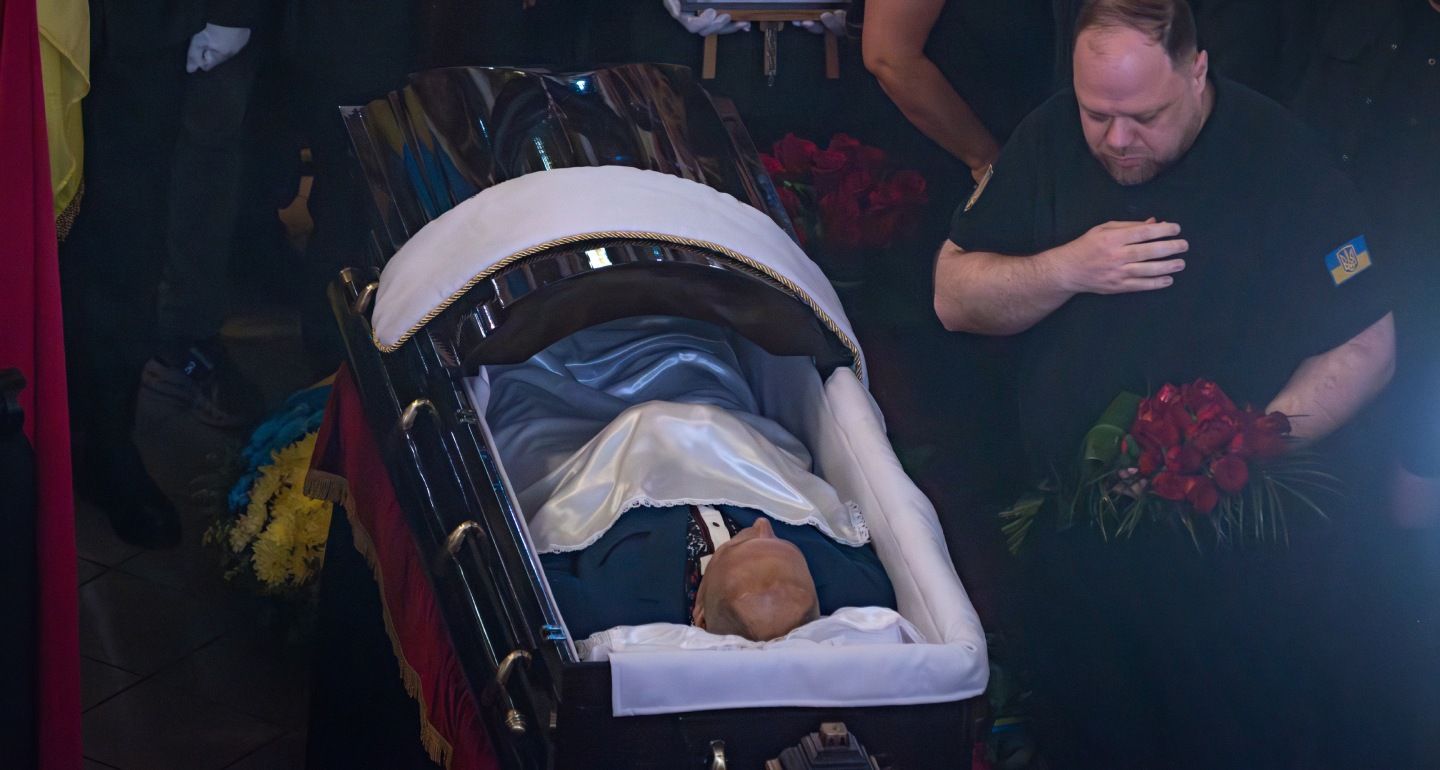
Source: Getty
The Kremlin never stopped believing Parubiy was the enemy and is still locked in a polemic with the leaders of Ukraine’s Euromaidan. That could have made Parubiy a target for “retribution.”
The murder of Ukrainian lawmaker Andriy Parubiy, one of the leaders of the 2014 Euromaidan revolution, in broad daylight in the city of Lviv on August 30 did not cause the widespread outrage in Ukrainian society that it would have done if it had occurred a decade earlier. To many, it just looked like the settling of scores with the political has-been.
In Moscow, however, Parubiy was still seen as an important figure. The nationalist politician’s right-wing past made him a poster boy for the Kremlin’s fantasies about Nazis having seized power in Kyiv. This makes the fatal shooting look as a part of Russia’s continuing obsession with replaying the battles of 2014—the moment when it conclusively lost control of Ukraine.
Parubiy first entered politics at the end of the 1980s as part of a group of nationalists from western Ukraine aligned with the ideology of the inter-war Organization of Ukrainian Nationalists (OUN). Initially, Parubiy was involved in the maintenance of OUN graves, and working with surviving OUN veterans. He was briefly jailed for taking part in one of Ukraine’s first anti-Communist rallies in 1989.
In the early 1990s, he helped to found the far-right Social-National Party of Ukraine, which later became the more respectable nationalist party Svoboda. But Parubiy’s career took a more mainstream turn in 2005 when he joined Our Ukraine: the democratic party of Ukraine’s then president Viktor Yushchenko.
At the same time, he retained the street savvy he had learned during his time as a far-right nationalist. He oversaw tented encampments in central Kyiv during Ukraine’s two revolutions (in 2004 and 2014), and in 2014 he also led the Euromaidan self-defense forces. As a member of the Ukrainian parliament, he got into fights with pro-Russian deputies, and once set off a smoke grenade in the chamber.
The success of the 2014 revolution catapulted Parubiy into the upper echelons of Ukrainian politics. For several months, he was secretary of the influential National Security and Defense Council of Ukraine, where he was responsible for coordinating the country’s response to an armed uprising by Russia-sponsored separatists.
Elected to parliament later in 2014 as part of the People’s Front party, which included most of the Euromaidan leaders, Parubiy ended up becoming speaker: Ukraine’s third most important office of state after president and prime minister.
However, the election of Volodymyr Zelensky as president in 2019 brought an abrupt end to Parubiy’s political influence. Parliament was dissolved, and the People’s Front fell apart. Parubiy got re-elected with ex-president Petro Poroshenko’s European Solidarity party, but he no longer played a significant political role. He became a political pensioner, albeit one with an aura of revolutionary glory.
Parubiy’s political arc was, in many ways, typical for those who emerged from the Euromaidan revolution: almost all have now left frontline politics. The only figure from that era still in a position of power is Vitali Klitschko, who has been mayor of Kyiv since 2014.
Former prime minister Arseniy Yatsenyuk disappeared from politics; the former leader of Svoboda, Oleh Tyahnybok, resigned shortly before his party was crushed in the 2019 election; and former acting president Oleksandr Turchynov is a deputy for European Solidarity (like Parubiy was), but wields little influence. Former Interior Minister Arsen Avakov lasted longer than most, but he was dismissed in 2021 and has now retired from public life to grow nuts in the Carpathian Mountains.
Parubiy’s low profile prompted a number of outlandish theories for his murder. Some of his colleagues said that as a former speaker, he had requested a security detail earlier this year—but was turned down. And rumors about motivations include that Parubiy had links to the criminal underworld; that his killing was part of a conflict within Ukraine’s far right; or that Zelensky’s team was afraid of such an experienced protest organizer.
The most likely explanation, however, is that it was a hit ordered from Moscow. The Ukrainian security services have already arrested a man they believe was recruited by Russia’s Federal Security Service (FSB) to kill Parubiy. Bizarrely, the suspect himself told journalists he targeted Parubiy to get revenge on the Ukrainian authorities (even though Parubiy had been in opposition for years). The suspect’s son was apparently killed in the ongoing war with Russia, and one motive that has been put forward is that the FSB promised to help return his son’s body to Russia.
The Kremlin never stopped believing Parubiy was the enemy—the same attitude it has toward other leaders of Euromaidan. Even if the reality is that there has been a generational shift in Ukrainian politics, the Kremlin remains stuck in the past. For Russian President Vladimir Putin, Euromaidan has not been consigned to the history books, and he regularly references the events of 2014, citing them as justification for today’s military campaign. In other words, he is still locked in a polemic with Ukraine’s former leaders. And that could have made Parubiy a target for “retribution.”
The capability of Russia’s intelligence agencies is also an important factor. It is far easier for them to kill an unprotected deputy like Parubiy than a Ukrainian official with real power. Likely, the FSB is also keen to be seen to be taking revenge for the series of successful assassinations that Ukraine has carried out inside Russia since the full-scale invasion in 2022.
The Kremlin’s obsession with the standard bearers of Euromaidan risks having a boomerang effect by encouraging Ukrainians to elevate the events of 2013–2014 to the status of national myth. Following the killing of Parubiy, Ukrainian social media and media outlets were inevitably full of warm words about the dead man—and those eulogies were not just written by former colleagues, but also by activists of a more liberal persuasion. They were united by the feeling that, since the Kremlin hadn’t forgotten Euromaidan’s heroes, Ukraine should remember them too.
This is similar to how the spurious historical parallels drawn incessantly by Russian propaganda only serve to strengthen Ukraine’s nationalist discourse. For example, the praise heaped by Kremlin-sponsored propaganda on Soviet agent Bohdan Stashynsky, who assassinated the Ukrainian ultra-nationalist Stepan Bandera in 1959, helps give figures who resisted Russia—like Bandera—a second life.
Even Zelensky gets a political boost from Russia’s obsession with the past. The Ukrainian president and Parubiy may have been political opponents, but the assassination has only succeeded in casting Zelensky even more starkly as a leader carrying the torch for national liberation.

An independent journalist.
Recent Work
Konstantin Skorkin
Konstantin Skorkin
Carnegie does not take institutional positions on public policy issues; the views represented herein are those of the author(s) and do not necessarily reflect the views of Carnegie, its staff, or its trustees.
A leak of Russian gas price data helps establish that China is paying Russia far less than Central Asian countries and Gazprom’s former European customers.

Sergey Vakulenko

Japan’s long-term security policy is driven by concerns about China, and there is little appetite for (or interest in) pursuing a confrontation with Moscow.

James D.J. Brown
The truth of the strategic situation is that Europe and Russia are extremely unlikely to be able to “turn the page” on their confrontation within the next two decades.
Arkady Moshes
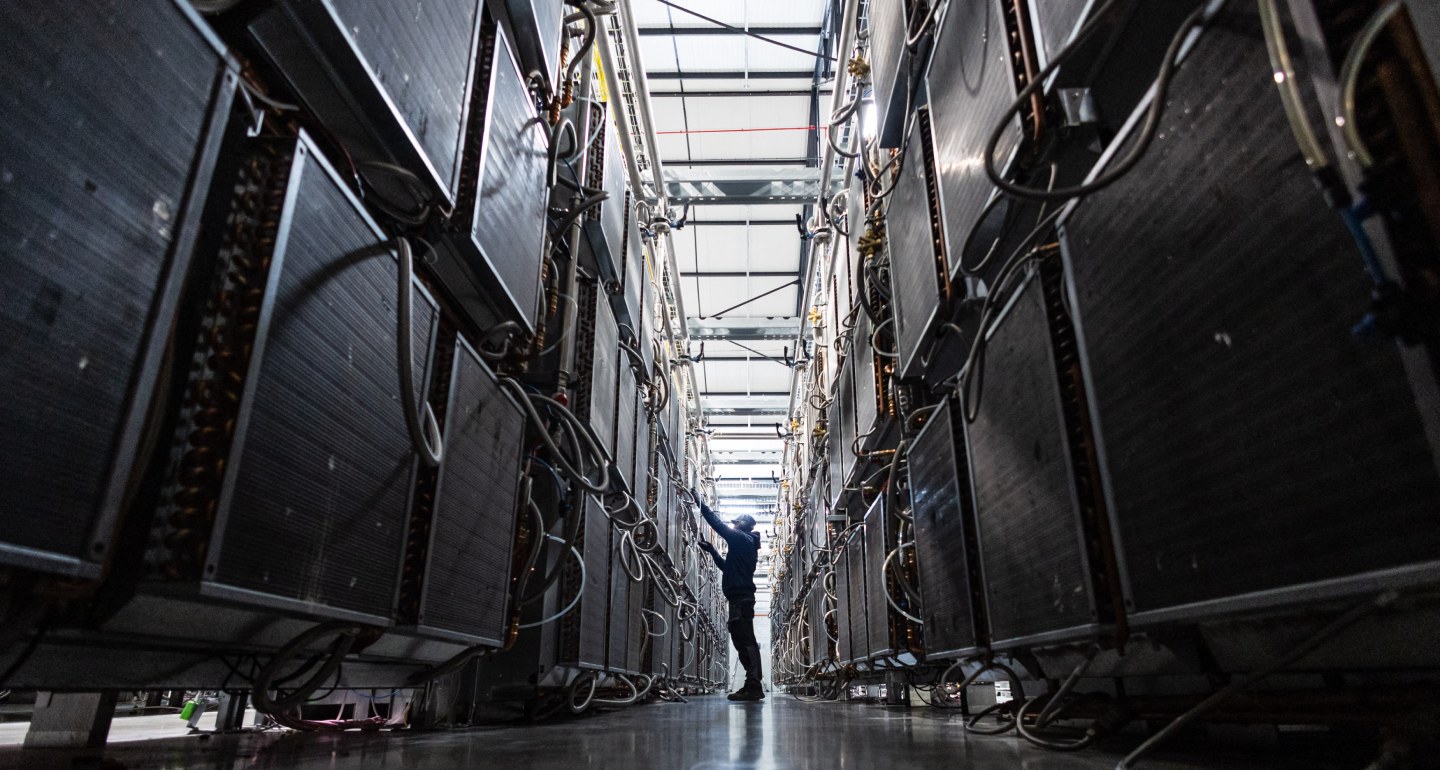
Russia spent years building a “sovereign internet,” concentrating web infrastructure exclusively within Russian territory. Ukrainian drone attacks have shown how vulnerable that approach has left the Russian internet.

Maria Kolomychenko

Putin’s conservative staffing policies and search for ever greater control have cemented parliament’s transformation into a bureaucratic appendage of the executive branch.

Andrey Pertsev