

Commentary
Vladislav Gorin
{
  "authors": [
    "Vladislav Gorin"
  ],
  "type": "commentary",
  "blog": "Carnegie Politika",
  "centerAffiliationAll": "",
  "centers": [
    "Carnegie Endowment for International Peace",
    "Carnegie Russia Eurasia Center"
  ],
  "englishNewsletterAll": "",
  "nonEnglishNewsletterAll": "",
  "primaryCenter": "Carnegie Russia Eurasia Center",
  "programAffiliation": "",
  "programs": [],
  "projects": [],
  "regions": [
    "Russia"
  ],
  "topics": [
    "Domestic Politics",
    "Political Reform",
    "Civil Society"
  ]
}
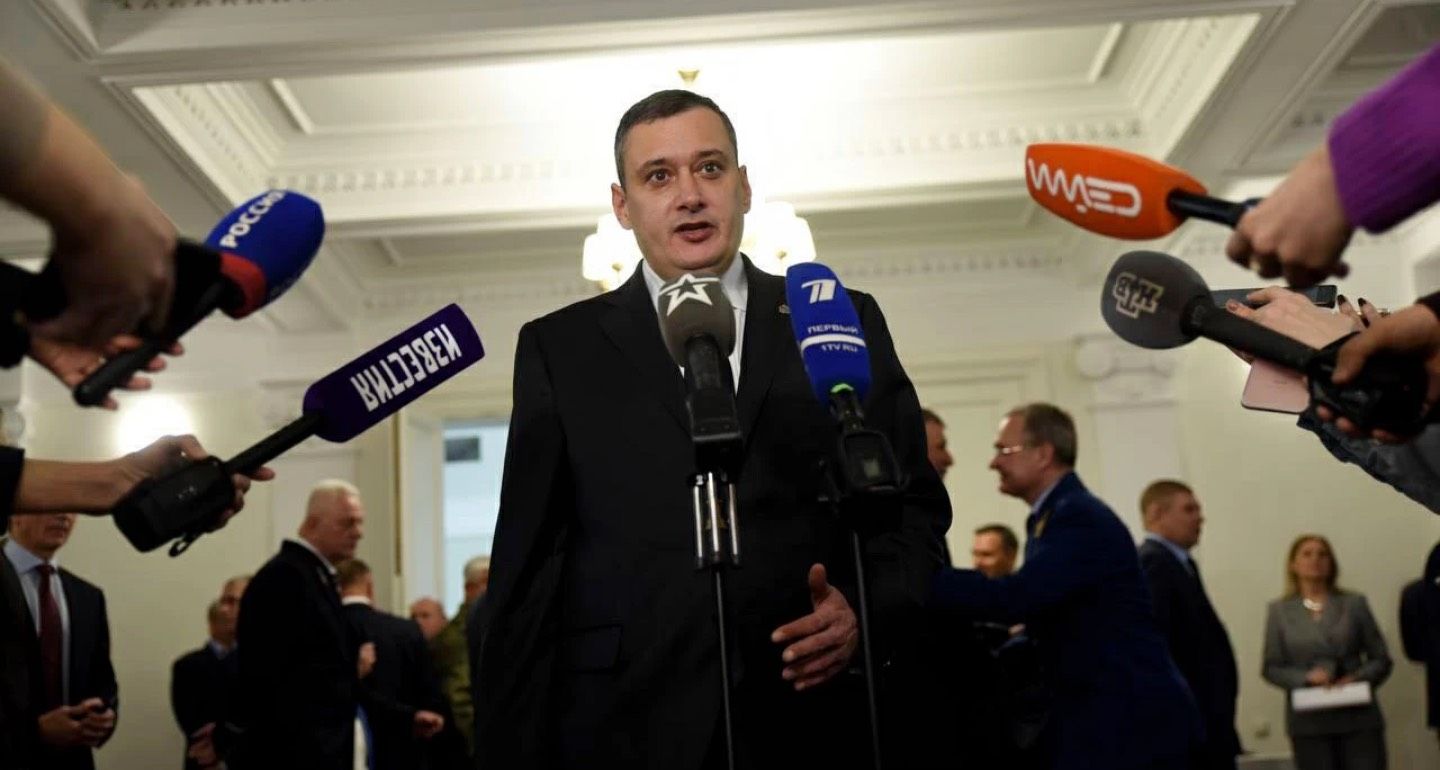
Фото: t.me/Hinshtein
The heads of the Vologda, Samara, and Kursk regions have attracted attention for their eccentric policies, oddball behavior, and media-savvy predilection for picking fights.
After spending years trying to depoliticize the role of Russia’s regional governors, the Kremlin has unexpectedly allowed several charismatic figures to emerge from their ranks. Three in particular stand out from the typical Putin-era governor: Georgy Filimonov, head of the Vologda region since 2023; Vyacheslav Fedorishchev, head of the Samara region since 2024; and Alexander Khinshtein, head of the Kursk region since 2024.
While Filimonov, Fedorishchev, and Khinshtein have all built careers in Russia’s political system, they are decidedly unusual. They enjoy far more media visibility than other regional leaders, and their behavior is flamboyant (at least in comparison to other Putin-era bureaucrats). They have been described as “representatives of a new populist cohort among regional heads,” and an example of “populism from above.”
Perhaps the most colorful of the three, Filimonov has made public appearances in a traditional Russian peasant shirt, as well as a type of tunic favored by Stalin. His office is filled with icons, and next to an image of Putin on the wall are portraits of Stalin and Soviet secret police chiefs Felix Dzerzhinsky and Lavrentiy Beria. In fact, he has three pictures of Stalin: one showing the Soviet leader with Lenin, one in the style of Andy Warhol’s Marilyn Monroe print, and one depicting Stalin shaking hands with Filimonov himself.
Filimonov’s most controversial policies for the region include restricting the sale of alcohol to weekdays between noon and 2 p.m., and limiting access to abortion. While the restriction on the sale of alcohol means more a growing black market, the pro-life policies have resulted in fewer terminations in the region (at least according to Filimonov), forcing women to travel to neighboring regions for abortions.
In the Samara region, Fedorishchev initially attracted attention for his outspoken attacks on corruption in Russian soccer. Later, he gained the spotlight by becoming embroiled in a spat between the pop star Egor Kreed and Russia’s self-appointed censor in chief, Yekaterina Mizulina. After a performance by Kreed in Moscow on August 30, which was condemned by Mizulina as “lewd,” Fedorishchev backed Mizulina, describing the concert as “pornographic in spirit,” and inviting Kreed to come to Samara “for a talk.”
Finally, in the Kursk region, Khinshtein has focused on talking about corruption and the war in Ukraine (the Kursk region borders Ukraine and was partially occupied by Kyiv’s forces between August 2024 and March 2025). Khinshtein has not been shy about arguing with people affected by the fighting, contending they should not be relying on the state for handouts or for help rebuilding. According to Khinshtein, those in the Kursk region’s badly damaged border areas shouldn’t expect the state to “assume all financial expenditure.”
All three governors are clearly conflict-prone and enjoy picking fights—whether with ordinary people, officials, or business. One high-profile example of the latter was the tussle between Filimonov and one of Russia’s top steelmakers, Severstal, the region’s biggest taxpayer, employer, and investor, owned by billionaire Aleksei Mordashov.
Filimonov has challenged Mordashov to a physical fight with the claim that the tycoon “does not have the intellectual capacity for an open and honest dialogue,” accused Severstal’s management of having a “quasi-liberal orientation toward Western beneficiaries,” and said the company’s representatives were not interested in improving air quality.
In February 2025, Filimonov threatened to derail a major Severstal investment worth 120 billion rubles ($1.48 billion). Citing concerned locals (as well as objections from a rapper and two extremist nationalist groups), Filimonov claimed Severstal was organizing the “mass importation of 6,000 immigrants.” As a result, Filimonov announced he was imposing a ban on employing foreigners on construction projects. Severstal rejected the governor’s accusations (and Filimonov quickly reversed his ban).
Looking beyond the rhetoric and threats to what Filimonov was trying to achieve, he has admittedly enjoyed a degree of success. For many years, Severstal, the most powerful entity in the Vologda region, not only influenced local decisionmaking but essentially dictated it by filling the regional government with its own appointees.
Now, however, Severstal has been forced to take notice of Filimonov, who has made a point of removing many officials with ties to the steelmaker, such as Vadim Germanov, the mayor of Cherepovets (the biggest city in the Vologda region and home to the Severstal steel works and headquarters), and Oleg Kuvshinnikov, a former governor and the region’s representative in Russia’s upper house of parliament (both men were former employees of Severstal).
But why has the Kremlin appointed such governors, and why does it allow them to behave in this way? In some respects, such behavior is simply an idiosyncratic way of trying to be noticed by President Vladimir Putin. In others, Filimonov, Fedorishchev, and Khinshtein are a kind of political experiment.
This experiment has two goals. The first is to introduce a new form of political communication into Russia’s regions: one that is more in line with contemporary habits of media consumption, and which offers more “clickbait” than the traditional gray suits of regional officials. Of course, this is a purely cosmetic change: in the new model, just as in the old model, there is no genuine dialogue with society—only political domination. Indeed, it’s quite similar to the sort of work done by Russian propagandists (a group to which Khinshtein and Filimonov both belong).
Secondly, the Kremlin’s demagogue governors help discredit local government more generally. Moscow is only too aware that governorships are the only political positions in Russia comparable to the presidency (although, of course, they are on a different scale). And that means it’s a good idea to limit the amount of respect felt by ordinary Russians for regional leaders.
The Kremlin has absolutely no need for legitimate, popular governors who could end up diluting Moscow’s monopoly on power. But it can get behind oddball governors. Of course, this is just a new variation on the Russian tradition of the “good czar, bad boyars” formula that Putin has leveraged throughout his time in power. After all, a governor who only wants to talk about Stalin and ignores everything else is far preferable to one who can build a strong connection with his fellow citizens.
Journalist, host of "What Happened?" podcast from Russian independent media Meduza
Recent Work
Vladislav Gorin
Vladislav Gorin
Carnegie does not take institutional positions on public policy issues; the views represented herein are those of the author(s) and do not necessarily reflect the views of Carnegie, its staff, or its trustees.

Japan’s long-term security policy is driven by concerns about China, and there is little appetite for (or interest in) pursuing a confrontation with Moscow.

James D.J. Brown
The truth of the strategic situation is that Europe and Russia are extremely unlikely to be able to “turn the page” on their confrontation within the next two decades.
Arkady Moshes

Russia spent years building a “sovereign internet,” concentrating web infrastructure exclusively within Russian territory. Ukrainian drone attacks have shown how vulnerable that approach has left the Russian internet.

Maria Kolomychenko

Putin’s conservative staffing policies and search for ever greater control have cemented parliament’s transformation into a bureaucratic appendage of the executive branch.

Andrey Pertsev

Russia’s AI-driven propaganda campaigns operate in a fragmented, chaotic, and often illogical manner. That’s not necessarily a problem for the Kremlin, though: It’s much easier to mimic genuine public debate that way.

Ilya Klishin