

Article
Marina Ottaway, Omar Hossino
{
  "authors": [
    "Marina Ottaway"
  ],
  "type": "legacyinthemedia",
  "centerAffiliationAll": "dc",
  "centers": [
    "Carnegie Endowment for International Peace"
  ],
  "collections": [],
  "englishNewsletterAll": "democracy",
  "nonEnglishNewsletterAll": "",
  "primaryCenter": "Carnegie Endowment for International Peace",
  "programAffiliation": "DCG",
  "programs": [
    "Democracy, Conflict, and Governance",
    "Middle East"
  ],
  "projects": [],
  "regions": [
    "United States",
    "Middle East",
    "North Africa",
    "Egypt",
    "Iraq",
    "Saudi Arabia"
  ],
  "topics": [
    "Political Reform",
    "Democracy"
  ]
}
REQUIRED IMAGE
The adoption of the Broader Middle East and North Africa Initiative by the Group of Eight Industrialized Nations (G-8) at their June 8-10 summit in Sea Island, Georgia represents a diplomatic victory for the United States. The initiative, however, is extremely unlikely to have a noticeable impact on political reform in the Middle East.
Source: Arab Reform Bulletin
Originally published in the June 2004 edition of the Arab Reform Bulletin.
The adoption of the Broader Middle East and North Africa Initiative by the Group of Eight Industrialized Nations (G-8) at their June 8-10 summit in Sea Island, Georgia represents a diplomatic victory for the United States. The initiative, however, is extremely unlikely to have a noticeable impact on political reform in the Middle East. It is even less likely to curb the anti-Americanism that is now rampant in the Middle East or to smooth relations between the United States and major Arab countries.
The initiative adopted at Sea Island is a scaled-down version of the original American proposal for a Greater Middle East Initiative. The United States abandoned the initial plan when the leak of a working paper to the pan-Arab newspaper Al Hayat in February was met with rejection and even scorn by Arab governments, which saw the initiative as an unacceptable intrusion in their internal affairs, and with skepticism by European countries, which believed that the charged political mood in the Middle East made the launching of a high profile initiative unadvisable. European countries also pointed out that the new initiative duplicated their long-standing efforts to engage with Arab countries around the rim of the Mediterranean on issues of economic and political reform through the Euro-Mediterranean Partnership (or Barcelona process).
The resolution adopted at Sea Island has two parts. The first is the launching of a "Partnership for Progress and a Common Future with the Region of the Broader Middle East and North Africa." (Some countries had objected to the use of "greater" on the grounds that the term had negative political connotations). The second is a plan for the G-8 to support reform in Arab countries. As adopted, the Partnership consists of a statement of principles about "human dignity, freedom, democracy, rule of law, economic opportunity, and social justice" and of the establishment of a Forum for the Future, a framework for regular ministerial level meetings on political and economic reform in the Broader Middle East and for parallel meetings of civil society and business leaders. Noteworthy in the statement is a call for continuing efforts to settle the Israeli-Palestinian conflict, an idea conspicuously absent from the original American proposal and inserted at the insistence of European and Arab countries.
The plan to support reform consists of a set of generic statements about the need to deepen democracy and broaden public participation, build a knowledge society, and promote economic development, and of a call for some concrete but discrete initiatives. These include a microfinance initiative to help small entrepreneurs; a project to enhance literacy; and support for training programs for business and entrepreneurship. It is unclear how these activities will be financed. The United States has not announced any new funding and projects will have to draw on the budget of the Middle East Partnership Initiative (MEPI) and other existing aid projects. European countries are unlikely to shift money from ongoing programs to an initiative for which they have shown little enthusiasm—French President Jacques Chirac even warned on June 9 that "provoking" change would "risk feeding extremism and falling into the fatal trap of the clash of civilizations."
Despite the watering down of the initial proposal, the Broader Middle East Initiative continues to receive a cold reception in the Arab world. Only five Arab countries (Bahrain, Iraq, Jordan, Tunisia, and Yemen) accepted the invitation to participate in a summit luncheon; Afghanistan and Turkey attended from the broader region. The most important Arab countries, Egypt and Saudi Arabia, had already made abundantly clear that they wanted nothing to do with the plan. Egyptian President Hosni Mubarak declared that external attempts to impose reform were "delusional" and would lead to anarchy. The Saudi crown prince refused to attend the Tunis summit that discussed an Arab response to the proposal.
The vagueness of the statements adopted, the absence of financial support, the Europeans' lack of enthusiasm, and the cold reception of the initiative in Arab countries suggest that the launch of the Broader Middle East Initiative is a rather hollow victory for the United States. The Bush administration narrowly avoided a diplomatic disaster by scaling down its proposal to the point where, in the words of an observer, there was nothing left to which anybody could object. It is unlikely, however, that the initiative will prove to be the catalyst for reform envisaged by the United States.

Former Senior Associate, Middle East Program
Before joining the Endowment, Ottaway carried out research in Africa and in the Middle East for many years and taught at the University of Addis Ababa, the University of Zambia, the American University in Cairo, and the University of the Witwatersrand in South Africa.
Recent Work
Marina Ottaway, Omar Hossino
Marina Ottaway
Carnegie does not take institutional positions on public policy issues; the views represented herein are those of the author(s) and do not necessarily reflect the views of Carnegie, its staff, or its trustees.

The greater threat to Zelensky comes not from Fedorov alone, but from the convergence between the former defense minister’s political campaign and the anti-corruption investigations moving ever closer to the presidential administration.

Balázs Jarábik
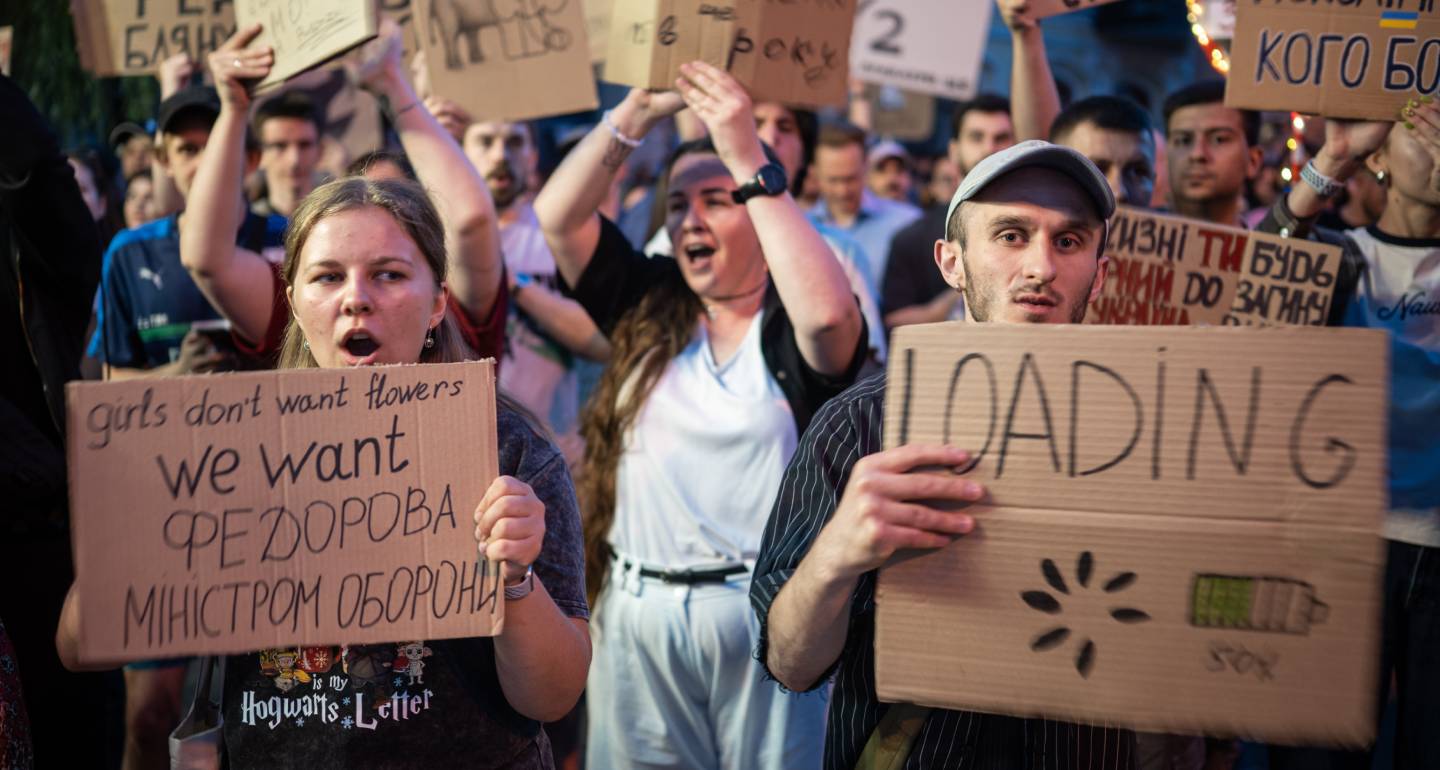
With his public call for new elections in Ukraine, ex-defense minister Mykhailo Fedorov has opened Pandora’s box.

Konstantin Skorkin

In the discussions made possible by the State Duma election campaign, one question is being asked more and more loudly. “What next?”

Andrey Pertsev

Two divergent trends—Putin’s hardline vision of how to prosecute the war in Ukraine, and a growing desire for change in Russia—could tear the regime apart.

Tatiana Stanovaya
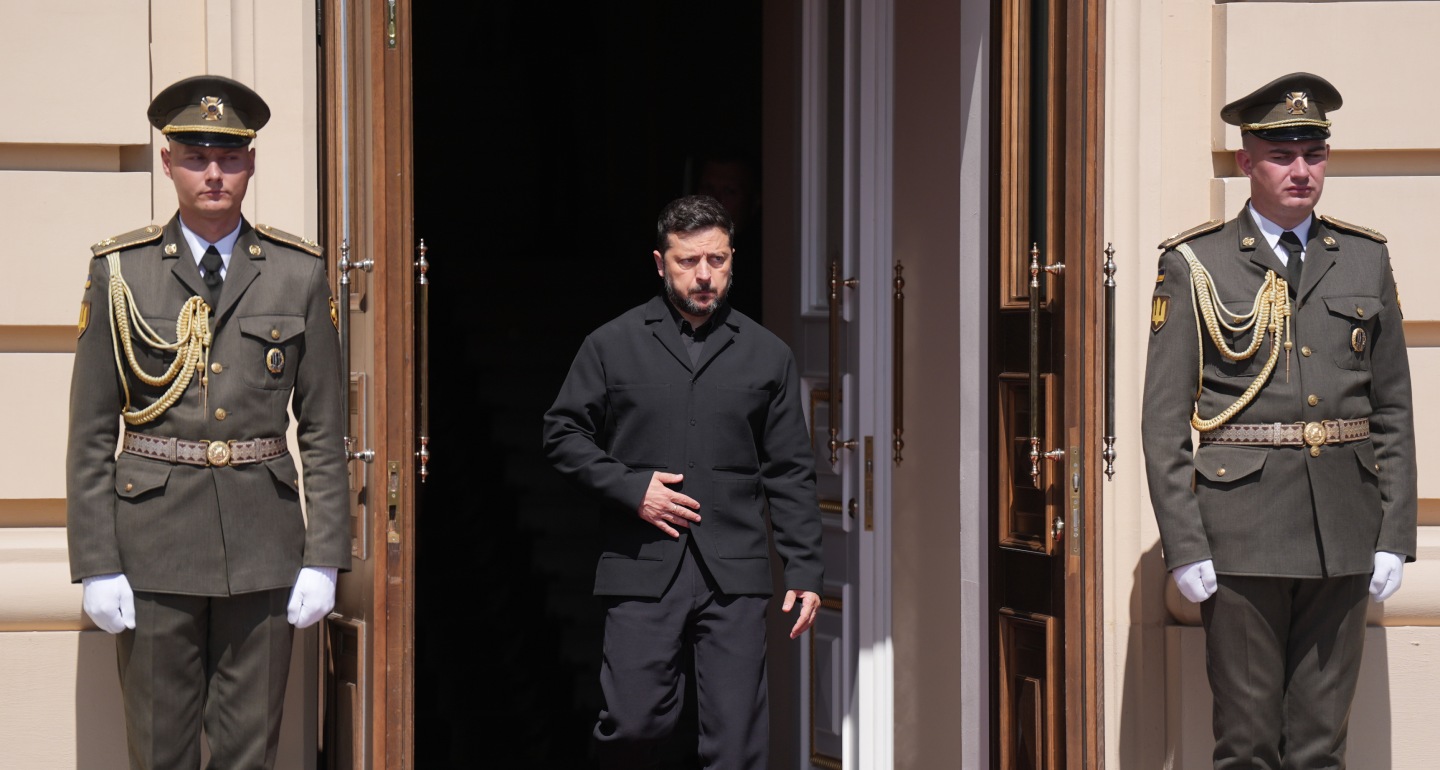
Ultimately, Zelensky sided neither with the reform camp nor with the military establishment as such, but with political control.
Balázs Jarábik