

Paper
Douglas H. Paal
{
  "authors": [
    "Douglas H. Paal"
  ],
  "type": "legacyinthemedia",
  "centerAffiliationAll": "dc",
  "centers": [
    "Carnegie Endowment for International Peace"
  ],
  "collections": [],
  "englishNewsletterAll": "asia",
  "nonEnglishNewsletterAll": "",
  "primaryCenter": "Carnegie Endowment for International Peace",
  "programAffiliation": "AP",
  "programs": [
    "Asia"
  ],
  "projects": [],
  "regions": [
    "East Asia",
    "China"
  ],
  "topics": [
    "Political Reform",
    "Foreign Policy",
    "Domestic Politics"
  ]
}
Source: Getty
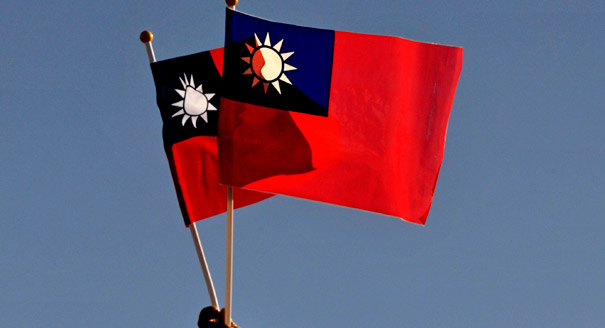
While China has responded to U.S. arms sales to Taiwan with strong rhetoric, its actions are still well within regular channels of protest and should not be over-interpreted by U.S. observers.
Source: Web Commentary

This episode is a bit more interesting than previous ones because it has been gestating in public debate for so long. Outsiders have been pressing the Obama administration to make this sale for more than six months, and Chinese officials and commentators have responded with their own warnings not to do so. In the process, many views have been aired in China about how Beijing should best respond once the sales were announced.
Commentaries in China’s hardliner publications and “netizens” on the internet have been pushing the Chinese authorities to react more harshly than in the past. They cited China’s growing wealth, power, and relevance to a host of international issues. They argue China should “stand up” to American pressure and respond “tit for tat.”
Conversely, they argue that the U.S. is tied down in the “1,2,2” crises and is easier to push around. The financial crisis is the “1,” the wars in Afghanistan and Iraq are the first “2,” and the nuclear programs of North Korea and Iran are the second “2.”
As the decision approached last week, Chinese diplomats appeared caught between how to react appropriately to what their government considers “interference in its internal affairs” by the U.S., how to deal with rising public pressure, and yet how to move forward on a broad agenda of issues with Washington where Beijing has an important stake.
In the end, the Chinese Ministry of Foreign Affairs repeated essentially the same verbal protest that it did in October 2008, when President George W. Bush approved a slightly larger package of arms sales. The new statement added the word “seriously” to “threatens China’s national security.” And it vented in somewhat more emotional language about challenging China’s national interests.
In terms of concrete reactions, this time the Chinese Defense and Foreign Affairs Ministries cancelled “all scheduled” military exchanges, but not all military exchanges, referring in separate commentary to canceling “a portion” of U.S.-China military exchanges. This is less comprehensive than the 2008 suspension of all military exchanges.
The reasoning behind this qualification is not yet completely clear. But it seems that calls by a senior general to “settle accounts” – a strong phrase seldom used since the extreme activities of the Cultural Revolution – may have had an influence. The same call said China should retain the exchanges it values and cancel the one the U.S. values.
Another factor in Beijing’s cautious response may have been that the experience of canceling all exchanges taught the Chinese that they lost control over the exchanges by doing so. It was costlier to restart the talks than they preferred. Now, they have a basis to start the exchanges or not, depending on circumstances.
The second threatened concrete reaction is to punish American firms involved in the Taiwan transactions. Saying this officially is new, but the reality is not. Boeing, which is selling a mere twelve Standard missiles, has been made to sit in the penalty box previously for arms sales, as the Chinese refused to believe Boeing’s argument that it is only selling arms to the Defense Department, which resells them to Taiwan. United Technologies, which will build 60 Blackhawk helicopters for Taiwan, with its Otis elevator and other divisions active in China, may undergo similar treatment.
The other firms involved in the current sale have done business in China in the past, mostly in the area of air traffic control and radars. All had dim prospects for new sales before the Friday announcement. Nonetheless, it should be noted that when any U.S. firm, involved in the Taiwan sale or not, comes up for consideration for contracts in China in an atmosphere such as today’s, its chances are damaged.
Beijing also announced cancellation of upcoming meetings at the Vice Foreign Minister level on strategic security, arms control, and non-proliferation. These were expected. But an early test of Beijing’s overall stance will come fairly soon as U.S. and U.N. officials press China to call an early meeting of the Six Party Talks. China had asked the U.S. to hold bilateral talks as a pre-cursor, and those took place in December.
Beijing’s attitude toward Iran is a bigger issue. No administration official will admit it, but it seems clear that the Taiwan arms sales package had been help up internally by the Obama administration in the hope that delay would allow Beijing to support stronger sanctions on Tehran during the February UN Security Council chairmanship by France. But it became clear at the January 17 New York meeting of the Permanent-5 plus One foreign ministers on Iran that China would not cooperate. An officer of the Chinese UN mission was sent to the meeting instead of the foreign minister.
At that point, it became obvious that saving the Taiwan arms sale announcement for after the UN Security Council vote would not help, and that announcing new sales afterward would establish an unhelpful linkage between Iran and Taiwan, which Washington prefers to handle on their own merits. So the announcement occurred Friday, January 29.
Confusingly, the Taiwan arms announcement has produced facile American media accounts that mirror the equally misleading stories that accompanied Obama’s trip to China last November. This time the Washington Post discovered China’s new “triumphalist attitude” in dealing with a weakened United States. The New York Times characterized Obama as trying to press on the Chinese that he is not as weak as he seems to them.
While both stories reflect the rhetorical heat that has emerged in informal circles in China and affected official rhetoric, they have over interpreted the practical consequences. So far, Beijing’s official response appears to be well within the channels within which arms sales to Taiwan have been dealt in the past. The rhetoric has been dialed up a degree, and there will be more, as Obama meets with the Dalai Lama. But policy still appears to be in cool and rational hands in China.
Distinguished Fellow, Asia Program
Paal previously served as vice chairman of JPMorgan Chase International and as unofficial U.S. representative to Taiwan as director of the American Institute in Taiwan.
Recent Work
Douglas H. Paal

Douglas H. Paal, Tong Zhao, Chen Qi, …
Carnegie does not take institutional positions on public policy issues; the views represented herein are those of the author(s) and do not necessarily reflect the views of Carnegie, its staff, or its trustees.

For every ruble allocated to social policy, health, and education in 2027, double that amount is earmarked for the army, the police, and the security services.

Alexandra Prokopenko

Cargo traffic through Russia’s Northern Sea Route has increased because of the disruption caused by the conflict in the Middle East, the Ukraine war, and U.S.-China tensions.

Mikhail Korostikov
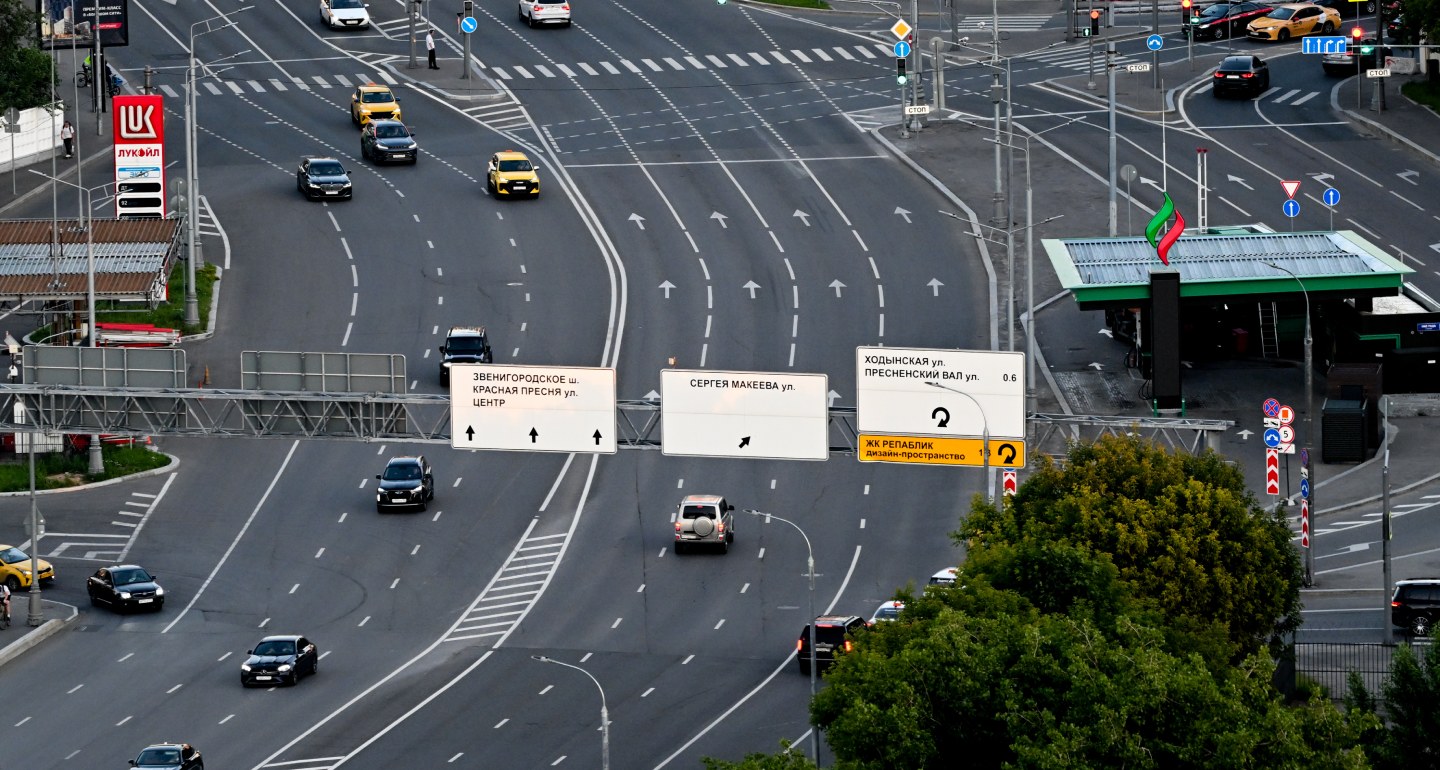
An analysis of traffic accident data suggests that Ukrainian drone attacks caused a material but not disastrous fall in Russian gasoline consumption over the summer.

Sergey Vakulenko

Sergei Kiriyenko used Russia’s parliamentary vote to further hone his strategy of corporate mobilization that is designed to maximize votes for United Russia.

Andrey Pertsev

The European far right might fail to steer EU policy in the direction Russia wants, but they will create enough chaos inside Europe to benefit the Kremlin.

Dimitar Bechev