

Commentary
Sergei Kiriyenko used Russia’s parliamentary vote to further hone his strategy of corporate mobilization that is designed to maximize votes for United Russia.
Andrey Pertsev
{
  "authors": [],
  "type": "other",
  "centerAffiliationAll": "dc",
  "centers": [
    "Carnegie Endowment for International Peace"
  ],
  "collections": [
    "Arab Awakening"
  ],
  "englishNewsletterAll": "menaTransitions",
  "nonEnglishNewsletterAll": "",
  "primaryCenter": "Carnegie Endowment for International Peace",
  "programAffiliation": "MEP",
  "programs": [
    "Middle East"
  ],
  "projects": [],
  "regions": [
    "Middle East",
    "North Africa",
    "Egypt"
  ],
  "topics": [
    "Political Reform",
    "Democracy",
    "Civil Society",
    "Religion"
  ]
}
Source: Getty
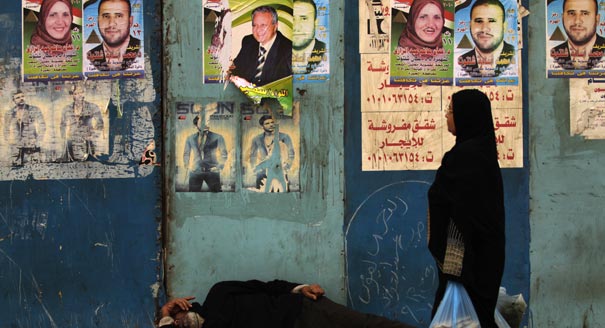
This page offers a selection of the major political parties and movements during the 2010 Egyptian parliamentary elections.
Egypt’s recent parliamentary elections created a host of problems for the ruling party, not the least of which is that they drained nearly all remaining credibility from the country's electoral system.
The lack of transparency and the presence of widespread irregularities in the voting and counting process have given Egypt’s parliamentary elections little credibility among both international and domestic observers.
Even though the Obama administration was unable to persuade President Mubarak to accept international election monitors, it is important to continue showing U.S. support for political reform and human rights in Egypt.
Given the overall political climate in Egypt and divisions within the Muslim Brotherhood, it seems likely that the Brotherhood will have a weaker showing in the upcoming elections than it did in 2005.
The project of transforming Egypt's ruling National Democratic Party from a large and diverse group of people seeking power through a connection to the presidency into a true political party is still a work in progress.
Recent changes in Egyptian media regulations and increased government intimidation of prominent independent journalists have prompted speculationthat the government is cracking down on media freedom in advance of the upcoming November parliamentary elections.
While Egypt's opposition groups remain divided on whether or not to boycott the upcoming parliamentary elections, there are indications that they, as well as many Egyptian citizens, are beginning to favor international monitoring to safeguard against electoral fraud.
The upcoming Egyptian parliamentary elections will both renew the tension between the ruling National Democratic Party and the opposition groups, and intensify the controversy in Egypt about international election monitoring in advance of the 2011 presidential elections.
While regime supporters claim that the public is against the idea of international monitoring, there is growing support from opposition movements and broad sectors of the Egyptian public in favor of international electoral monitors as a safeguard against election fraud.
Egypt is an important ally for the United States and the country’s upcoming parliamentary elections in November and presidential election in the fall of 2011 could have broad implications for the bilateral relationship and U.S. interests in the region.
The Egyptian parliamentary elections in 2010 and the presidential succession question offer a valuable opportunity to understand the regime’s preferences on striking a balance between stability and the urgent need for reform.
Carnegie does not take institutional positions on public policy issues; the views represented herein are those of the author(s) and do not necessarily reflect the views of Carnegie, its staff, or its trustees.

Sergei Kiriyenko used Russia’s parliamentary vote to further hone his strategy of corporate mobilization that is designed to maximize votes for United Russia.

Andrey Pertsev

The European far right might fail to steer EU policy in the direction Russia wants, but they will create enough chaos inside Europe to benefit the Kremlin.

Dimitar Bechev

If the Russian-speaking community in Latvia cannot articulate their interests without being seen as disloyal, they could end up embracing a pro-Kremlin agenda.

Sergejs Potapkins

Russia’s ruling party would have benefited from Putin appearing as its distant patron, but as an active frontman imposing his views on the public, he has done nothing but harm both the party’s election campaign and the ruling system overall.
Andrey Pertsev

In the tenth year of his presidency, President Mirziyoyev’s system is becoming even more personalized than that of his predecessor Karimov.

Galiya Ibragimova