

Q&A
- +1
Amr Hamzawy, Andrew Leber, Eric Lob, …
{
  "authors": [
    "Marwan Muasher"
  ],
  "type": "legacyinthemedia",
  "centerAffiliationAll": "dc",
  "centers": [
    "Carnegie Endowment for International Peace",
    "Malcolm H. Kerr Carnegie Middle East Center"
  ],
  "collections": [
    "Arab Awakening"
  ],
  "englishNewsletterAll": "menaTransitions",
  "nonEnglishNewsletterAll": "",
  "primaryCenter": "Carnegie Endowment for International Peace",
  "programAffiliation": "MEP",
  "programs": [
    "Middle East"
  ],
  "projects": [],
  "regions": [
    "Middle East",
    "North Africa",
    "Egypt",
    "Libya",
    "Morocco",
    "Tunisia",
    "Jordan",
    "Syria",
    "Saudi Arabia",
    "Yemen",
    "Gulf",
    "Levant",
    "Maghreb"
  ],
  "topics": [
    "Political Reform"
  ]
}
Source: Getty
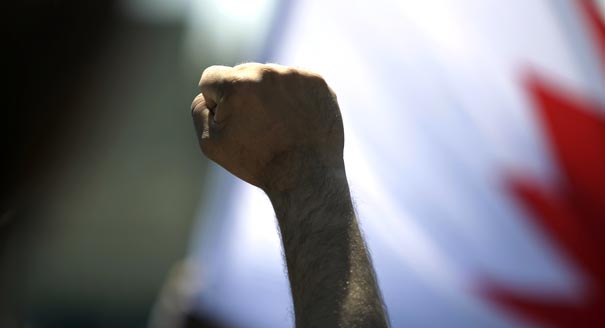
The empowerment of the Arab public, coupled with the realization that change is possible through peaceful means, is a combination powerful enough to fundamentally change the whole region’s dynamic, even if that change does not happen quickly or smoothly.
Source: Politico

But this is only natural. We are going to experience many seasons — springs, summers, falls and winters. The Arab Awakening is going to be measured in decades, not months or years.
No one should expect the transformation to happen smoothly — the road to democracy is usually bumpy. Even in Egypt and Tunisia, where the first leaders left in the face of peaceful protests, it will not be easy. There are still minirevolutions that need to take place within the systems before the two countries can claim an orderly transition to democracy.
We are now seeing empires fight for survival in Libya, Yemen and Syria. After enjoying power for a long time, these regimes have realized that any serious reform process is likely to lead to their demise. But any leader who starts killing his people has lost all legitimacy. The regimes that have gone down this path are very likely going in an irreversible direction — their days look numbered.
There is also work being done by Saudi Arabia and other Persian Gulf states to shore up the status quo. The idea is to rely on security or economic means to hold back real change. But it would be a mistake for governments that now enjoy legitimacy — including Saudi Arabia, but also Jordan and Morocco — not to use the time they have to undergo serious reform that leads not just to better economic conditions but to better governance and power sharing. That is the only way to stay ahead of the street and manage orderly change.
Despite all the difficulties, it is wrong to assume that this historic moment will die. Too much has changed, and it’s too late to reverse course. What has been broken is not just the barrier of fear but, more important, the feeling of powerlessness.
The Arab public, accustomed to being on the receiving end of policies made by its governments or outside forces, has a new sense of empowerment — the feeling that it can effect change. This is a new development in the region, and it is there to stay.
There is also a sense that this can be done peacefully. The violence the Arab world witnessed for years came from a feeling of frustration, a belief that change is possible only through violence.
This is now fundamentally challenged. The empowerment now emerging, coupled with the realization that change is possible through peaceful means, is a powerful combination. It can fundamentally change the whole region’s dynamic — as well as its future.
But while the street has been successful in starting revolution, it cannot institutionalize change. Countries need to manage an orderly transition. They need to put forward a serious reform process rather than ad hoc measures designed to pacify the street.
It would be a mistake to think that economic means alone or limited reforms can be enough to contain the populace. Economic means are not going to address the issue of governance, the rule of law and wider participation in the decision-making process.
In the end, half-baked reform is shortsighted. Should the street erupt again, protesters are likely to have far higher demands.
Regimes that haven’t resorted to violence still have a chance to do the right thing. For them to remain credible in the public’s eyes, however, they need to promptly begin a gradual but real reform process that is comprehensive, serious, measurable and inclusive.
While change does not happen in an instant, gradualism in the past has been an excuse for doing nothing. Selective reform is no longer credible. This time around, the process needs to be sustained. Reform needs to be holistic, because political, economic and social reforms go together. This ensures that the benefits of economic modernization do not go to an elite few.
Reform is also not serious if it does not end with power sharing among the executive, legislative and judiciary branches. Stronger parliaments and judicial bodies are essential for proper checks and balances.
But reform rhetoric alone no longer fools anyone. All promises must have performance indicators, links to the budget and timelines. There must be a way for people to see that progress is being made.
This transformation needs to include all political forces. The times when governments could write reform blueprints and expect the public to go along are gone. For reform to be credible, people must buy in to the process. This can come only through their participation in agreeing on reform plans that will decide their future.
Will it be easy? No. Reform is never free. It will take time for democracy to take hold across the region. But this is exactly what we all should have expected.
There is no way for the region to go back to the time before the Arab Spring. The awakening will move ahead through the coming seasons.

Vice President for Studies
Marwan Muasher is vice president for studies at Carnegie, where he oversees research in Washington and Beirut on the Middle East. Muasher served as foreign minister (2002–2004) and deputy prime minister (2004–2005) of Jordan, and his career has spanned the areas of diplomacy, development, civil society, and communications.
Recent Work



Amr Hamzawy, Andrew Leber, Eric Lob, …
Marwan Muasher
Carnegie does not take institutional positions on public policy issues; the views represented herein are those of the author(s) and do not necessarily reflect the views of Carnegie, its staff, or its trustees.

In the tenth year of his presidency, President Mirziyoyev’s system is becoming even more personalized than that of his predecessor Karimov.

Galiya Ibragimova

The greater threat to Zelensky comes not from Fedorov alone, but from the convergence between the former defense minister’s political campaign and the anti-corruption investigations moving ever closer to the presidential administration.

Balázs Jarábik
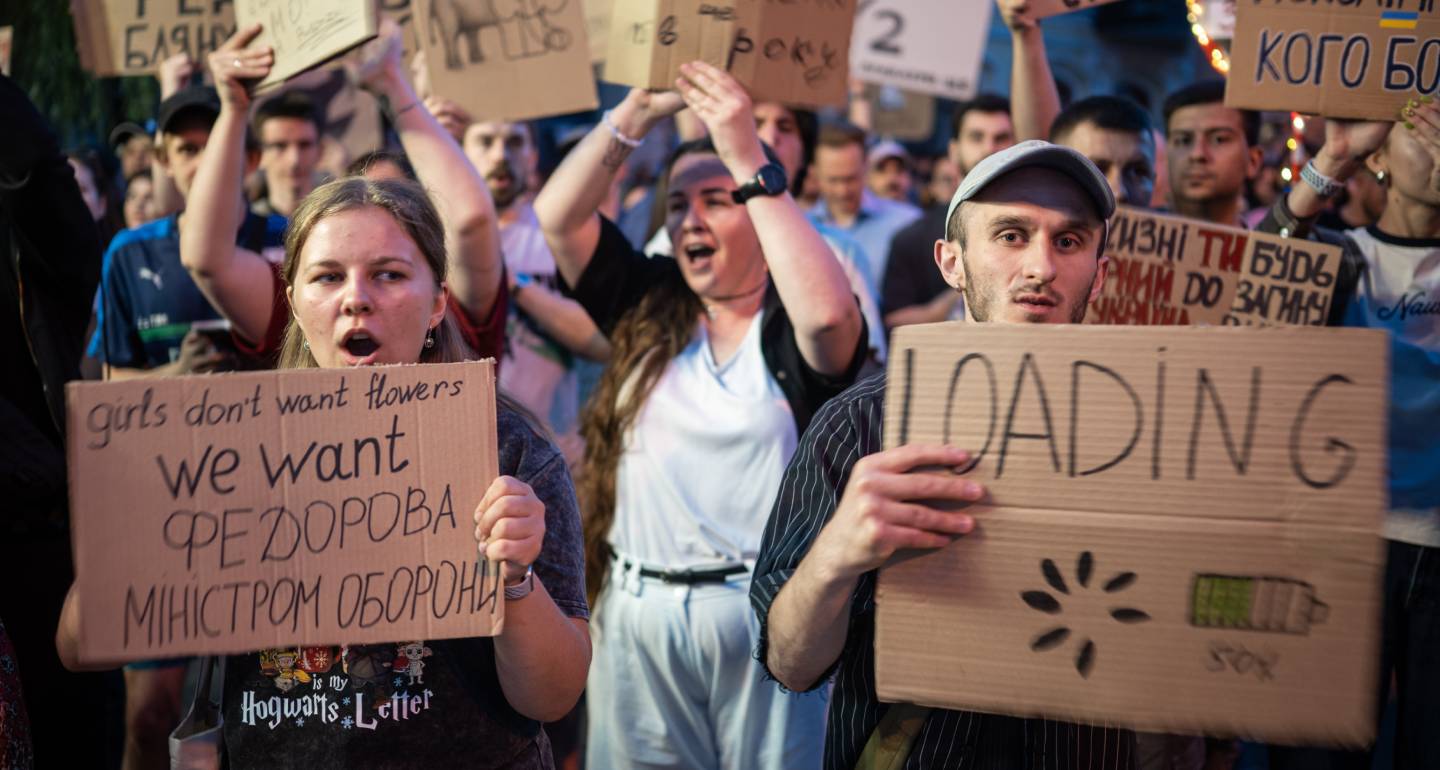
With his public call for new elections in Ukraine, ex-defense minister Mykhailo Fedorov has opened Pandora’s box.

Konstantin Skorkin

In the discussions made possible by the State Duma election campaign, one question is being asked more and more loudly. “What next?”

Andrey Pertsev

Two divergent trends—Putin’s hardline vision of how to prosecute the war in Ukraine, and a growing desire for change in Russia—could tear the regime apart.

Tatiana Stanovaya