

In The Media
Kevin Jianjun Tu
{
  "authors": [
    "Kevin Jianjun Tu"
  ],
  "type": "legacyinthemedia",
  "centerAffiliationAll": "dc",
  "centers": [
    "Carnegie Endowment for International Peace",
    "Carnegie China"
  ],
  "collections": [],
  "englishNewsletterAll": "ctw",
  "nonEnglishNewsletterAll": "",
  "primaryCenter": "Carnegie China",
  "programAffiliation": "SCP",
  "programs": [
    "Sustainability, Climate, and Geopolitics"
  ],
  "projects": [],
  "regions": [
    "East Asia",
    "China",
    "North America"
  ],
  "topics": [
    "Climate Change"
  ]
}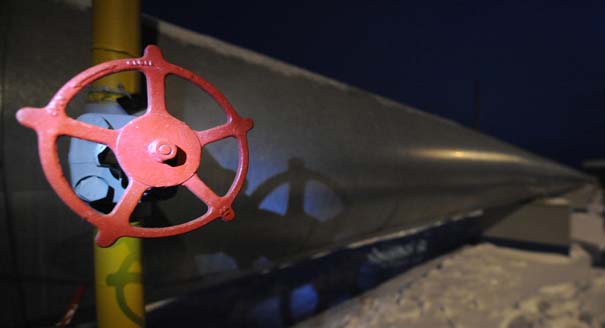
Source: Getty
Shale gas can improve China's environment and energy security, but there are many barriers that will hinder China from duplicating America's shale revolution.
Source: Wall Street Journal

This is inspiring Beijing to dream of a U.S.-style shale gas revolution for China. Shale gas supplied less than 2% of U.S. gas output in 2000, but 10 years later it reached 23% and is projected to account for 49% by 2035. America's dependence on imported oil as a percentage of national consumption has rapidly diminished from 60% in 2005 to slightly over 40% today.
To gain access to state-of-the-art shale gas technology, both China National Offshore Oil Corporation and Sinopec have recently made strategic investments in North American shale gas assets. At home, after a rather disappointing round of bidding for shale gas drilling rights in June 2011, when only six state-owned companies were invited to participate, the Ministry of Land and Resources announced last month the second round of bidding. Realizing that America's shale revolution has been powered by small- and medium-sized enterprises instead of Big Oil, Beijing also is allowing Chinese private enterprises and Sino-foreign joint ventures (as long as they're controlled by Chinese parties) to bid.
But China is hardly on track to replicate America's success. Several factors still threaten to trip up Beijing's efforts to bring the shale revolution to the Middle Kingdom.
"Technologically recoverable" is not the same as "economically recoverable." Shale gas deposits in China are generally located in mountainous areas and remote deserts, and are buried deep underground. While the technology exists to extract gas in those conditions, it's not cheap. Drilling costs in China have run as high as $16 million per well, compared to only several million dollars in the United States.
This need for capital is related to the weakest link of China's shale gas industry: the country's inability to attract the right types of developers and incentivize private enterprises to spur much-needed innovations. Major international players, while interested in investing, are well positioned to resist transferring critical technological know-how to their Chinese counterparts—which effectively leads to a prolonged learning curve.
Despite some signs of openness, China has struggled to attract investment from smaller foreign players. Beijing already faced an uphill slog since many smaller American drillers face financial troubles due to low gas prices in their home market. Making matters worse, the legal vacuum for shale gas development (including licensing, exploration and production); a lack of intellectual property rights protection for technology; low gas prices in China; and a dearth of easily recoverable fields for new entrants all are deterring investment.
Beijing also has a hard time attracting the right kind of domestic developers. China lacks strong protections for private property rights, especially in the energy industry. Shale gas investors will have noticed the most recent consolidation of the Shanxi coal industry starting from 2009, in which the government forced mergers among ostensibly private mines and mostly benefited state-owned companies. Not surprisingly, private investors in China are more likely to be interested in short-term speculation instead of long-term investment in research and development that is key to a Chinese shale gas revolution.
Nor will China necessarily reap environmental rewards from shale gas. Hydraulic fracturing—which uses pressurized fluid to break up the shale deposits that contain the gas—is water-intensive and many shale gas fields in China face serious water shortages, making it difficult to scale up output. Even in regions where water availability is less of a concern, inexperienced or irresponsible drilling practices risk fresh water contamination.
Though China currently has only 62 shale gas wells in trial development zones, Beijing has recognized the importance of water management in China's Shale Gas Development Plan for 2011-2015. Even so, China's problematic environmental enforcement records and the country's highly fragmented water governance mechanism certainly do not necessarily hold the promise of moving the water management agenda toward the right direction.
Shale gas can improve China's environment and energy security. But there are too many barriers that will prevent China from duplicating America's success. The shale revolution can certainly spread across the Pacific one day. But for that to happen, Beijing will need a major revamp of basic policies such as protection of property rights.
This article was originally published in the Wall Street Journal.

Former Senior Associate , Energy and Climate Program
Tu was a senior associate in Carnegie’s Energy and Climate Program, where he led the organization’s work on China’s energy and climate policies.
Recent Work
Kevin Jianjun Tu
Kevin Jianjun Tu
Carnegie does not take institutional positions on public policy issues; the views represented herein are those of the author(s) and do not necessarily reflect the views of Carnegie, its staff, or its trustees.

Without a ceasefire with Ukraine on attacking each other’s energy infrastructure—to which the Kremlin is unlikely to agree—the diesel agreement between Putin and Trump is largely for show, rather than representing a genuine increase in the volumes of Russian diesel on the global market.

Sergey Vakulenko

With the growth in points of friction between the great powers, organizations like the SCO will continue to play a role in the strategic adaptation of the smaller powers caught between them.

Temur Umarov

When faced with fuel shortages in the past, Central Asian governments could always count on additional supplies from Moscow. That safety net no longer exists.

Galiya Ibragimova

Official discussions about mini oil refineries are unlikely to come to anything—but the mere fact they’re happening reveals the regime is failing to deliver a functioning economy.
Sergey Vakulenko
With no key agreement signed on the Power of Siberia 2 gas pipeline, there is a risk that the window of opportunity for Russia will close if Chinese power generation becomes so green that new gas sources are no longer of any interest to Beijing.

Alexander Gabuev