

Research
- +10
Rosa Balfour, Frances Z. Brown, Yasmine Farouk, …
{
  "authors": [
    "Moisés Naím"
  ],
  "type": "legacyinthemedia",
  "centerAffiliationAll": "",
  "centers": [
    "Carnegie Endowment for International Peace"
  ],
  "collections": [],
  "englishNewsletterAll": "",
  "nonEnglishNewsletterAll": "",
  "primaryCenter": "Carnegie Endowment for International Peace",
  "programAffiliation": "",
  "programs": [],
  "projects": [],
  "regions": [
    "Middle East",
    "Israel",
    "Palestine",
    "North America"
  ],
  "topics": [
    "Security"
  ]
}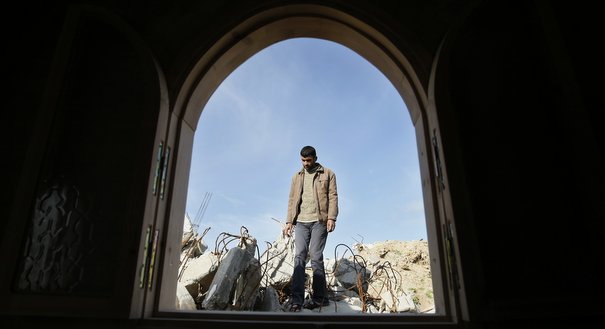
Source: Getty
Israel's Iron Dome system not only saved the lives of Israeli civilians, but also prevented the deaths of thousands of innocent people in the Gaza Strip.
Source: El País

During the eight days the conflict lasted, Hamas launched 1,506 rockets from Gaza into Israel. More than half fell on empty land. But of the 421 rockets that would have fallen in urban centers, 84 percent were destroyed in the air by the Israeli anti-missile system (which is capable of establishing the rocket’s flight path, and ignoring those that will fall harmlessly on unpopulated zones). A total of 58 Palestinian rockets fell in populated areas, killing five Israelis and wounding 240.
What would have happened had the Hamas rockets been more successful, and had fallen in Tel Aviv and other large cities causing not five, but 1,000, 3,000 or more deaths among the civilian population? The answer is obvious: the government of Israel — like that of any other country — would have invaded Gaza. This would have meant an attack by ground forces and tanks, and house-to-house fighting in one of the world’s most densely populated urban areas, with civilians trapped inside that battlefield.
Though in this new conflict between Hamas and Israel the number of deaths in Israel was limited, this was not the case among the inhabitants of Gaza. According to the UN, 103 civilians died in the Gaza Strip, though Israeli sources put the figure at 57. The Israeli air force reports that it carried out 1,500 attacks on targets in Gaza, destroying almost all the command centers of Hamas, 26 weapons factories, stockpiles of arms and explosives, and more than 12,000 rockets, as well as hundreds of tunnels.
This is not the end of the tragedy, but just one more chapter in a long and painful conflict whose solution will never be a military one. Fanaticism, irrationality and what the historian Barbara Tuchman — in reference to the insanity that leads governments and nations to commit fateful mistakes — called “the march of folly” — have been shaping this situation for a long time. Hamas refuses to accept Israel’s right to exist as a nation, and promises to go on doing everything necessary to wipe it out. And the Israeli government announces it will go ahead with the construction of 3,000 houses in the most politically sensitive settlements of the occupied territories, on the same day that the UN General Assembly, by an overwhelming majority of votes, admitted Palestine as an “Observer State,” implying recognition of its sovereignty over the area controlled by Israel since 1967.
It is hard to imagine positions more absurd and clearly counterproductive. There is incontrovertible evidence that the position of Hamas concerning the destruction of Israel has impeded the progress of the Palestinian people, whose interests it claims to represent. The same goes for the construction of ever more Israeli settlements in the occupied territories. These settlements weaken Israel’s national security. But the dire forces that drive the march of folly never lessen. They are immune to evidence.
Amid all the insanity, and only as a temporary consolation, a few life-saving initiatives appear. Such as these missiles.

Distinguished Fellow
Moisés Naím is a distinguished fellow at the Carnegie Endowment for International Peace, a best-selling author, and an internationally syndicated columnist.
Recent Work



Rosa Balfour, Frances Z. Brown, Yasmine Farouk, …
Moisés Naím
Carnegie does not take institutional positions on public policy issues; the views represented herein are those of the author(s) and do not necessarily reflect the views of Carnegie, its staff, or its trustees.

With the growth in points of friction between the great powers, organizations like the SCO will continue to play a role in the strategic adaptation of the smaller powers caught between them.

Temur Umarov

Two divergent trends—Putin’s hardline vision of how to prosecute the war in Ukraine, and a growing desire for change in Russia—could tear the regime apart.

Tatiana Stanovaya

Andrey Melnichenko’s essay offers no answer to the fundamental question of how, under any kind of negotiated settlement, Europe can protect itself from the Russian ressentiment that is inevitable in all scenarios except for an outright victory for Putin.

Leonid Bershidsky
The recent damage inflicted by Ukrainian drones and missiles on Russia has made Belarus aware of its own vulnerabilities—and surprisingly amenable to Kyiv’s demands.

Artyom Shraibman
It is not a phenomenon unique to Russia that the public of a country at war (even the aggressor) enduring airstrikes will not overturn its government but rather show solidarity with it and blame its woes on the enemy.
Vladislav Gorin