

Paper
Ibrahim Saif, Ahmed Ghoneim
{
  "authors": [
    "Ibrahim Saif"
  ],
  "type": "legacyinthemedia",
  "centerAffiliationAll": "",
  "centers": [
    "Carnegie Endowment for International Peace",
    "Malcolm H. Kerr Carnegie Middle East Center"
  ],
  "collections": [],
  "englishNewsletterAll": "",
  "nonEnglishNewsletterAll": "",
  "primaryCenter": "Malcolm H. Kerr Carnegie Middle East Center",
  "programAffiliation": "",
  "programs": [],
  "projects": [],
  "regions": [
    "Egypt",
    "Gulf",
    "Levant",
    "Maghreb",
    "Middle East",
    "North Africa"
  ],
  "topics": [
    "Economy",
    "Political Reform"
  ]
}
Source: Getty
At a time of economic transformation in many Arab countries, the informal sector is subject to pressures and challenges that demand new approaches.
Source: Al-Hayat
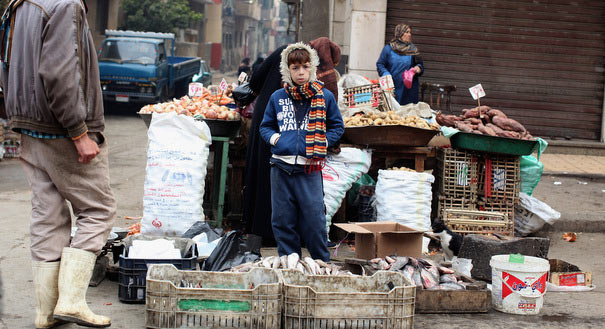
Informal economies, are difficult to measure, and estimates of the size of these economies in Arab countries vary. In Egypt, for example, experts estimate that the informal economy accounts for about 40 percent of economic activity, a figure that is expected to rise. In Morocco, the informal economy employs 30 percent of the workforce. Before the popular uprising in Syria broke out, one-quarter of the workforce was unregulated. Even in small countries such as Jordan, observers would be surprised to find that the informal sector represents over 20 percent of the economy.
Most studies on the informal economy are based on surveys carried out by unofficial research groups or United Nations institutions, such as the International Labor Organization. The studies concur that the informal sector is expanding.
What are the reasons for this phenomenon? And what policies can be implemented to integrate wide segments of society into the formal economy?The reasons informal economies are expanding vary from country to country. In some states, such as Egypt, workers and small businesses operate in the informal economy in order to avoid complicated bureaucratic procedures. They also seek to avoid paying taxes, as in Jordan, and to escape the heavy hand of the state, as in Syria.
The common denominator among actors in the informal economy is that they have no incentive to participate in the formal system of production. States impose taxes and demand protection money, and these actors believe that the financial burdens of working with the state outweigh the services received from it. Accordingly, workers and businesses prefer to operate outside the reach of the state.
Studies also note that the informal sector is attracting young people unable to find job opportunities in the formal sector of the economy—in 2012, the International Labor Organization estimated that unemployment stood at 25 percent among young people in Arab countries.
Governments are unable to provide job opportunities, and they have failed to improve the labor environment or provide incentives for unemployed young people. These governments do not examine the issue or make efforts to prevent the spread of the informal economy, conveniently sidestepping a problem for which they have no solution.
Large numbers of workers employed in the growing informal economy also lack medical insurance or social security coverage. While these workers are employed, they remain vulnerable—large numbers of citizens are excluded from the official economy and thus from the protection of labor laws.
The informal sector is not regulated. Competition is intense and alternatives are unavailable. This contributes to the suffering of workers operating in the informal economy.
Moreover, although the number of workers is growing, the economic pool they draw upon remains static. The informal economy may provide the government an outlet for economic pressure in the short term, but that situation will eventually become untenable, leading informal workers to demand solutions from the state.
Instead of burying their heads in the sand, governments should deal with the informal sector directly, facing its problems instead of pretending that they do not exist. This presents policymakers with a dilemma: Is the solution to formalize the informal sector? Not necessarily.
But thinking and dialogue should begin about mechanisms that can help informal sector workers develop their skills, improve their performance, and gain access to the credit and resources necessary to enter the formal sector. Positive incentives to change the legal framework in which these informal workers operate are also necessary. Most studies on the informal sector reveal problems associated with the implementation of laws, access to funding, and the provision of manpower.
At a time of economic transformation in many Arab countries, the informal sector is subject to pressures and challenges that demand new approaches. Given its nature, the informal economy is not represented in private sector institutions and is not formally recognized, despite the fact that it employs more than one-third of the workforce in many countries and contributes a large share of production.
Nothing prevents governments from taking certain steps to integrate this sector into the formal economy. In the absence of this, workers in the informal economy will remain disconnected and will suffer from low wages, low productivity, and unacceptable working conditions, all of which are undesirable over the long term.
This article was originally published in Al-Hayat in Arabic.
Former Senior Associate, Middle East Center
Saif is an economist specializing in the political economy of the Middle East. His research focuses on international trade and structural adjustment programs in developing countries, with emphasis on Jordan and the Middle East.
Recent Work
Ibrahim Saif, Ahmed Ghoneim
Ibrahim Saif, Muhammad Abu Rumman
Carnegie does not take institutional positions on public policy issues; the views represented herein are those of the author(s) and do not necessarily reflect the views of Carnegie, its staff, or its trustees.

In the discussions made possible by the State Duma election campaign, one question is being asked more and more loudly. “What next?”

Andrey Pertsev

Two divergent trends—Putin’s hardline vision of how to prosecute the war in Ukraine, and a growing desire for change in Russia—could tear the regime apart.

Tatiana Stanovaya
Ultimately, Zelensky sided neither with the reform camp nor with the military establishment as such, but with political control.

Balázs Jarábik
Tokayev’s predecessor, Nursultan Nazarbayev, outlined arrangements for a power transition too soon and in too much detail, ultimately losing control over the process. Tokayev is determined not to meet the same fate.

Temur Umarov
Despite unhappiness on the ground, Moscow is determined to use both carrot and stick to ensure there is record support for United Russia in occupied Ukraine.

Konstantin Skorkin