

Commentary
Cornelius Adebahr
{
  "authors": [
    "Cornelius Adebahr"
  ],
  "type": "legacyinthemedia",
  "centerAffiliationAll": "dc",
  "centers": [
    "Carnegie Endowment for International Peace",
    "Carnegie Europe",
    "Malcolm H. Kerr Carnegie Middle East Center"
  ],
  "collections": [
    "Europe’s Southern Neighborhood",
    "Iranian Proliferation"
  ],
  "englishNewsletterAll": "menaTransitions",
  "nonEnglishNewsletterAll": "",
  "primaryCenter": "Carnegie Europe",
  "programAffiliation": "MEP",
  "programs": [
    "Middle East",
    "Europe"
  ],
  "projects": [],
  "regions": [
    "Middle East",
    "Iran"
  ],
  "topics": [
    "Foreign Policy",
    "Economy",
    "Trade",
    "Nuclear Policy"
  ]
}
Source: Getty
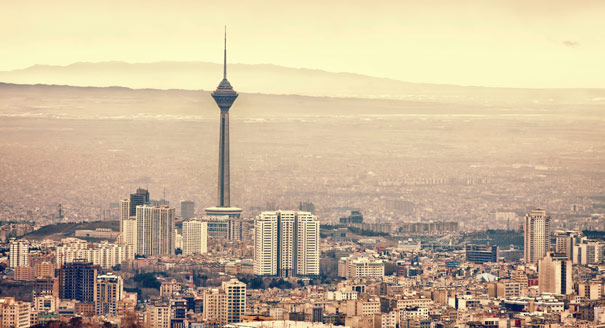
Rather than undermining nuclear negotiations, moves by Western businesses preparing to capitalize on a possible deal have the potential to spur pressure for change within Iran.
Source: CNN
Iran may be continuing its global charm offensive, but the U.S. government is still having trouble selling changes in Iran policy to an American audience.
The latest example came late last month, following Iranian President Hassan Rouhani's trip to Davos, Switzerland. During his appearances at the World Economic Forum, Rouhani invited gathered world and corporate leaders to take advantage of the opportunities that the opening up of Iran offers. But such encouragement is only likely to provoke ire in Washington, a point underscored just days later when U.S. Undersecretary of State Wendy Sherman was grilled by the Foreign Relations Committee over fears that the foreign firms lining up to do business with Iran could diminish Washington's leverage in negotiations over Iran's nuclear program.
It's a compelling argument on the surface. But it is also one that belies a misunderstanding of the reality on the ground – and how the situation is viewed from within Iran.
"Most of these delegations appear to be going to get themselves in line for the day when, in fact, a comprehensive agreement is reached, if it is reached," Bloomberg quoted Sherman as saying. "And we have told them all they are putting their reputations, themselves and their business enterprises at risk if they jump the gun."
But the idea that business should continue to hold back for political reasons is not only unviable, but could be counterproductive. Indeed, insisting that Iran is still not open for business suggests that many policymakers in the United States are underestimating the importance of communicating properly in this conflict, especially towards an Iranian public yearning for signs that their economic lot is close to improving.
International firms flocking to Iran are preparing for the moment sanctions are properly lifted. Yet rather than undermine the U.S. position, preparatory activities are actually raising expectations among business people and the broader public in Iran that there is light at the end of the tunnel. Such optimism could also help bolster Rouhani's standing vis-à-vis his hardline opponents, who have been sharply critical of a deal with the United States.
Ultimately, the debate over Iran's nuclear program is about the perception of who is right or wrong, and the U.S. must make sure it stays on the right side of that debate. True, a robust sanctions regime has contributed to getting Iran to the table. But it is hard to imagine continuing international backing for tough measures if the U.S. and its allies don't alter their approach as Iran shows signs of compromise. Indeed, the notion that the current level of pressure should be extended indefinitely (or even increased if some U.S. politicians ever get their way) is misguided. Now that at least a minimum level of trust has been established through direct talks among foreign ministers and the conclusion of an interim agreement, the rest of the world is now looking toward some kind of resolution.
But even setting aside political principle, it is clear that in practical terms, the hardline approach has not been quite as effective in discouraging Western business in Iran as some might have hoped. Anyone who has spent time in Tehran, even before Rouhani's election, will have noted the apparently healthy supply of Western products, from Coca-Cola to iPhones – all a testament to the creativity of companies able to do business legally in a country under sanctions. Indeed, American companies, rather than sitting on their hands when it comes to Iran's 70 million consumers, have been surprisingly active. They may not send official delegations but, through intermediary agents, many firms are actively seeking out investment opportunities in sectors ranging from chemicals to oil to food.
Of course, many remain sympathetic to the frustration of U.S. policymakers over the urge of companies, European and American alike, to do business with a country that they still consider a grave threat to international peace. But if things go awry, these firms will have the luxury of being able to wait for the situation to improve. Iranian businesses – and Rouhani's government – may not be in quite so comfortable a position.
With that in mind, the U.S. should be a little more sanguine about the preparations that the private sector has been making. Rather than undercut the pressure that the West has been trying to apply, the carrot of an improved economy might create more pressure for change from within than slavish adherence to the stick.

Former Nonresident Fellow, Carnegie Europe
Cornelius Adebahr was a nonresident fellow at Carnegie Europe. His research focuses on foreign and security policy, in particular regarding Iran and the Persian Gulf, on European and transatlantic affairs, and on citizens’ engagement.
Recent Work
Cornelius Adebahr

Cornelius Adebahr, Barbara Mittelhammer
Carnegie does not take institutional positions on public policy issues; the views represented herein are those of the author(s) and do not necessarily reflect the views of Carnegie, its staff, or its trustees.

When faced with fuel shortages in the past, Central Asian governments could always count on additional supplies from Moscow. That safety net no longer exists.

Galiya Ibragimova

Despite unhappiness on the ground, Moscow is determined to use both carrot and stick to ensure there is record support for United Russia in occupied Ukraine.

Konstantin Skorkin
The recent damage inflicted by Ukrainian drones and missiles on Russia has made Belarus aware of its own vulnerabilities—and surprisingly amenable to Kyiv’s demands.

Artyom Shraibman
Russia looks set to reap economic benefits from closer ties with Southeast Asian countries that are keen to find reliable energy suppliers and diversify trade ties.

Alexander Gabuev
Ongoing uncertainty in the Middle East allows Moscow to both increase its influence in Tehran and continue to enjoy the financial windfall of higher oil prices.

Nikita Smagin