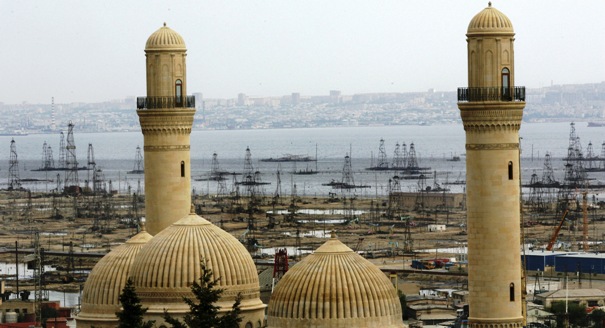
Azerbaijan is the only post-Soviet Republic where the population is divided between Shia (65 percent) and Sunni (35 percent) Muslims. This characteristic derives from the history of the country where for several centuries Shia Safawids and Sunni Ottomans fought each other for religious and political supremacy in the region. However, from the beginning of the 19th century onwards, neither Iranians nor Ottomans were able to exert influence on Azerbaijan since all the South Caucasus fell under the control of a third power, Russia. Thanks to the long Russian and Soviet domination between 1828 and 1991 that promoted secularism and the emergence of a local enlightenment movement, maarifçilik, the old Shia and Sunni division lost importance. As a result, the distinction between Shia and Sunni Islam was to a large extent blurred. However, with the end of the Soviet Union, the subsequent gradual reconnection between Azerbaijan and the rest of the Muslim world has rekindled among Azerbaijanis a sense of difference between Shia and Sunni. Of special concern for Azerbaijan is that the current exacerbation of the Shia-Sunni division in the Muslim world, such as the emergence of the Islamic State in Iraq and the Levant, or ISIS, in Syria and Iraq, is affecting the traditionally harmonious relations between Shia and Sunnis.
As was the case for all Muslims in the former Soviet Union, the end of rule by Moscow was a turning point in Azerbaijanis' relationship with Islam. This Islamic revival all around the country is not only an internal development, but also something resulting from influences coming from Iran, Turkey, and some Arab countries. The relative sectarianism of this revival has created a source of concern for Azerbaijani authorities. The establishment of new links between Azerbaijanis with Iranian, Turkish and/or Gulf Muslims has contributed to the diversification and even enrichment of Islam. However, at the same time, an indirect consequence of the new Islamic cooperation between local and global Islam has been the reawakening of the old division between Shia and Sunni, an animosity largely forgotten after several decades of anti-Islamic (against both Shias and Sunnis) official policy. Turkish proselytism by many private organizations has developed a new Sunni consciousness, while Azerbaijani students have introduced new Shia ideas thanks to their studies in Qom, Mashhad, and other major Shia holy cities. In addition to these Islamic traditions that have always been active in Azerbaijan, there is now a third one both new and to some extent foreign to local traditions:—salafism. This new Islamic element entered into Azerbaijan as a result of religious connections between Azerbaijani students and scholars in the Gulf countries. The official Islamic establishment, under the leadership of Sheikh ul Islam of the State Committee for Religious Affairs, tried to harness this revival and make it compatible with the secular character of the country. The state religious policy has basically remained above the Shia-Sunni division and has rarely favored one religious group over another. However, despite the considerable sensitivity showed by the Azerbaijani state to the delicate question of relations among Shia, Sunni, and Salafi Islam, among the religious leaders of these three groups there is a certain sense of division that is not currently shared by the average believer. Unfortunately for Azerbaijan, this mild division among the groups is getting worse and worse every day, as the result of sectarianism developing in the Middle East.
The worsening of the Syrian conflict and its gradual transformation into a kind of sectarian war has attracted dozens of fighters from Azerbaijan. Different YouTube videos show the involvement of Azerbaijanis in the civil war in Syria . Reportedly more than 200 Azerbaijani Sunnis were fighting against the Syrian Army in 2013 within the Jihadist forces, with 30 of them dying. According to Azerbaijani journalists, the majority of Azerbaijani fighters joined the ISIS ranks, with the rest joining the Jabhat al Nusra. There are many rumors of Azerbaijani Islamists joining Shia groups to defend the Bashar regime, but so far this has not been confirmed.
The sudden emergence of ISIS in Iraq and its seizure of Mosul and other cities have provoked great stress and fear among Azerbaijani Shia leaders who are more concerned about Iraq than Syria. Indeed, Iraq is more like Azerbaijan in many ways. In religious terms, Azerbaijani Shia and Iraqi Shia are very similar, whereas there are considerable differences between the Shia of Azerbaijan and the Alawites of Syria, who are a branch of the Shia. Azerbaijani and Iraqi Shia have to a large extent the same spiritual leaders. For instance, the prestigious Shia leader Ali Sistani, who is based in Iraq, also has a lot of followers in Azerbaijan. Moreover, many holy places venerated by Shia around the world, including the Azerbaijani Shia, are in Iraq. In that sense the Iraqi sectarian conflict has more potential of involving the Azerbaijani Shia. So far few Azerbaijani Shia have responded to the call of Ali Sistani to combat ISIS insurgents, but if sectarianism develops in the Middle East it is almost guaranteed that some Azerbaijani people will go to fight.
In order to limit the involvement of Azerbaijani citizens in the Syrian conflict, and probably the Iraqi one as well, Sheikh ul Islam Allahshukur Pashazade, the greatest religious authority of Azerbaijan, issued a fatwa in January 2014 emphasizing two points: first that the Syrian conflict is not a holy war, Jihad, and secondly that the people who die in that conflict cannot be considered shahid, martyrs of Islam. This fatwa’s objective has been to dissuade Azerbaijani from going to Jihad in the Middle East. At the same time, the Azerbaijani security apparatus since the beginning of 2013 has considerably increased its control of Salafist groups in the country, going so far as to arrest and jail people who were about to join the Jihadists in Syria.
The reaction of the non-official religious authorities to the emergence of ISIS in Iraq has been generally cautious and moderate, at least until now. Ilgar Ibrahimoglu and Haji Shahin, major influential Shia leaders, have tried to minimize the sectarian aspect of the conflict in Iraq in order reduce the tensions that could arise in Azerbaijan. At the same time, they have warned against attacks targeting Shia holy places in the cities taken by ISIS. Gamet Suleymanoglu, the most influential Salafi leader in Azerbaijan, issued an interesting, and even surprising, statement. He clearly condemned the actions of ISIS, saying that this movement was a danger to the entire region, and declaring that it is not representative of Islam. Despite these apparently wise and cautious statements made by both Sunni and Shia leaders, the social media chats and discussions show a very heated debate among Azerbaijanis along Shia-Sunni lines.
To sum up, since the end of the Soviet Union there has been in Azerbaijan a clear sensitivity to the Islamic issues that are shaking up the Middle East, especially the Shia-Sunni division affecting almost all Middle Eastern countries. Fortunately, since the secularism inherited from the Soviet times is still strong, the majority of Azerbaijani Muslims are to a large extent immune to the sectarian conflicts affecting the Middle East. The religious leaders are very aware of these conflicts and are trying to limit the impact on Azerbaijani Shias and Sunnis. Their preventive measures were successful in the case of the Syrian conflict because Syria is far from Azerbaijan and the Alawites of Syria are a different branch of Shia that is not predominant in Azerbaijan. With the conflict reaching Iraq, which reflects the same religious divisions as in Azerbaijan, the risk is greater that Azerbaijani Shias and Sunni will be affected by the sectarianism of the Middle East.
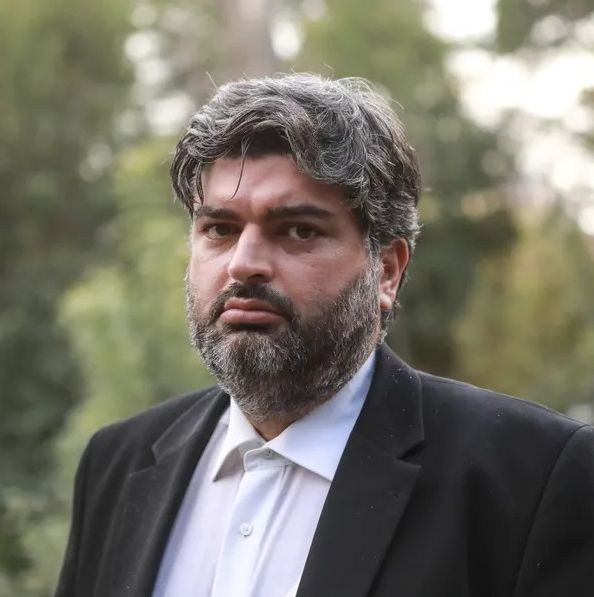
Kenan Rovshenoglu is a journalist with Yeni Musavat, Baku.