

Paper
Douglas H. Paal
{
  "authors": [
    "Douglas H. Paal"
  ],
  "type": "legacyinthemedia",
  "centerAffiliationAll": "dc",
  "centers": [
    "Carnegie Endowment for International Peace"
  ],
  "collections": [],
  "englishNewsletterAll": "asia",
  "nonEnglishNewsletterAll": "",
  "primaryCenter": "Carnegie Endowment for International Peace",
  "programAffiliation": "AP",
  "programs": [
    "Asia"
  ],
  "projects": [],
  "regions": [
    "North America",
    "United States",
    "East Asia",
    "China",
    "Taiwan"
  ],
  "topics": [
    "Economy",
    "Trade",
    "Foreign Policy"
  ]
}
Source: Getty
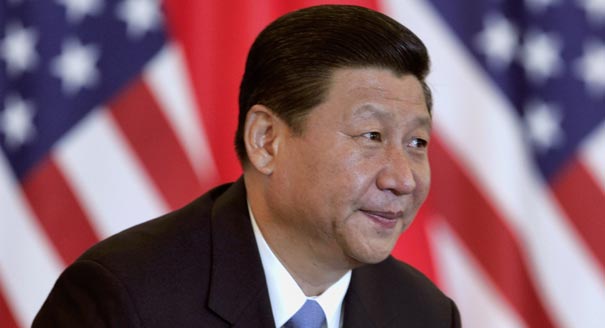
After a period of uncertainty, the Trump administration is now pursuing a more pragmatic policy toward China, at least with regards to the One China policy.
Source: CGTN
Speaking on CGTN, Carnegie’s Douglas H. Paal evaluated the prospects of future U.S.-China cooperation now that President Donald Trump has announced that he will honor the “One China” policy.
Paal welcomed the recent call between Trump and President Xi Jinping as a significant step toward stabilizing the U.S.-China after an initial period of uncertainty. He noted that if the previous Trump administration policy of openly questioning the One China policy were to continue, it would be impossible for Xi to have a constructive relationship with Trump.
The United States has now pursued a more pragmatic approach, said Paal, which matches the Chinese posture of flexibility and adaptability that Xi has adopted in the wake of Trump’s surprise election victory last November.
Paal praised the diplomacy of China’s top two “America watchers”—Yang Jiechi and Cui Tiankai—calling their efforts highly effective.
Moving forward, Paal predicted that future cooperation will depend on Trump’s perception of whether China is willing to significantly adjust trade and investment patterns to create jobs in the United States.

Distinguished Fellow, Asia Program
Paal previously served as vice chairman of JPMorgan Chase International and as unofficial U.S. representative to Taiwan as director of the American Institute in Taiwan.
Recent Work
Douglas H. Paal


Douglas H. Paal, Tong Zhao, Chen Qi, …
Carnegie does not take institutional positions on public policy issues; the views represented herein are those of the author(s) and do not necessarily reflect the views of Carnegie, its staff, or its trustees.

Japan’s long-term security policy is driven by concerns about China, and there is little appetite for (or interest in) pursuing a confrontation with Moscow.

James D.J. Brown

Without a ceasefire with Ukraine on attacking each other’s energy infrastructure—to which the Kremlin is unlikely to agree—the diesel agreement between Putin and Trump is largely for show, rather than representing a genuine increase in the volumes of Russian diesel on the global market.

Sergey Vakulenko

Russian strikes are weakening the economy sustaining Ukraine’s war effort. Closing the growing funding gap will require more European support and politically contentious reforms in Kyiv.

Balázs Jarábik

Despite a new textbook, an influx of Russian teachers and managers, and an end to the teaching of Ukrainian, the Kremlin is unlikely to have “reprogrammed” locals.

Konstantin Skorkin

For every ruble allocated to social policy, health, and education in 2027, double that amount is earmarked for the army, the police, and the security services.

Alexandra Prokopenko