

The prospect of a total block on Russia’s most popular messaging app has sparked disagreement between the regime’s political managers and its security agencies.
Andrey Pertsev
{
"authors": [
"Balázs Jarábik",
"Iulian Groza",
"Jana Kobzová",
"Viktor Konstantynov",
"Tsovinar Kuiumchian",
"Leonid Litra",
"Tornike Sharashenidze",
"Isaac Webb"
],
"type": "other",
"centerAffiliationAll": "",
"centers": [
"Carnegie Endowment for International Peace",
"Carnegie Europe"
],
"collections": [
"Europe’s Eastern Neighborhood"
],
"englishNewsletterAll": "",
"nonEnglishNewsletterAll": "",
"primaryCenter": "Carnegie Endowment for International Peace",
"programAffiliation": "",
"programs": [],
"projects": [
"Reforming Ukraine"
],
"regions": [
"Caucasus",
"Georgia",
"Eastern Europe",
"Ukraine",
"Moldova",
"Russia",
"Europe"
],
"topics": [
"Political Reform",
"Foreign Policy"
]
}Source: Getty
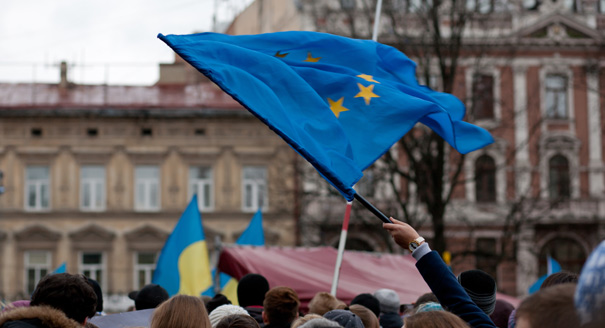
EU association deals with Ukraine, Georgia, and Moldova have proven to be key drivers of reform in all three countries. The emphasis should now be on implementation, not simply legislative adoption.
Source: European Parliament
Signing and ratifying Association Agreements with Georgia, Moldova, and Ukraine has proven to be an impressive affirmation of Brussels’ soft power. The EU’s overtures have persuaded elites and mobilised societies despite the fact that the Agreements come neither with a membership promise nor with the kind of financial assistance that has been given to the EU’s new member states.
EU assistance has been effective in restoring macro-financial stability in all three countries. While costs of compliance with the DCFTA were calculated, level of investment associated with the necessary modernisation to make these economies competitive were neglected. The discrepancy between costs and benefits should prompt the EU to be more flexible.
Brussels’ achievements remain fragile. Informal interests continue to play important roles in these countries and have the potential to thwart reforms. In the absence of strong, de-politicised institutions, the EU should work to support political consolidation—the alternative is further polarisation and political fragility—while at the same time insisting on adherence to democratic standards and strengthened institutional checks and balances.
Carnegie does not take institutional positions on public policy issues; the views represented herein are those of the author(s) and do not necessarily reflect the views of Carnegie, its staff, or its trustees.
The prospect of a total block on Russia’s most popular messaging app has sparked disagreement between the regime’s political managers and its security agencies.
Andrey Pertsev
Not only does the fighting jeopardize regional security, it undermines Russian attempts to promote alternatives to the Western-dominated world order.
Ruslan Suleymanov
Moldova’s reintegration plan was drawn up to demonstrate to Brussels that Chișinău is serious about the Transnistria issue—and to get the West to react.
Vladimir Solovyov
The front-runner to succeed Ilia II, Metropolitan Shio, is prone to harsh anti-Western rhetoric and frequent criticism of “liberal ideologies” that he claims threaten the Georgian state. This raises fears that under his leadership the Georgian Orthodox Church will lose its unifying role and become an instrument of ultraconservative ideology.
Bashir Kitachaev
Lukashenko is willing to make big sacrifices for an invitation to Mar-a-Lago or the White House. He also knows that the clock is ticking: he must squeeze as much out of the Trump administration as he can before congressional elections in November leave Trump hamstrung or distracted.
Artyom Shraibman







