

Article
C. Raja Mohan, Darshana M. Baruah
{
  "authors": [
    "C. Raja Mohan"
  ],
  "type": "legacyinthemedia",
  "centerAffiliationAll": "dc",
  "centers": [
    "Carnegie Endowment for International Peace",
    "Carnegie India"
  ],
  "collections": [],
  "englishNewsletterAll": "ctw",
  "nonEnglishNewsletterAll": "",
  "primaryCenter": "Carnegie India",
  "programAffiliation": "SAP",
  "programs": [
    "South Asia"
  ],
  "projects": [],
  "regions": [
    "United States",
    "East Asia",
    "Indo-Pacific"
  ],
  "topics": [
    "Foreign Policy"
  ]
}
Source: Getty
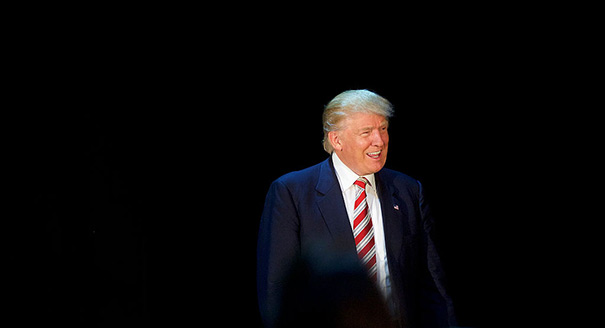
With his relentless focus on “burden-sharing” and “America First”, U.S. President Trump could end up rearranging the political and security order in East Asia.
Source: Indian Express
It’s being billed as a meeting of the mavericks. After months of mutual personal abuse and the beating of war drums, US President Donald Trump and the North Korean leader Kim Jong-un have surprised the world by agreeing to meet shortly. If all goes well, the two leaders should be sitting across a table before the end of May; we don’t yet know where. There is speculation that Kim might be ready to travel to Washington.
And if the talks between the “Rocket Man” (Trump’s derisive name for the missile-testing man in Pyongyang) and the “Dotard” (the obscure word that Kim’s propagandists found to paint the US president as a senile old man) succeed, East Asia would never be the same again. No wonder the man who has taken the lead in the process, President Moon Jae-in of South Korea, is calling it an “unfolding political miracle”.
But few in the world would agree. Most analysts in Washington think Trump’s impulsive acceptance of Kim’s offer for a summit would end in a disaster. Some think an utterly unprepared Trump could give away the farm to Kim. Others worry that Trump’s high-stakes personal diplomacy is doomed to fail and would only increase the prospects for war with North Korea. Many hope that the meeting might never take place and the preparations would simply collapse under the weight of inherent contradictions.
Trump, however, appears quite bullish and thinks that the “greatest deal the world has ever seen” might be at hand in North Korea. It is precisely the prospect of such a deal that alarms the region. China, for example, has welcomed the talks between Trump and Kim and claimed credit for facilitating this unexpected turn. But there is no hiding Beijing’s wariness that a breakthrough between Trump and Kim could end up diminishing China’s role in the Korean Peninsula.
Relations between Kim and the Chinese president, Xi Jinping, are said to be strained. Much of the world, especially the United States, has operated on the assumption that Beijing held the keys to peace in the peninsula. But the current process is being driven by Kim’s charm offensive towards South Korea, his bold outreach to the US, and Trump’s willingness to gamble. Equally important is the new determination in South Korea to end the impasse with the North by taking the political initiative.
Meanwhile, Japan too is worried. For long at the receiving end of aggressive North Korean actions, Japan has been pressing for a hard line on North Korea. Tokyo is worried that a Trump deal would leave Pyongyang with residual nuclear and missile capability and weaken the US alliance with Japan. Tokyo could end up in a far worse place than it is in now. Blindsided by the rapid turn of events, the Japanese prime minister, Shinzo Abe, is heading to Washington next month to make sure Tokyo has some say in how the talks between Trump and Kim are conducted.
In the past, the negotiations with North Korea were focused on lifting of sanctions and delivering international economic assistance in return for a verifiable freeze on Pyongyang’s nuclear weapons programme. This incremental approach was to lead to denuclearisation. The efforts did not succeed because the political distrust was too deep and the negotiation was too narrowly focused on the nuclear question.
This time, though, the talks could be very different. Instead of incrementalism that was quite vulnerable, the idea of a grand bargain might well be on the table. The trade-off could be the denuclearisation of the Korean Peninsula for regime security in Pyongyang, a peace treaty that would bring the Korean War of 1950-53 to a close, deeper ties between North and South Korea, and the normalisation of relations between North Korea on the one hand and the United States and Japan on the other. For those who are familiar with the difficult history of the peninsula this is a pipe dream.
But Kim and Trump might be thinking big and ready to act bold. On his part, Kim is said to be open to denuclearisation (critics say Pyongyang has offered that before). Trump, apparently, is ready to consider drastic political solutions. Some of Trump’s previous advisers have suggested that he might even be open to discussing the withdrawal of American troops — numbering about 28,000 — from the peninsula if Kim is serious about denuclearisation.
This is what sets Trump apart from his predecessors. He has been deeply sceptical of alliances. He has insisted that America’s rich allies in Europe and Asia can and must contribute more for collective defence. He is also not beholden to traditional assumptions about the dangers from nuclear weapons in the Korean Peninsula. At one point during the campaign, he argued that he would not object to South Korea and Japan acquiring nuclear weapons to defend themselves against a nuclear North Korea.
With his relentless focus on “burden-sharing” and “America First”, Trump could end up rearranging the political and security order in East Asia. Korean political developments tend to draw a big yawn in Delhi.
This time though, India should be paying attention to the miracle being plotted by the maverick men in Washington and Pyongyang. Trump and Kim are not afraid of the unfreezing of the Korean Peninsula. Whether they succeed or fail, India would be staring at a very different set of geopolitical equations in East Asia.
This article was originally published in the Indian Express.
Former Nonresident Senior Fellow, Carnegie India
A leading analyst of India’s foreign policy, Mohan is also an expert on South Asian security, great-power relations in Asia, and arms control.
Recent Work

C. Raja Mohan, Darshana M. Baruah


Alexander Gabuev, Paul Haenle, C. Raja Mohan, …
Carnegie does not take institutional positions on public policy issues; the views represented herein are those of the author(s) and do not necessarily reflect the views of Carnegie, its staff, or its trustees.

When faced with fuel shortages in the past, Central Asian governments could always count on additional supplies from Moscow. That safety net no longer exists.

Galiya Ibragimova

Despite unhappiness on the ground, Moscow is determined to use both carrot and stick to ensure there is record support for United Russia in occupied Ukraine.

Konstantin Skorkin
The recent damage inflicted by Ukrainian drones and missiles on Russia has made Belarus aware of its own vulnerabilities—and surprisingly amenable to Kyiv’s demands.

Artyom Shraibman
Russia looks set to reap economic benefits from closer ties with Southeast Asian countries that are keen to find reliable energy suppliers and diversify trade ties.
Alexander Gabuev

Ongoing uncertainty in the Middle East allows Moscow to both increase its influence in Tehran and continue to enjoy the financial windfall of higher oil prices.

Nikita Smagin