

Commentary
In the discussions made possible by the State Duma election campaign, one question is being asked more and more loudly. “What next?”
Andrey Pertsev
{
  "authors": [
    "Anirudh Burman",
    "Bhargavi Zaveri"
  ],
  "type": "legacyinthemedia",
  "centerAffiliationAll": "",
  "centers": [
    "Carnegie Endowment for International Peace",
    "Carnegie India"
  ],
  "collections": [],
  "englishNewsletterAll": "",
  "nonEnglishNewsletterAll": "",
  "primaryCenter": "Carnegie India",
  "programAffiliation": "",
  "programs": [],
  "projects": [
    "Political Economy"
  ],
  "regions": [
    "India"
  ],
  "topics": [
    "Domestic Politics",
    "Economy"
  ]
}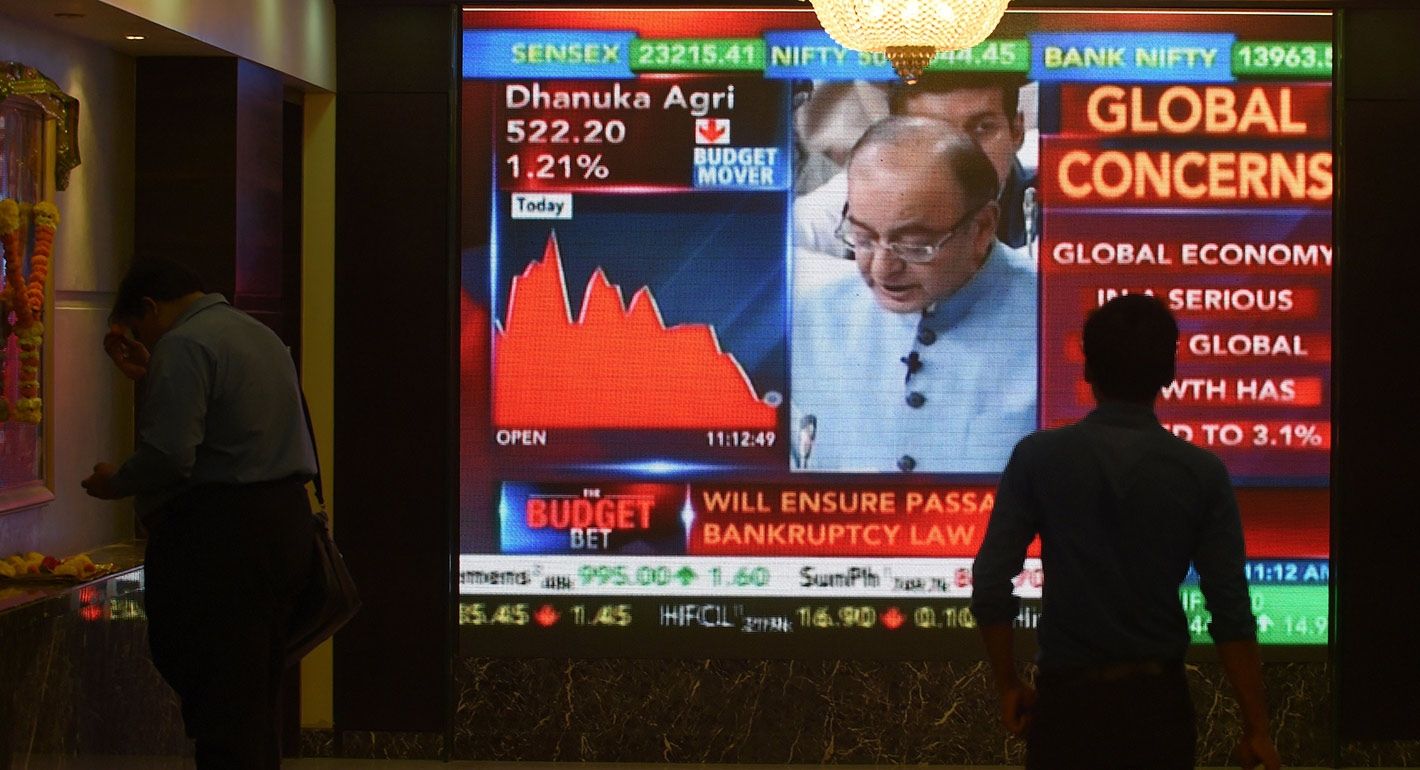
Source: Getty
India’s transition to private markets is predicated on how well it regulates private activities across a range of economic sectors, such as finance, telecom, and infrastructure.
Source: BloombergQuint
India’s transition to private markets is predicated on how well it regulates private activities across a range of economic sectors such as finance, telecom, and infrastructure. Since 1991, the government has signaled its willingness to regulate private markets technocratically and neutrally by creating independent regulators such as the Securities and Exchange Board of India, Telecom Regulatory Authority of India, Insolvency and Bankruptcy Board of India, and others.

Former Associate Research Director and Fellow, Carnegie India
Anirudh Burman was an associate research director and fellow at Carnegie India. He works on key issues relating to public institutions, public administration, the administrative and regulatory state, and state capacity.
Bhargavi Zaveri
Bhargavi Zaveri is part of the Finance Research Group, Mumbai. She works in the areas of financial regulation, land and access to finance and regulatory governance. She has previously held research positions at IGIDR, the National Institute of Public Finance and Policy and the Harvard Law School. She has advised the Ministry of Finance on issues relating to financial regulation. She has published academic work on Indian financial regulation in Indian and international journals. She often writes about land and access to finance in the public media.
Carnegie does not take institutional positions on public policy issues; the views represented herein are those of the author(s) and do not necessarily reflect the views of Carnegie, its staff, or its trustees.

In the discussions made possible by the State Duma election campaign, one question is being asked more and more loudly. “What next?”

Andrey Pertsev

While the Nazis rushed ahead in a revolutionary fervor, Russia’s modern crusaders against enemies of the state work methodically, giving their targets time to adjust to restrictions before closing the loopholes.

Leonid Bershidsky

Reading the purported correspondence of celebrity Ksenia Sobchak sheds light on her role within the system, and how journalism and politics function in Putin’s Russia.

Vladislav Gorin

Two divergent trends—Putin’s hardline vision of how to prosecute the war in Ukraine, and a growing desire for change in Russia—could tear the regime apart.

Tatiana Stanovaya
Ultimately, Zelensky sided neither with the reform camp nor with the military establishment as such, but with political control.

Balázs Jarábik