

Q&A
Dara Massicot, Aaron David Miller, Andrew S. Weiss
{
  "authors": [
    "Aaron David Miller"
  ],
  "type": "legacyinthemedia",
  "centerAffiliationAll": "dc",
  "centers": [
    "Carnegie Endowment for International Peace"
  ],
  "collections": [],
  "englishNewsletterAll": "democracy",
  "nonEnglishNewsletterAll": "",
  "primaryCenter": "Carnegie Endowment for International Peace",
  "programAffiliation": "DCG",
  "programs": [
    "Democracy, Conflict, and Governance"
  ],
  "projects": [],
  "regions": [
    "North America",
    "United States",
    "Middle East",
    "Israel",
    "Palestine"
  ],
  "topics": [
    "Political Reform",
    "Democracy",
    "Foreign Policy"
  ]
}
Source: Getty
A Biden administration will be eager to separate itself from the policies of its predecessor and restore credibility to U.S. foreign policy, and the Israeli-Palestinian conflict would seem like a prime candidate for a decisive pivot away from the Trump era.
Source: Haaretz
“Wait till you see how Obama’s gonna pressure Bibi,” a very smart analyst and activist on Israeli-Palestinian issues confidently predicted to me in early 2009. Maybe, I replied. But having been round the block more than a few times on the matter of pressuring Israel, I knew better.
There would be tension and drama with plenty of ups and downs. But serious pressure on Israel? As the late Yitzhak Rabin used to say on so many other matters, you can forget about it.
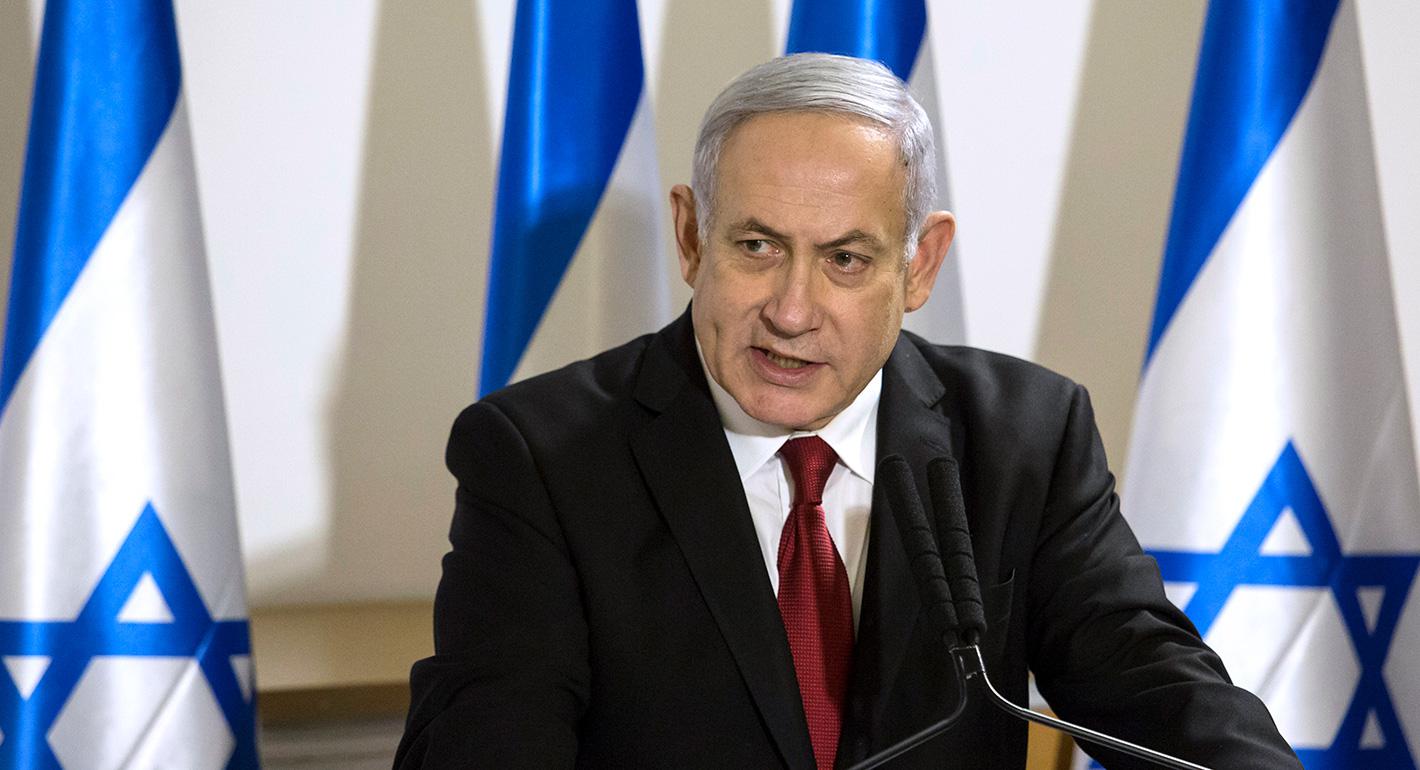
So should Benjamin Netanyahu worry about Joe Biden?
A Biden administration will be eager to separate itself from the policies of its predecessor and restore credibility to U.S. foreign policy, and the Israeli-Palestinian conflict would seem like a prime candidate for a decisive pivot away from the Trump era.
After all, for most mainstream Democrats, let alone progressives, if not an entire younger generation of Democrats, Donald Trump represents Satan’s finger on earth, mirrored by Benjamin Netanyahu – a self-styled Trump mini-me.
Add to that the exhaustion and disillusionment with the illiberal policies of an indicted, and now longest serving, prime minister in Israel’s history; sprinkle in a pinch of possible annexation; combine a touch of growing anger over a 53 year occupation, and you have a witches brew of troubles just waiting to create major tensions with a Biden White House.
Haaretz commentator and Netanyahu biographer Anshel Pfeffer says Netanyahu should be very worried, crediting Biden as the reason there’s been no annexation. With Trump’s poll numbers plummeting, Netanyahu can’t be certain his friend and ally will even be around in January 2021. So why get off on the wrong foot with a new American president, who’s also a longtime friend?
Maybe. But there’s a compelling case to be made, especially when it comes to the low-returns peace process, that Biden will have a few other things on his mind – specifically, putting America back together again. And with that pressing agenda, fighting with Israel about the Palestinians is certainly not even in the top ten.
The idea that Joe Biden will be the first U.S. president since George H.W. Bush to bring serious pressure on Israel is based more on hope than experience.
Clearly if Biden wins, the years of giving all the honey to Israel and nothing but vinegar to the Palestinians is over. A new administration would – at least rhetorically – make an issue of settlement activity. Biden has opposed annexation, without threatening consequences; accepted Jerusalem as Israel’s capital and the move of the U.S. embassy there; and opposed conditioning aid.
And by the looks of the more-Biden-than-Sanders Democratic party platform (two states, anti-BDS, against settlement expansion and annexation but no mention of the word "occupation") – it seems pretty much pro-Israel business as usual.
Bibi has wrestled with two Democratic presidents and seen them come and go. And unlike Clinton and Obama, he’s got a long-standing relationship with Biden and likely figures he’s got some room to maneuver.
Then there’s the question of priorities. Governing is about choosing. Biden will be faced with a galactic challenge of national recovery that surpasses even Roosevelt’s in the wake of the Great Depression, with no triumphant victory in World War Two to bail the country out. A terrible trifecta – pandemic, economic recession and strife driven by racial and economic injustice haunts the land.
Biden’s time, resources, energy and political capital will be devoted to that recovery; it will define his presidency.
And besides, there is no peace process worth fighting about. Bush and Baker risked pressuring Israel in the early 1990s because there was something at stake worth the effort – an unprecedented peace conference in Madrid. What’s Biden’s reward? Trying to preserve a two state solution that’s rapidly going the way of the dodo? Laying the groundwork for a futuristic one state solution untethered from reality?
It will be interesting to see Biden the candidate’s reaction should Netanyahu go ahead with any of his annexation plans. If Netanyahu annexes key settlement blocs in the Jerusalem area – territory it is clear Israel would have kept as a result of a negotiation with Palestinians – Candidate Biden will need to oppose it vigorously, as a harmful unilateral action.
But it’s arguable what President Biden would or could do eight months later to try to reverse the decision. Most likely very little. Should Netanyahu do something astonishingly foolish like annexing the Jordan Valley or other large areas of the West Bank, a much harsher reaction might follow.
And that’s precisely the point. Unless Israelis and Palestinians give a President Biden a reason to get involved – either through a bloody confrontation, some destructive unilateral act or, less likely, some diplomatic initiative, he will have little reason to engage in any major way. There will be an effort to improve ties with the Palestinians, more chatter about a two-state solution; handwringing by the Europeans; and Obama-era unpleasantness with Israel over settlements and the like.
As for any serious entanglement with Israel on the peace process, that’s highly unlikely unless Netanyahu does something really reckless. If tensions do flare, more than likely they‘ll be over a Biden administration effort to engage on the Iran nuclear issue not over a non-existent peace process.
And even here, Washington will likely seek to correct some of the deficiencies in the Iran nuclear deal and buy off and coopt Israel in other areas. If the Democrats take the Senate, Bibi may have few options to oppose it. Certainly there will be will be no more endruns around the administration as Bibi did with Congress under Obama.
So should Netanyahu be worried about Joe Biden? Yes. But only if he does something preternaturally stupid or reckless, and not because Biden himself triggers a confrontation, or a reckoning. Indeed, if Bibi finds himself in a major confrontation with Biden, he’ll almost certainly have nobody but himself to blame.

Senior Fellow, American Statecraft Program
Aaron David Miller is a senior fellow at the Carnegie Endowment for International Peace, focusing on U.S. foreign policy.
Recent Work


Dara Massicot, Aaron David Miller, Andrew S. Weiss



Sophia Besch, Eric Ciaramella, Steve Feldstein, …
Carnegie does not take institutional positions on public policy issues; the views represented herein are those of the author(s) and do not necessarily reflect the views of Carnegie, its staff, or its trustees.

Japan’s long-term security policy is driven by concerns about China, and there is little appetite for (or interest in) pursuing a confrontation with Moscow.

James D.J. Brown

Putin’s conservative staffing policies and search for ever greater control have cemented parliament’s transformation into a bureaucratic appendage of the executive branch.

Andrey Pertsev

Without a ceasefire with Ukraine on attacking each other’s energy infrastructure—to which the Kremlin is unlikely to agree—the diesel agreement between Putin and Trump is largely for show, rather than representing a genuine increase in the volumes of Russian diesel on the global market.

Sergey Vakulenko

Ex-president Gurbanguly Berdimuhamedov remains interested in politics, but his son Serdar, Turkmenistan’s current president, is becoming increasingly independent and willing to break with his father’s legacy. If their covert rivalry goes too far, both risk losing power.

Galiya Ibragimova

Despite a new textbook, an influx of Russian teachers and managers, and an end to the teaching of Ukrainian, the Kremlin is unlikely to have “reprogrammed” locals.

Konstantin Skorkin