

Commentary
When faced with fuel shortages in the past, Central Asian governments could always count on additional supplies from Moscow. That safety net no longer exists.
Galiya Ibragimova
{
  "authors": [
    "Zainab Usman",
    "Alexander Csanadi"
  ],
  "type": "commentary",
  "centerAffiliationAll": "dc",
  "centers": [
    "Carnegie Endowment for International Peace"
  ],
  "collections": [
    "Chart of the Month",
    "Climate and Energy Transitions"
  ],
  "englishNewsletterAll": "ctw",
  "nonEnglishNewsletterAll": "",
  "primaryCenter": "Carnegie Endowment for International Peace",
  "programAffiliation": "SCP",
  "programs": [
    "Sustainability, Climate, and Geopolitics",
    "Africa"
  ],
  "projects": [],
  "regions": [
    "Southern, Eastern, and Western Africa",
    "North America"
  ],
  "topics": [
    "Climate Change"
  ]
}
Source: Getty
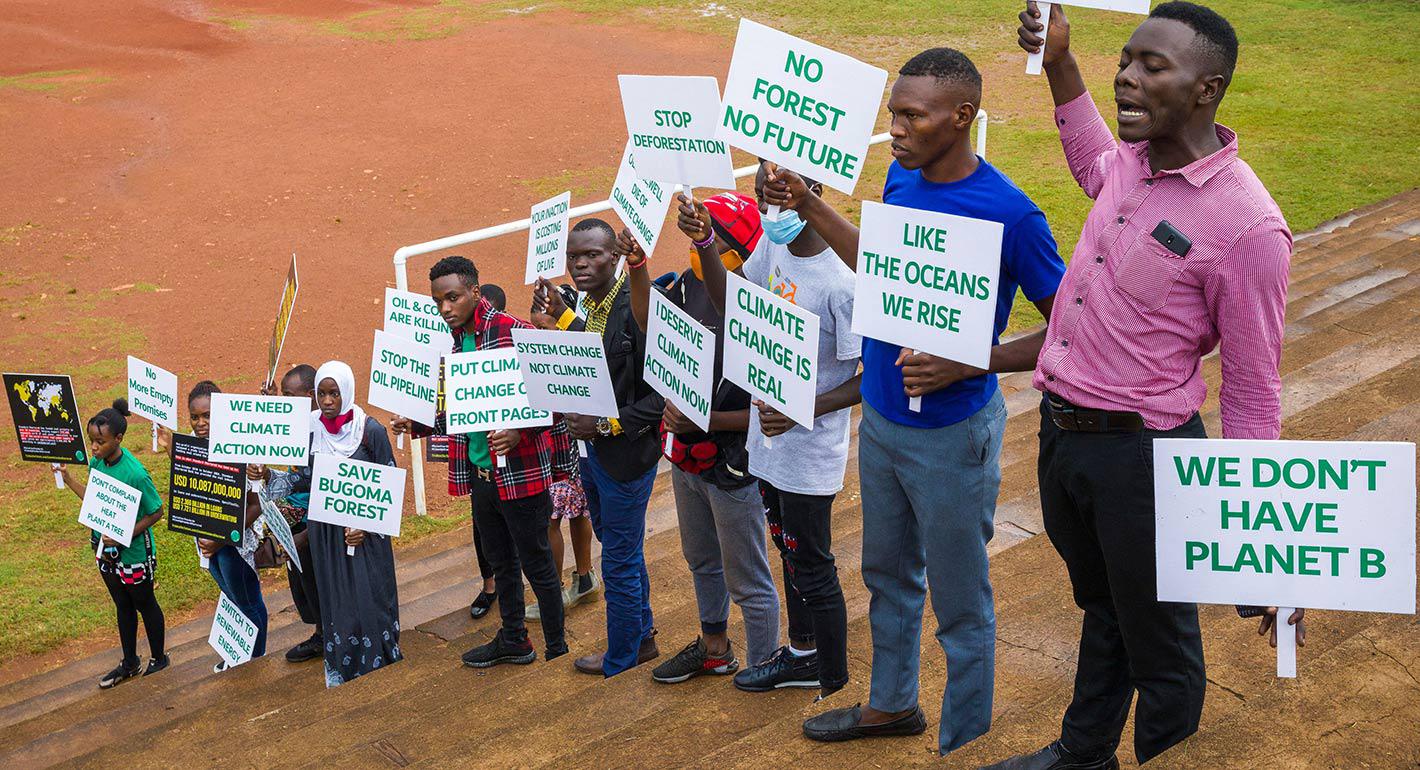
A more inclusive cross-section of researchers would help ensure that the direction and volume of climate research is truly representative of diverse perspectives and priorities and would make the output more likely to yield feasible policy solutions.
As the world turns its attention to the UN Climate Change Conference in Glasgow, it is worth reflecting on the voices driving the debates forward and where they come from. Recently, Reuters published a list of the 1,000 most influential climate scientists based on their publication records and the engagement those publications generate. Only five Africans made the list, according to an analysis by Carbon Brief.
Principally responsible for this glaring disparity are the structural barriers preventing African and other researchers from the Global South from publishing in top academic journals. This lack of representation is indicative of broader inequities given the disproportionately severe effects of climate change on African countries relative to their total greenhouse gas emissions. In addition, this lack of representation is fundamentally a missed opportunity to draw on diverse perspectives around the world to identify innovative solutions to the existential challenge of climate change.
To help address this gap, Carnegie’s Africa Program is compiling a dataset of Africa-based research organizations working on climate-related issues (download full Excel file here). As of November 1, 2021, the dataset includes at least 117 Africa-based organizations working on issues of sustainable agriculture, renewable energy, sustainable urban development, and extractive industries (see figure 1). Many of the organizations—such as the Africa Sustainability Centre in Kenya, the Environmental-Economics Policy Research Unit based at the University of Capetown in South Africa, and the African Climate Change Research Centre in Nigeria—produce technical research across one or more of these thematic areas. Other organizations, such as the Lawyers’ Environmental Action Team in Tanzania, work on the legal and regulatory dimensions of climate change and related policy areas.
These 117 African research organizations have been categorized into at least five broad thematic areas based on what they focus on, albeit with some overlap. More than half (sixty-four) have a demonstrated focus on agriculture and forestry, and also energy (fifty-two). The prioritization of agriculture and energy is to be expected given the high share of employment in agriculture and persistent energy poverty across the continent. Meanwhile, thirty-nine organizations work on extractive industries (such as oil, gas, and mining), while eighteen are engaged in work on urban development, and seven are focused on industry.

This dataset is a first cut at compiling a list of Africa-based entities producing technical and policy-related research on climate change. Given the worldwide challenge that global warming poses, and its geographically disparate effects, it is imperative to engage with experts in parts of the world highly vulnerable to the repercussions of climate change. A more inclusive cross-section of researchers across continents would help ensure that the direction and volume of climate research is truly representative of diverse perspectives and priorities, and such a move would also be more likely to yield feasible policy solutions.

Former Director, Africa Program
Zainab Usman was a senior fellow and the inaugural director of the Africa Program at the Carnegie Endowment for International Peace.
Alexander Csanadi
Former Research Analyst, Africa Program
Alexander Csanadi was a research assistant in the Carnegie Africa Program.
Carnegie does not take institutional positions on public policy issues; the views represented herein are those of the author(s) and do not necessarily reflect the views of Carnegie, its staff, or its trustees.

When faced with fuel shortages in the past, Central Asian governments could always count on additional supplies from Moscow. That safety net no longer exists.

Galiya Ibragimova
Official discussions about mini oil refineries are unlikely to come to anything—but the mere fact they’re happening reveals the regime is failing to deliver a functioning economy.

Sergey Vakulenko

Tokyo would have to surmount a lot of obstacles—not least Western sanctions—if it wanted to return Russian oil imports to even modest pre-2022 volumes.

Vladislav Pashchenko

Powerful lobbyists and inertia led to Russia’s coal-mining sector missing an excellent opportunity to solve its structural problems.
Alexey Gusev
Although Ukrainian strikes have led to a noticeable decline in the physical volume of Russian oil exports, the rise in prices has more than made up for it.
Sergey Vakulenko