

Paper
Douglas H. Paal
Source: Getty
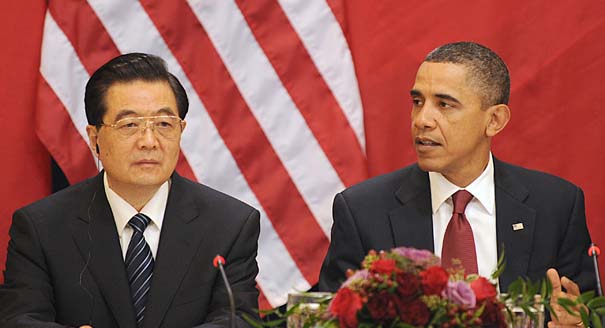
While Chinese President Hu Jintao's upcoming state visit to the United States will provide an opportunity for progress in Sino-U.S. relations, efforts need to be taken to ensure that any positive momentum from the visit is maintained.
Leadership visits between important countries should be seen as “action forcing events.” Even when the gaps between the countries are very large, as between the United States and China, scheduling a summit meeting causes the leaders and bureaucracies of the countries to emphasize seeking beneficial outcomes and avoiding frictions. Such a process can be clearly seen on display now, as President Barack Obama prepares to receive Chinese President Hu Jintao on January 19.
In the interval between Obama’s state visit to China in November 2009 and now, media focus shifted from cooperation to tensions in the U.S.-China relationship. Taiwan, the Dalai Lama’s visit to the White House, frictions over the South China Sea, the Senkaku Islands, the right to exercise in the Yellow Sea, North Korean provocations, and trade and economics have all seen more strain than resolution. Mutual strategic suspicion was amply aired in the media of both countries and the U.S. Congress.
Yet, with Obama’s invitation to Hu in the middle of 2010, the precondition to turn relations in a more positive direction was established. Then Deputy National Security Advisor Tom Donilon and National Economic Advisor Larry Summers visited Beijing in September to set forth some means to make a visit by Hu a success.
Viewed cynically, Hu’s visit could be seen as a relatively empty meeting, just giving him face in the last two years of his term of office and making up for the half-hearted and clumsy welcome Hu received during his first official visit during the George W. Bush administration. But given the drift in management of U.S. relations by China in recent years, getting Hu on to the White House grounds provides him with incentive to take relations in hand. His “face” is engaged and he has an interest in making his ten-year legacy as leader of China reflect well on his dealings with Washington. It becomes an “action forcing event.”
Properly prepared, such a visit jumpstarts improvements otherwise too hard or onerous to attempt. Since the Donilon-Summers trip to Beijing, China has apparently realized that continuing to boycott the U.S. military for last year’s arms sales to Taiwan would be inconsistent with a good summit outcome. Thereafter, U.S. Secretary of Defense Bob Gates met with his counterpart at a meeting in Hanoi, “productive” defense consultations took place in Washington in early December between Under Secretary of Defense Michelle Flournoy and Lieutenant General Ma Xiaotian, China muted objections to the George Washington carrier battle group exercising in the Yellow Sea, and Gates’ own visit to China is now scheduled for early January.
A previously scheduled meeting of the Joint Commission on Commerce and Trade (JCCT) concluded in December with a number of promises from China on indigenous innovation, intellectual property protection, and market access. Participants reviewed the talks as perhaps the most productive ever. This would not be easily imagined in the absence of the coming summit.
A visit to Beijing by Deputy Secretary of State James Steinberg and NSC Senior Director Jeffrey Bader in December—primarily to discuss North Korea but also to plan the objectives of the summit—seems to have helped to unlock China’s previously rigid posture on not interfering in the escalating tensions on the Korean peninsula.
During the first week of January, China’s Foreign Minster Yang Jiechi will visit Washington to continue the planning for the summit. His agenda presumably will include discussions on cooperation over North Korea, Iran, mutual strategic suspicion, clean energy, and climate cooperation. He is also likely to sample the views of non-governmental observers of U.S-China relations.
While results so far are on the whole good, perhaps the trickier part of the process is to make it survive the weeks after the summit. Past experience in times of constructive relations suggests the best method going forward is to engage a broader swath of the Chinese and American elites in a full agenda of exchanges. An important outcome of the summit, therefore, would be instructions from the two leaders for their colleagues to continue the process. An exchange of visits by Chinese Vice President and heir-apparent Xi Jinping and Vice President Joe Biden would be the first place to start.
But it should not stop there. The United States should contrive invitations for the rest of the next generation of the Politburo Standing Committee to exchange visits over the next year and a half. Appropriately high ranking American counterparts should be instructed to make their exchanges as substantial as possible. Demystifying or at least better understanding mutual strategic distrust should be a major objective.
With the trade outlook not significantly improving, and the United States (and Taiwan, South Korea, and Russia) going into a hot election year in 2012, there is every prospect that new and serious bilateral deterioration will set in if differences are not being managed and resolved where possible. Getting as much of the Chinese and American leadership to get “some skin in the game” may be the best thing that can be done to manage the next phase of the long term adjustment to China re-rise and America’s domestic challenges.
Distinguished Fellow, Asia Program
Paal previously served as vice chairman of JPMorgan Chase International and as unofficial U.S. representative to Taiwan as director of the American Institute in Taiwan.
Recent Work
Douglas H. Paal

Douglas H. Paal, Tong Zhao, Chen Qi, …
Carnegie does not take institutional positions on public policy issues; the views represented herein are those of the author(s) and do not necessarily reflect the views of Carnegie, its staff, or its trustees.

When faced with fuel shortages in the past, Central Asian governments could always count on additional supplies from Moscow. That safety net no longer exists.

Galiya Ibragimova
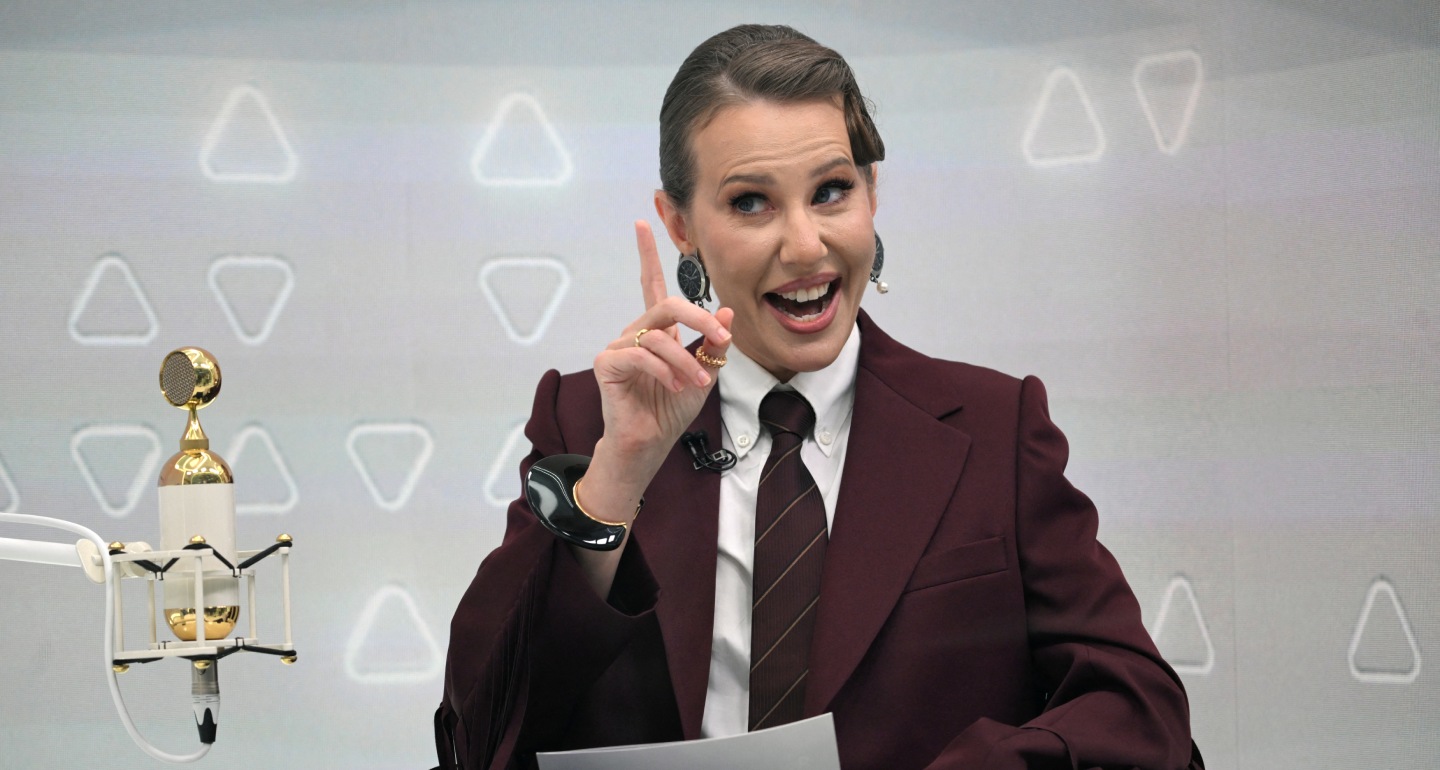
Reading the purported correspondence of celebrity Ksenia Sobchak sheds light on her role within the system, and how journalism and politics function in Putin’s Russia.
Vladislav Gorin

Two divergent trends—Putin’s hardline vision of how to prosecute the war in Ukraine, and a growing desire for change in Russia—could tear the regime apart.

Tatiana Stanovaya
Ultimately, Zelensky sided neither with the reform camp nor with the military establishment as such, but with political control.

Balázs Jarábik
Tokayev’s predecessor, Nursultan Nazarbayev, outlined arrangements for a power transition too soon and in too much detail, ultimately losing control over the process. Tokayev is determined not to meet the same fate.

Temur Umarov