

Commentary
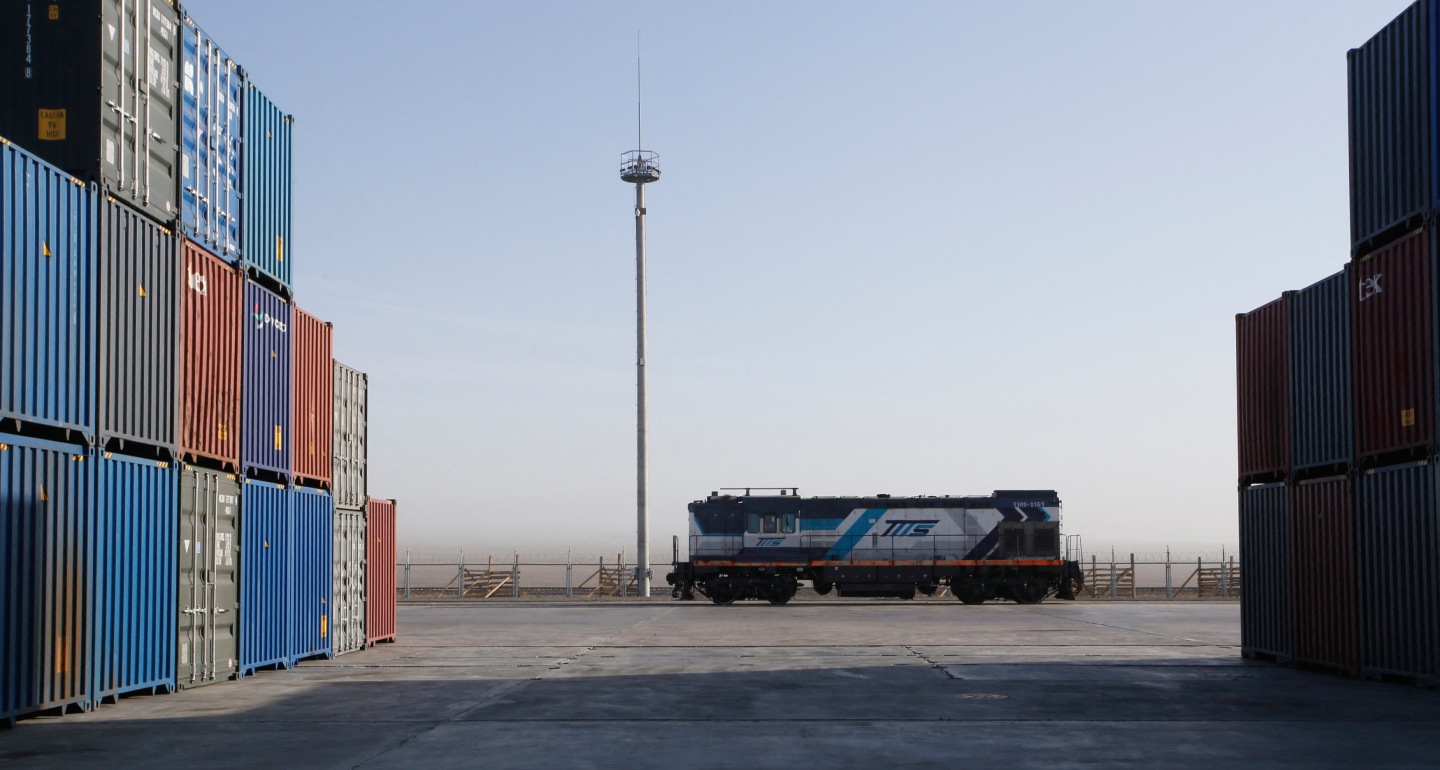
This year’s wars have made alternative routes to transit through Russia no less risky for Central Asian countries.
Galiya Ibragimova
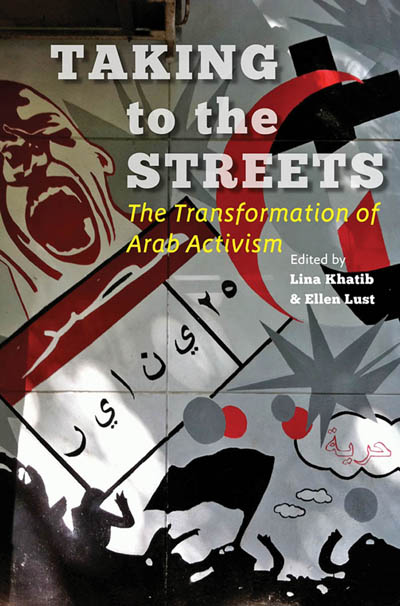
A critical look at the dynamics of activism in the Arab world since the Arab uprisings of 2011 and the interplay between the domestic and regional contexts in different Arab countries.
Source: Johns Hopkins University Press
Taking to the Streets critically examines the conventional wisdom that the 2011 Arab Spring uprisings happened spontaneously and were directed by tech-savvy young revolutionaries. Pairing first-hand observations from activists with the critical perspectives of scholars, the book illuminates the concept of activism as an ongoing process, rather than a sudden burst of defiance. The contributors examine case studies from uprisings in Tunisia, Egypt, Libya, Yemen, Syria, Bahrain, Morocco, Jordan, Kuwait, and Saudi Arabia, evaluating the various manifestations of political activism within the context of each country's distinct sociopolitical landscape. The chapters include a country-specific timeline of the first year following the uprisings and conclude with lessons learned. First-hand observations include those of Libyan activist Rihab Elhaj, who reflects on how the revolution gave birth to Libyan civil society, as well as Syrian writer and human rights activist Khawla Dunia, who discusses how Syrians have tried to remain steadfast in their commitment to nonviolent resistance.A foreword by Prince Hicham Ben Abdallah El Alaoui—third in succession to the Moroccan throne and consulting professor at Stanford University's Center on Democracy, Development, and the Rule of Law (CDDRL)—provides a historical overview of activism in the Middle East and North Africa. A postscript from CDDRL director Larry Diamond distinguishes the study of activism from that of democratization.
Taking to the Streets will be used in courses on Middle East politics and will be relevant to scholars and the general public interested in democratization, political change, and activism.
“The co-editors have compiled a magnificent set of authors. The chapters capture rich descriptive accounts of events that illuminate the political realities surrounding the events of the Arab Spring.”
— Amaney A. Jamal, Princeton University
Former Director, Middle East Center
Khatib was director of the Carnegie Middle East Center in Beirut. Previously, she was the co-founding head of the Program on Arab Reform and Democracy at Stanford University’s Center on Democracy, Development, and the Rule of Law.
Ellen Lust
Carnegie does not take institutional positions on public policy issues; the views represented herein are those of the author(s) and do not necessarily reflect the views of Carnegie, its staff, or its trustees.
This year’s wars have made alternative routes to transit through Russia no less risky for Central Asian countries.

Galiya Ibragimova

The ruling elites in contemporary Russia are not a political class, but a community of managers who are not subject to competition or public accountability. The state is becoming an operating apparatus without any internal autonomy.

Alexandra Prokopenko

Pashinyan’s pro-European party has been re-elected with a decisive victory. But the pro-Russian opposition could still slow Armenia’s progress toward peace with Azerbaijan and rapprochement with Europe.
Mikayel Zolyan

How did Putin co-opt Russia’s political and economic elites, ensuring no more than fitful resistance to the regime’s war on Ukraine?
Alexandra Prokopenko
For all the menacing rhetoric, the Armenian prime minister remains a leader with whom Putin is prepared to interact: not as an ally, but as a partner, albeit a problematic one.

Alexander Atasuntsev