

Report
Mr. Husain Haqqani, Ashley J. Tellis
{
  "authors": [
    "Husain Haqqani"
  ],
  "type": "legacyinthemedia",
  "centerAffiliationAll": "dc",
  "centers": [
    "Carnegie Endowment for International Peace"
  ],
  "collections": [],
  "englishNewsletterAll": "ctw",
  "nonEnglishNewsletterAll": "",
  "primaryCenter": "Carnegie Endowment for International Peace",
  "programAffiliation": "russia",
  "programs": [
    "Russia and Eurasia",
    "Democracy, Conflict, and Governance"
  ],
  "projects": [],
  "regions": [
    "South Asia",
    "India",
    "Pakistan"
  ],
  "topics": [
    "Political Reform",
    "Democracy",
    "Foreign Policy"
  ]
}
REQUIRED IMAGE
Source: Carnegie
Originally appeared in the Wall Street Journal, October 10, 2002
Parliamentary elections are being held today in Pakistan. But while they will not lead to the restoration of democracy, they could well lead to civil unrest and confrontation between Pakistan's powerful military and its civilian politicians. Continued military influence is likely to increase hostility between Pakistan and India and undercut efforts to root out Islamic extremists, who have been the armed forces' political allies in the past.
The elections are meant to meet the deadline for return to civilian rule set by the country's supreme court after the 1999 coup that brought Gen. Pervez Musharraf to power. But before holding the polls, Gen. Musharraf stripped parliament of its sovereignty through constitutional amendments imposed by decree. He has secured five more years as president, given himself the power to dismiss the government and parliament and authorized himself to amend the constitution further.
The customary 90-day campaign period has been cut to 40, and severe restrictions have been placed on campaigning. State-run radio and television are being used to emphasize the mistakes of previous civilian leaders, without giving their parties a chance to respond.
When Gen. Musharraf secured his position ahead of parliamentary elections through a one-sided referendum in April, many called it fraudulent as well as a farce. This time, the president has a different strategy. In addition to constitutional amendments, the general has decreed arbitrary rules for the elections. Candidates are required to have a college degree (roughly 10% of Pakistan's population qualifies). And those that do have degrees and political experience are banned too: former Prime Ministers Benazir Bhutto and Nawaz Sharif, as well as a hundred other experienced politicians belonging to mainstream political parties are barred from standing as candidates.
Gen. Musharraf claims he is trying to change Pakistan's political culture and bring new leadership to the country. Not a bad goal. But the president is not the first military ruler to make such claims. Pakistan has followed a familiar path since its first military ruler, Field Marshal Ayub Khan, took over in a coup in 1958. No matter how initially promising they seemed, military rulers always ended up multiplying Pakistan's problems, not solving them.
That's not likely to change. Gen. Musharraf has created a National Security Council comprised of military and civilian leaders to ensure that military guidelines are followed in policy making. Irrespective of the results of today's polls, the military, which has ruled Pakistan for more than half its 52-year existence, will remain the most important feature of Pakistani politics.
Repression, war or confrontation with India has characterized each one of Pakistan's military regimes. Heavy arms spending has caused economic hardship. Even those who earlier supported Gen. Musharraf now agree that strengthening the military's hand is not the way to avoid the mistakes of civilian politicians.That kind of cynicism from ordinary Pakistanis about the controlled parliamentary election is likely to result in low voter turnout today. When Pakistan's first national election was held in 1970, more than 63% of registered voters showed up, expecting to change their lives. By the time of the 1997 election only 33% of registered voters bothered to get to the polls on election day.
The Pakistani military justifies its refusal to cede power by projecting India as a constant and imminent threat. But the army's power to intervene in politics precludes civilian leaders from taking a leading role in helping accommodate the tension with the country's neighbor. India's own obsessively anti-Pakistan interest groups (not to mention the bellicose government in New Delhi) only fuel the fire by appearing to validate the more aggressive elements in the Pakistani military.
Pakistan will not become stable, democratic and focused sufficiently on development until the army is persuaded to relinquish its politico-economic dominance. Until now, Gen. Musharraf's support in the war against terrorism has been considered sufficient reason by the U.S. to back his regime, without insistence on specific steps toward democracy. But if the U.S. refrains from rebuking him over his power grab even after the parliamentary elections, it will devastate the prospects for Pakistan's long-term stability.
Gen. Musharraf seeks support from the international community in return for his avowed commitment to fighting terrorism. But his desire to perpetuate his own rule, and the domination of the military in Pakistan's politics, clearly outweighs other considerations.
Reprinted with permission of The Wall Street Journal © 2002. Dow Jones
& Company, Inc. All rights reserved.
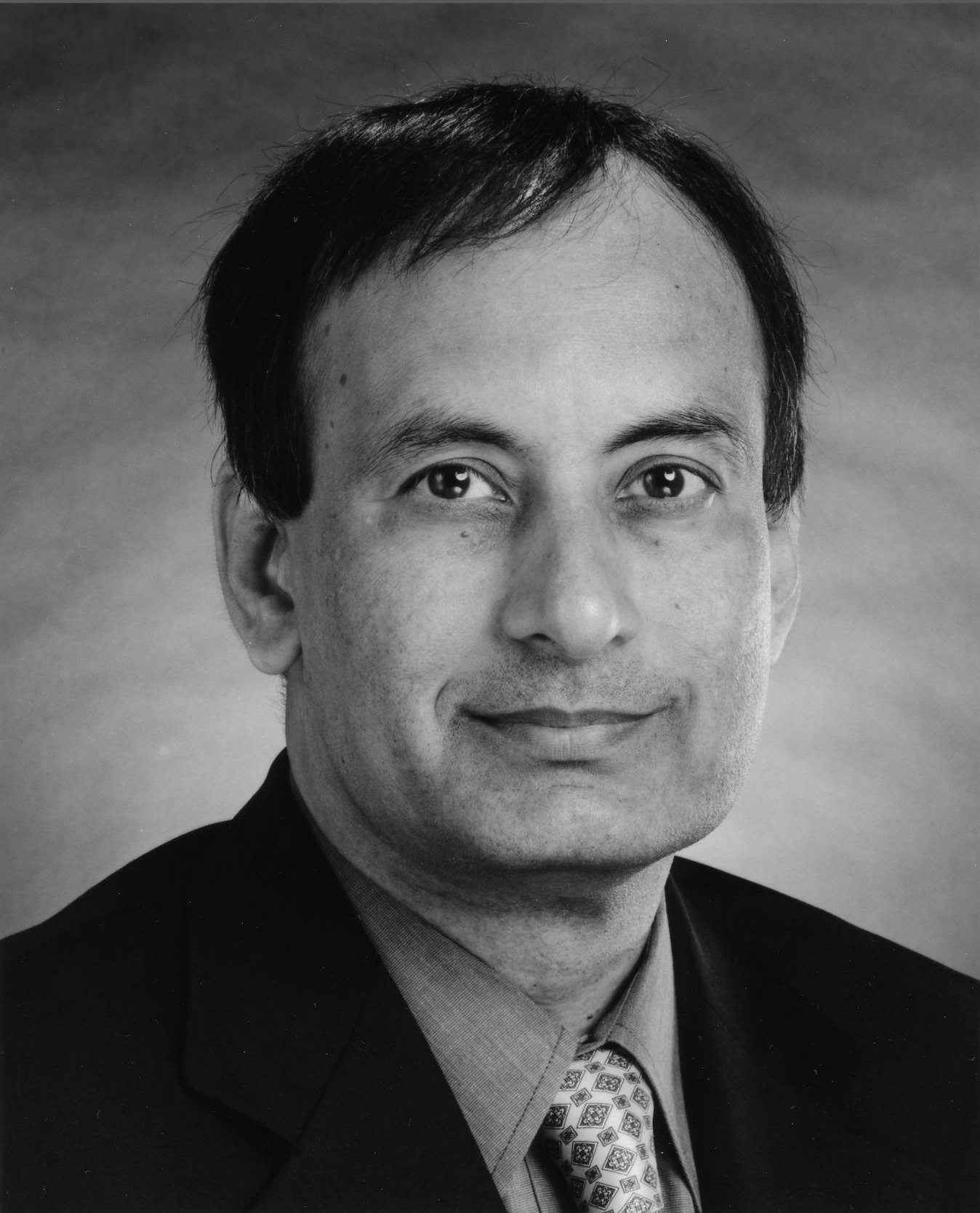
Former Visiting Scholar
Recent Work
Mr. Husain Haqqani, Ashley J. Tellis
Mr. Husain Haqqani
Carnegie does not take institutional positions on public policy issues; the views represented herein are those of the author(s) and do not necessarily reflect the views of Carnegie, its staff, or its trustees.

China’s political future will be shaped between now and next October. As the Communist Party enters its intense “campaign season” to prepare for a major political transition in 2027, reading Beijing's actions and responses may become more difficult as domestic politics weigh on its behavior more than usual.

Damien Ma

But their "principal to principal" model will only be as effective as the political strength of each leader back home.
Damien Ma

U.S. unpredictability has allowed China to capitalize on its positioning as the “responsible great power”. Paradoxically, the more China wins the perception game, the more likely expectations will rise for Beijing to deliver not just words but to demonstrate with its deeds.

Chong Ja Ian

Hanoi and Beijing have long treated each other as distant cousins rather than comrades in arms. That might be changing as both sides draw closer to hedge against uncertainty and America’s erratic behavior.

Nguyễn Khắc Giang

Across Asia, China is better positioned to withstand energy shocks from the fallout of the Iran war. Its abundant coal capacity can ensure stability in the near term. Yet at the same time, the country’s energy transition away from coal will make it even less vulnerable during the next shock.
Damien Ma