• Commentary
  • Research
  • Experts
  • Events
Carnegie China logoCarnegie lettermark logo
{
  "authors": [
    "Matthew Rojansky"
  ],
  "type": "legacyinthemedia",
  "centerAffiliationAll": "dc",
  "centers": [
    "Carnegie Endowment for International Peace",
    "Malcolm H. Kerr Carnegie Middle East Center",
    "Carnegie Russia Eurasia Center"
  ],
  "collections": [],
  "englishNewsletterAll": "",
  "nonEnglishNewsletterAll": "",
  "primaryCenter": "Carnegie Endowment for International Peace",
  "programAffiliation": "russia",
  "programs": [
    "Russia and Eurasia"
  ],
  "projects": [
    "Eurasia in Transition"
  ],
  "regions": [
    "Middle East",
    "Syria",
    "Caucasus",
    "Russia"
  ],
  "topics": [
    "Political Reform",
    "Security",
    "Foreign Policy"
  ]
}
Source: Getty

In The Media

Russia Softens Stance on Syria

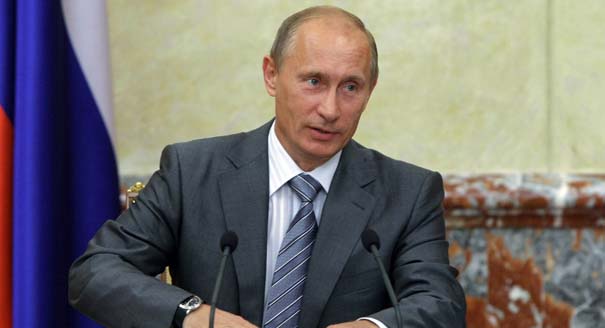
The Russian government may be changing its attitude towards Syria and penalizing the Assad regime for failing to heed Moscow's advice.

Link Copied
By Matthew Rojansky
Published on Mar 20, 2012
Project hero Image

Project

Eurasia in Transition

Learn More

Source: CTV (Canada)

Speaking on CTV, Carnegie’s Matthew Rojansky explained that the Russian government may be changing its attitude toward Syria. “I think the Russian perspective is that they are not the ones who have changed. Two other parties have changed,” said Rojansky.  First, the international community has come to Russia in a more supplicant mode, acknowledging Russia as the pivotal party with leverage on Assad. “Once again, Russia has proved the indispensable man, so to speak, in international security,” argued Rojansky.  “The second change, at least in Sergey Lavrov’s, Russia’s foreign minister’s view, is that the Assad regime has failed to listen to Russia’s wise advise and that Assad has misplayed his own hand, and I think Russia is therefore, in some respects, punishing him,” he added.

  • Russia’s Foreign Policy Position: “Russians like to have an independent position,” argued Rojansky. “What they mean by that is that they will not let the West tell them what to do and will not let the Arab League tell them what to do. And they have done that. They have staked out an independent position on Syria.”
     
  • Financial Stake in Syria: Russia has long-standing financial interests in Syria, including Soviet-era weapons, new arms deals, energy and oil services deals, and the military base at Tartus. All of those things had appeared to be a lost cause as recently as a few months ago, but "now it looks like they might actually be able to extract a deal to keep those,” said Rojansky.
     
  • Lesson to Syria: “Russia has handled its own protest much better, and that is the message they would like Kofi Annan to deliver,” said Rojansky. “Syria has got to be much smarter, stop killing innocent people, and look at the Russian model."
     
  • Russia’s Domestic Politics: Before the March 2012 presidential election in Russia, it was extremely important that Putin not seem to accept the notion that a public protest movement could bring down what he views as a legitimate regime, said Rojansky.  “After his reelection, he has kind of got a new lease on life, and he knows that that lease is contingent on his delivering a sense of fresh air, and freedom, and reform,” he added.  Putin’s legitimacy domestically depends on Russia maintaining its great power status, including exercising influence through international instruments, like the UN Security Council. “If Russia finds itself being sidelined, then it chips away at the image of Putin as a great leader, and that is something he cannot afford,” concluded Rojansky.
     

This intervew originally aired on CTV (Canada).

About the Author

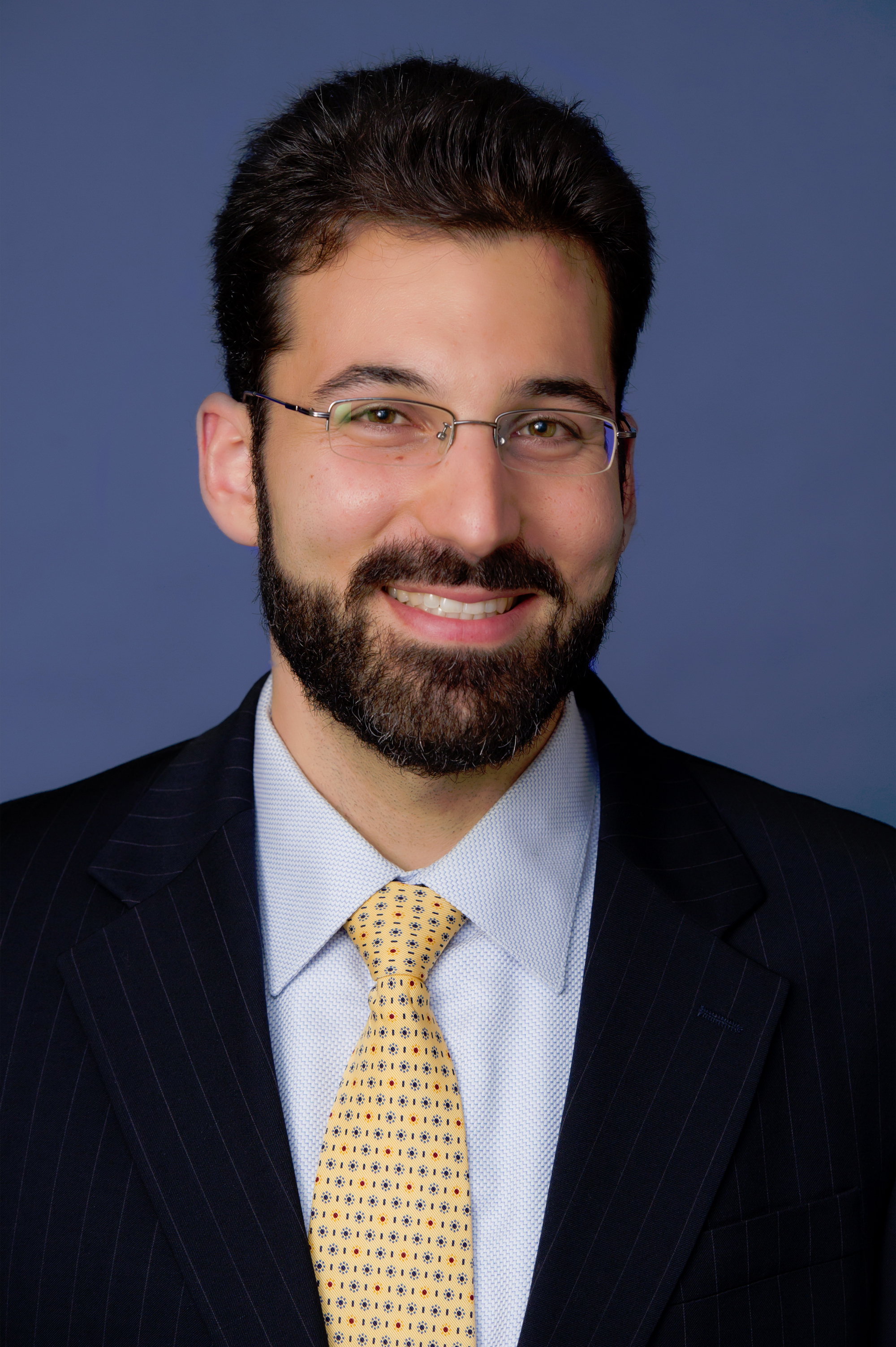
Matthew Rojansky

Former Deputy Director, Russia and Eurasia Program

Rojansky, formerly executive director of the Partnership for a Secure America, is an expert on U.S. and Russian national security and nuclear-weapon policies.

    Recent Work

  • Paper
    An Opportunity for Ambition: Ukraine’s OSCE Chairmanship

      Matthew Rojansky

  • In The Media
    Presiding Over the OSCE: Challenges and Opportunities

      Matthew Rojansky

Matthew Rojansky
Former Deputy Director, Russia and Eurasia Program
Matthew Rojansky
Political ReformSecurityForeign PolicyMiddle EastSyriaCaucasusRussia

Carnegie does not take institutional positions on public policy issues; the views represented herein are those of the author(s) and do not necessarily reflect the views of Carnegie, its staff, or its trustees.

More Work from Carnegie China

  • Commentary
    Malaysia’s Year as ASEAN Chair: Managing Disorder

    Malaysia’s chairmanship sought to fend off short-term challenges while laying the groundwork for minimizing ASEAN’s longer-term exposure to external stresses.

      Elina Noor

  • Commentary
    When It Comes to Superpower Geopolitics, Malaysia Is Staunchly Nonpartisan

    For Malaysia, the conjunction that works is “and” not “or” when it comes to the United States and China.

      Elina Noor

  • Commentary
    Neither Comrade nor Ally: Decoding Vietnam’s First Army Drill with China

    In July 2025, Vietnam and China held their first joint army drill, a modest but symbolic move reflecting Hanoi’s strategic hedging amid U.S.–China rivalry.

      • Nguyen-khac-giang

      Nguyễn Khắc Giang

  • Commentary
    China’s Mediation Offer in the Thailand-Cambodia Border Dispute Sheds Light on Beijing’s Security Role in Southeast Asia

    The Thai-Cambodian conflict highlights the limits to China's peacemaker ambition and the significance of this role on Southeast Asia’s balance of power.

      Pongphisoot (Paul) Busbarat

  • Trump and Xi on a red background
    Commentary
    Emissary
    China Is Determined to Hold Firm Against Trump’s Pressure

    Beijing believes that Washington is overestimating its own leverage and its ability to handle the trade war’s impacts. 

      • Sheena Chestnut Greitens

      Rick Waters, Sheena Chestnut Greitens

Get more news and analysis from
Carnegie China
Carnegie China logo, white
  • Research
  • About
  • Experts
  • Events
  • Contact
  • Careers
  • Privacy
  • For Media
Get more news and analysis from
Carnegie China
© 2026 Carnegie Endowment for International Peace. All rights reserved.