

Commentary
Thomas de Waal
{
  "authors": [
    "Thomas de Waal"
  ],
  "type": "commentary",
  "centerAffiliationAll": "",
  "centers": [
    "Carnegie Endowment for International Peace",
    "Carnegie Europe",
    "Carnegie Russia Eurasia Center"
  ],
  "collections": [],
  "englishNewsletterAll": "",
  "nonEnglishNewsletterAll": "",
  "primaryCenter": "Carnegie Europe",
  "programAffiliation": "",
  "programs": [],
  "projects": [],
  "regions": [
    "Middle East",
    "Israel",
    "Caucasus",
    "Russia",
    "Azerbaijan",
    "Armenia",
    "Georgia"
  ],
  "topics": [
    "Economy",
    "Trade",
    "Foreign Policy"
  ]
}
Source: Getty
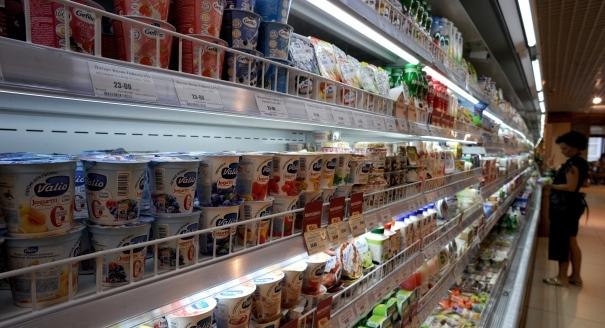
The list of countries wanting to take advantage of Western sanctions to boost their food exports to Russia has nothing in common but the desire to gain a new market.
International sanctions on Russia are having multiple but mysterious effects.
Russia’s currency has slid, with a dollar now worth almost 40 rubles. The unexpected criminal charges against billionaire Vladimir Yevtushenkov may be the result of a new round of economic and political austerity. As one analyst told the Financial Times, “Now they’re going after people who are not part of the inner circle. In these times neutrality is no longer enough.”
These new trading partners have nothing in common except willingness to gain a new market.
In the case of Israel and Russia, it is a matter of making up for a double trade ban. On September 1, the European Union announced new restrictions on Israeli imports following the summer offensive against Gaza. Israel and Russia evidently hope they can exchange products with each other that are not going to or from Europe.
Meanwhile, Egypt and Russia are discussing a new free trade agreement. Argentinian and Brazilian ministers are talking about how they can take the opportunity to export more agricultural products to the Russian market.
Closer to home, Armenia sees an opportunity to boost its faltering economy. President Serzh Sargsyan has talked of “great opportunities for our agricultural producers” and the agriculture minister says he wants to see exports double.
Azerbaijan, which has assured the West of its support for Ukraine in the current crisis, recently hosted a senior Russian delegation led by Moscow’s main troubleshooter for its neighborhood, Dmitry Rogozin. Azerbaijan’s Deputy Prime Minister Yagub Eyyubov told his visitors, “The European Union is putting pressure on Russia but no one will break the Russian Federation, it will never bend.”
For Russia, this is a matter of “food security,” for Azerbaijan it is a new market opportunity.
For Russia’s neighbors in the Caucasus this is also an instance where, in a relationship where Russia is generally perceived to hold all the cards, they gain some leverage of their own. Even Georgia is expanding its trade relationship with Russia, despite the recent suspension of their 1994 free trade agreement. Exports of Georgian wine to Russia surged by 65 percent in the first seven months of this year.
For all the big declarations, it looks highly unlikely that Azerbaijan tomatoes, Armenian apples, and Argentinian beef can smoothly and silently take up the empty place in the Russian market left by France, Greece, or Poland. The last time Russia underwent such a massive market disruption, in the late 1980s and early 1990s, it took years to rectify.
The politics of it may be more important for Moscow—a demonstration that there is a multi-polar world out there, in trade at least.

Senior Fellow, Carnegie Europe
Thomas de Waal is a senior fellow at Carnegie Europe, specializing in Eastern Europe and the Caucasus.
Recent Work
Thomas de Waal

Thomas de Waal, Areg Kochinyan, Zaur Shiriyev
Carnegie does not take institutional positions on public policy issues; the views represented herein are those of the author(s) and do not necessarily reflect the views of Carnegie, its staff, or its trustees.

But their "principal to principal" model will only be as effective as the political strength of each leader back home.

Damien Ma

U.S. unpredictability has allowed China to capitalize on its positioning as the “responsible great power”. Paradoxically, the more China wins the perception game, the more likely expectations will rise for Beijing to deliver not just words but to demonstrate with its deeds.

Chong Ja Ian

Hanoi and Beijing have long treated each other as distant cousins rather than comrades in arms. That might be changing as both sides draw closer to hedge against uncertainty and America’s erratic behavior.

Nguyễn Khắc Giang

Across Asia, China is better positioned to withstand energy shocks from the fallout of the Iran war. Its abundant coal capacity can ensure stability in the near term. Yet at the same time, the country’s energy transition away from coal will make it even less vulnerable during the next shock.
Damien Ma

In the latest Five-Year Plan, the Chinese president cements the shift to an innovation-driven economy over a consumption-driven one.
Damien Ma