

Article
Alejandro Martin Rodriguez, Joy Arkeh, Sarah Yerkes
{
  "authors": [
    "Sarah Yerkes"
  ],
  "type": "commentary",
  "blog": "Emissary",
  "centerAffiliationAll": "dc",
  "centers": [
    "Carnegie Endowment for International Peace"
  ],
  "collections": [
    "Democracy at 10"
  ],
  "englishNewsletterAll": "menaTransitions",
  "nonEnglishNewsletterAll": "",
  "primaryCenter": "Carnegie Endowment for International Peace",
  "programAffiliation": "MEP",
  "programs": [
    "Middle East"
  ],
  "projects": [],
  "regions": [
    "Tunisia"
  ],
  "topics": [
    "Democracy"
  ]
}
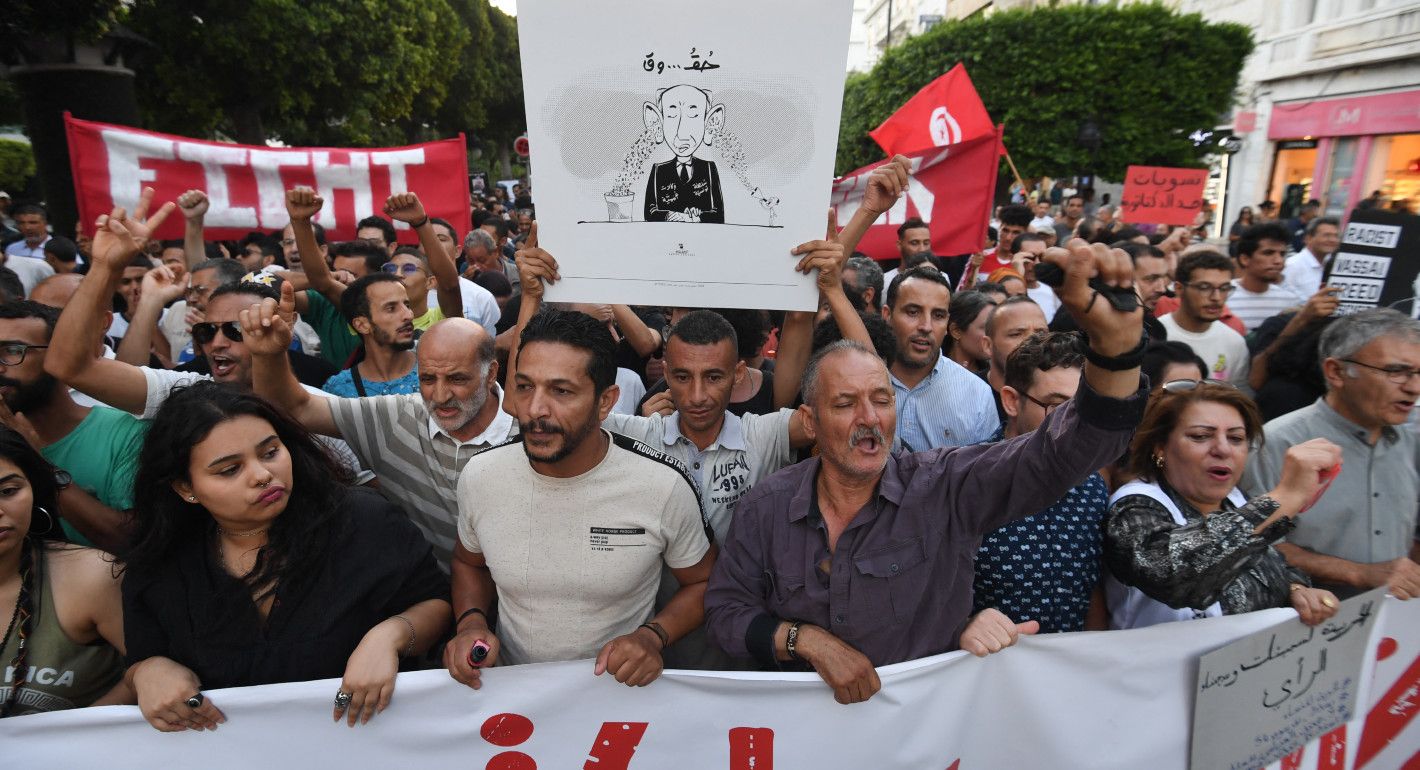
Tunisians protest in front of the Interior Ministry on September 13. (Photo by Fethi Belaid/AFP via Getty Images)
Dozens of Tunisians expressed interest in running, but almost all have been disqualified or jailed under the president’s legal changes.
On October 6, Tunisia will hold a presidential election that will almost certainly be a low point in the trajectory of what was once the sole democracy in the Arab world. Tunisian President Kais Saied, a constitutional law professor who was democratically elected in 2019, has deftly used the law to ensure his victory in what will be Tunisia’s first undemocratic presidential election in almost fourteen years.
Saied initiated a self-coup on July 25, 2021, setting off a series of actions that rolled back Tunisia’s decade of democratic progress. Kais fired nearly all government ministers, suspended the democratically elected parliament, created a new constitution, and introduced draconian laws that severely limit freedom of expression. In the runup to the election, Saied has used the autocratic legal environment to ensure none of the potential opposition figures are able to participate in the election.
Dozens of potential candidates expressed interest in running for president, but the elections commission (ISIE), which Saied restructured to fall under his control in 2022, only approved three, including Saied. This was a dramatic drop from the twenty-six candidates approved to run in 2019.
This year, seventeen candidates formally filed papers with the ISIE. Fourteen of them of were disqualified for failing to acquire the required number of signatures, failing to meet the nationality criteria, or failing to provide a sufficient financial guarantee. Additionally, seven potential candidates said they were unable to file their paperwork, as they could not obtain legal documents from the Ministry of Interior showing that they had no criminal records—a new requirement Saied instituted, although the ISIE denied that anyone was disqualified for this reason. And while Tunisia’s Administrative Court, the highest body in charge of electoral disputes, ruled that three of the disqualified candidates should be reinstated, the ISIE rejected the court’s ruling, stating, “The commission is the only body constitutionally entrusted with the integrity of election.”
Saied has relied on several legal texts that he has introduced or drafted to disenfranchise his opponents.
Since Decree Law 54’s adoption in September 2022, Saied’s government has used it to arrest dozens of political and media figures.
Article 89 of the 2022 Constitution implicitly targets several of Saied’s prominent opponents by raising the age of eligibility, denying eligibility to dual citizens and, most importantly, preventing anyone facing legal challenges from running.
Saied’s government has also used the penal code to issue harsh sentences against several of his opponents, accusing them of insulting the president or of attempts to overthrow the government.
Decree Law 2022-55 was written for the December 2022 parliamentary elections. It has been used widely in the presidential campaign against Saied’s potential opponents, several of whom have been accused of vote-buying.
By manipulating the 2024 presidential election, Saied has put one more nail in the coffin of Tunisia’s democratic transition and ensured the outcome well before the process began. He has deftly used his status and experience as a constitutional law expert to justify his antidemocratic behavior. Saied spent the bulk of his first term reconstructing Tunisia’s legal landscape to pave the way for his continued rule. In addition, he has also put forth his own decree laws, including Decree Law 54, that have created a chilling effect on Tunisian society, opening up anyone who criticizes him or runs against him to legal action and the potential of serious jail time or even death.
Saied’s government has also failed to deliver for the Tunisian public, who have seen their country’s economy steadily decline and are increasingly feeling the effects of decades of corruption and government mismanagement. Under Saied, virtually all of Tunisia’s economic indicators have declined, particularly those that most impact the daily lives of Tunisians. Tunisia has failed to reach its pre-pandemic levels of real GDP, with unemployment hovering around 16 percent and food inflation around 10 percent.
Although the Tunisian people will not have a credible choice at the ballot box on October 6, many Tunisians remain interested in and committed to returning the country to a democratic path where all Tunisians have a voice and a say in how their country is governed, as was clear when thousands took to the streets on September 13 to protest against Saied. During Saied’s second term, they must work to ensure that the few remaining institutions in the country with some independence, such as the media and civil society, are active in holding the president to his promise—codified in his 2022 Constitution—to step down following the end of his second term in 2029.
The latest from Carnegie scholars on the world’s most pressing challenges, delivered to your inbox.

Acting Co-Director and Senior Fellow, Middle East Program
Sarah Yerkes is acting co-director and a senior fellow in Carnegie’s Middle East Program, where her research focuses on Tunisia’s political, economic, and security developments as well as state-society relations in the Middle East and North Africa.
Recent Work

Alejandro Martin Rodriguez, Joy Arkeh, Sarah Yerkes
Alejandro Martin Rodriguez, Sarah Yerkes
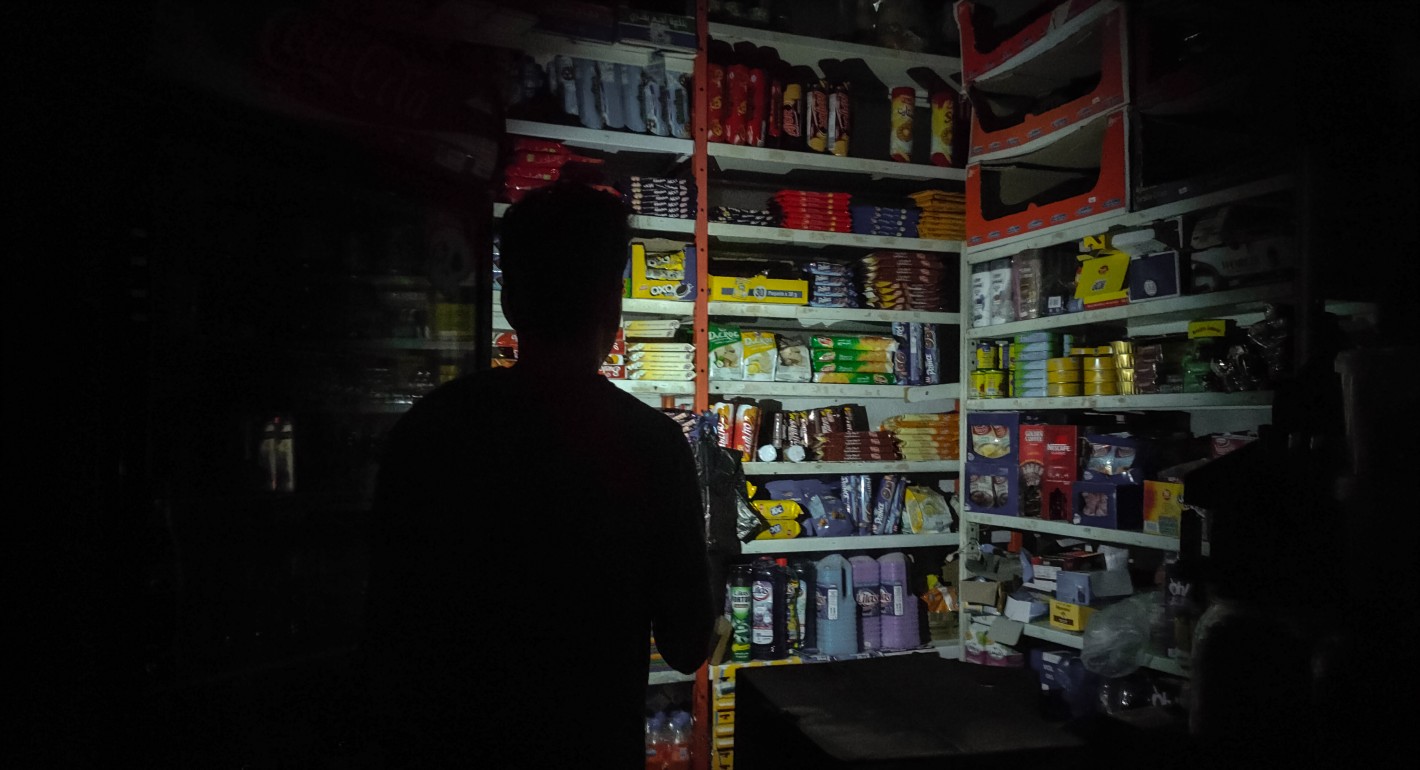
Saied’s main accomplishment has been to destroy a decade’s worth of democratic progress.
Sarah Yerkes

In Colombia and elsewhere in the region, the United States is trying to shape election outcomes—but at what cost?
Oliver Stuenkel, Adrian Feinberg
The impacts of the Faye-Sonko rupture could go well beyond the country’s borders.

Lesley Anne Warner
Regardless of the outcome, there’s another path to ensuring that progress doesn’t stall.

Zaur Shiriyev
Lessons from other backsliding democracies show that mass mobilization needs to feed into an electoral strategy.
Saskia Brechenmacher, Shreya Joshi