

Commentary
Judy Dempsey
{
  "authors": [
    "Judy Dempsey"
  ],
  "type": "legacyinthemedia",
  "centerAffiliationAll": "",
  "centers": [
    "Carnegie Endowment for International Peace",
    "Carnegie Europe"
  ],
  "collections": [
    "Europe’s Eastern Neighborhood"
  ],
  "englishNewsletterAll": "",
  "nonEnglishNewsletterAll": "",
  "primaryCenter": "Carnegie Europe",
  "programAffiliation": "",
  "programs": [],
  "projects": [],
  "regions": [
    "Europe",
    "Eastern Europe",
    "Western Europe"
  ],
  "topics": [
    "EU"
  ]
}
Source: Getty
Compensating Holocaust victims is not only about money. It is about dealing with the past and ensuring that Jews living in Germany can feel safe. Why can’t other countries reckon with their pasts?
Source: New York Times

In my latest Letter From Europe, I write about the battle over how to pay pensions to Holocaust survivors who volunteered to work in the ghettos and contributed to the government pension plan.
But compensating Holocaust victims is not only about money. It is also about dealing with the past and ensuring that Jews living in today’s Germany can feel safe and believe that it is their home.
The Holocaust dwarfs the tragedies of history. Yet other European governments are also haunted by the past, often finding it extremely difficult to apologize for cruelties during war or occupation, despite the passage of time.When François Hollande, the French president, made an official two-day visit to Algeria last month, Algerians were hoping that he would apologize for the way French atrocities during an effort to brutally crush Algeria’s war of independence in 1961.
Mr. Hollande had already gone further than his predecessors when last October, he acknowledged the injustice done to Algerians during colonial rule. In particular, he cited the killing of up to 250 Algerian protestors in the streets of Paris on October 17, 1961. ‘‘Fifty-one years after this tragedy, I pay tribute to the memory of the victims,’’ Mr. Hollande said.
But in Algeria, Mr. Hollande fell short of making an apology.
“I want to define with Algeria a strategic partnership on an equal-to-equal basis. I am not here to repent or apologize, I am here to tell the truth,’’ he said after meeting the Algerian President, Abdelaziz Bouteflika. Maybe, said analysts, an apology will be made once those French politicians who were in power at the time are no longer alive.
Dealing with the past has also proved extremely difficult for the countries of the former Yugoslavia that were plunged into civil war just twenty years ago. The media in Serbia is still reluctant to write about Serb atrocities in Bosnia and in Kosovo. Indeed, across this part of Europe, there is a prevailing sense of victimhood. Analysts said this makes it difficult for governments to talk to each other about the past and normalize their relations.
Yet remarkably, after many decades of distrust and enmity, Poland and Russia are slowly dealing with the past.
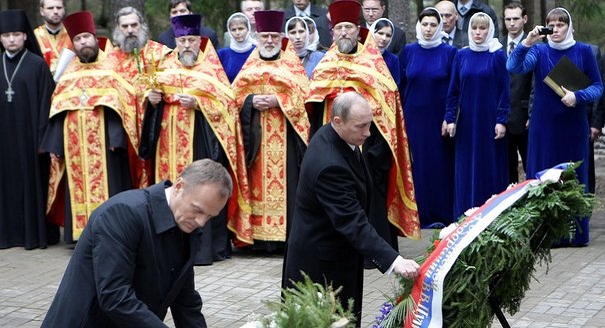
In April 2010, President Vladimir Putin visited Katyn, in western Russia where 60 years earlier an estimated 22,000 Poles were killed in April 1940 on Stalin’s order.
Mr. Putin was the first Russia leader to make such a gesture and the first to invite a Polish leader to commemorate the event. A Polish-Russian historians’ commission has also been established to delve into the many chapters of their difficult relationship. Perhaps historians in the Balkans could emulate such a commission.

Nonresident Senior Fellow, Carnegie Europe
Dempsey is a nonresident senior fellow at Carnegie Europe
Recent Work
Judy Dempsey
Judy Dempsey
Carnegie does not take institutional positions on public policy issues; the views represented herein are those of the author(s) and do not necessarily reflect the views of Carnegie, its staff, or its trustees.
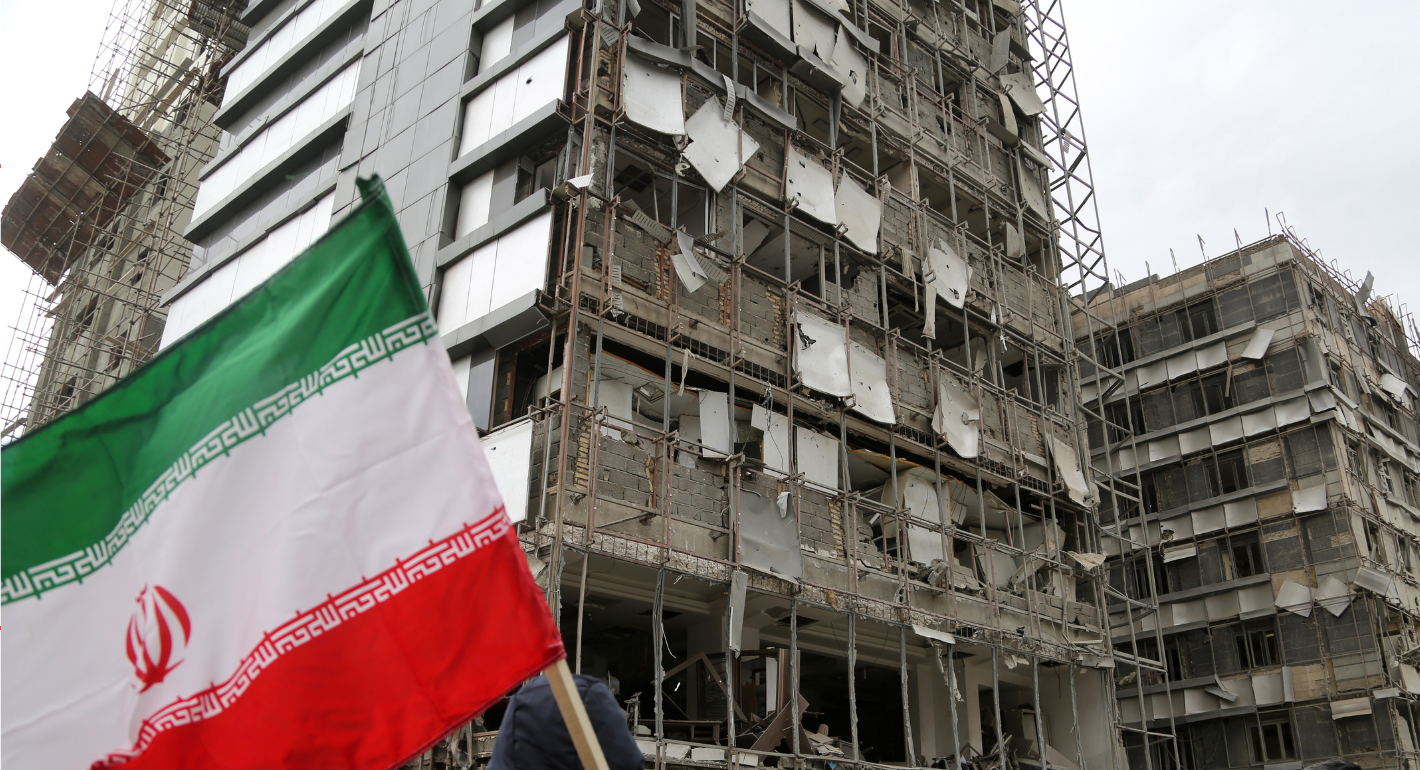
Europe’s reaction to the war in Iran has been disunited and meek, a far cry from its previously leading role in diplomacy with Tehran. To avoid being condemned to the sidelines while escalation continues, Brussels needs to stand up for international law.

Pierre Vimont
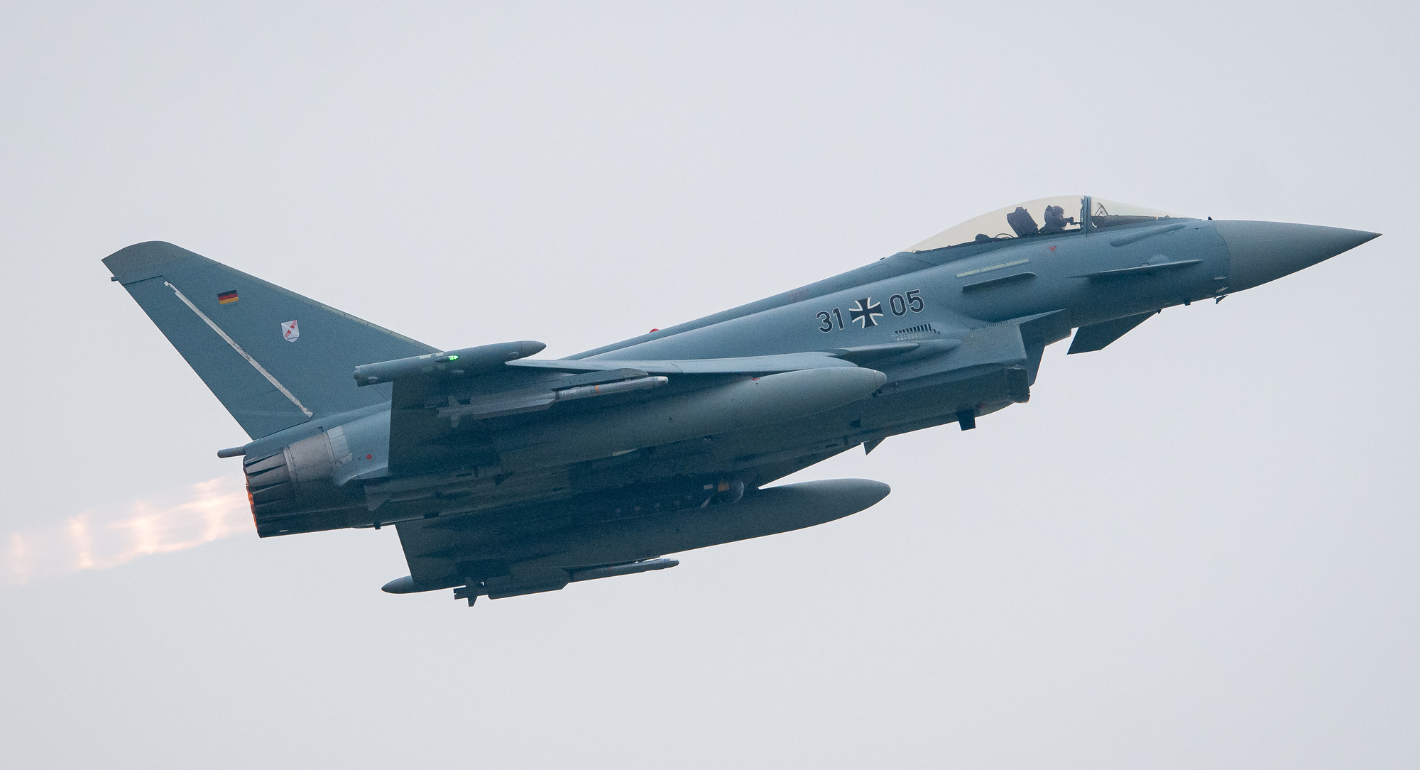
France and Germany’s failure to agree on the Future Combat Air System (FCAS) raises questions about European defense. Amid industrial rivalries and competing strategic cultures, what does the future of European military industrial projects look like?

Rym Momtaz, ed.
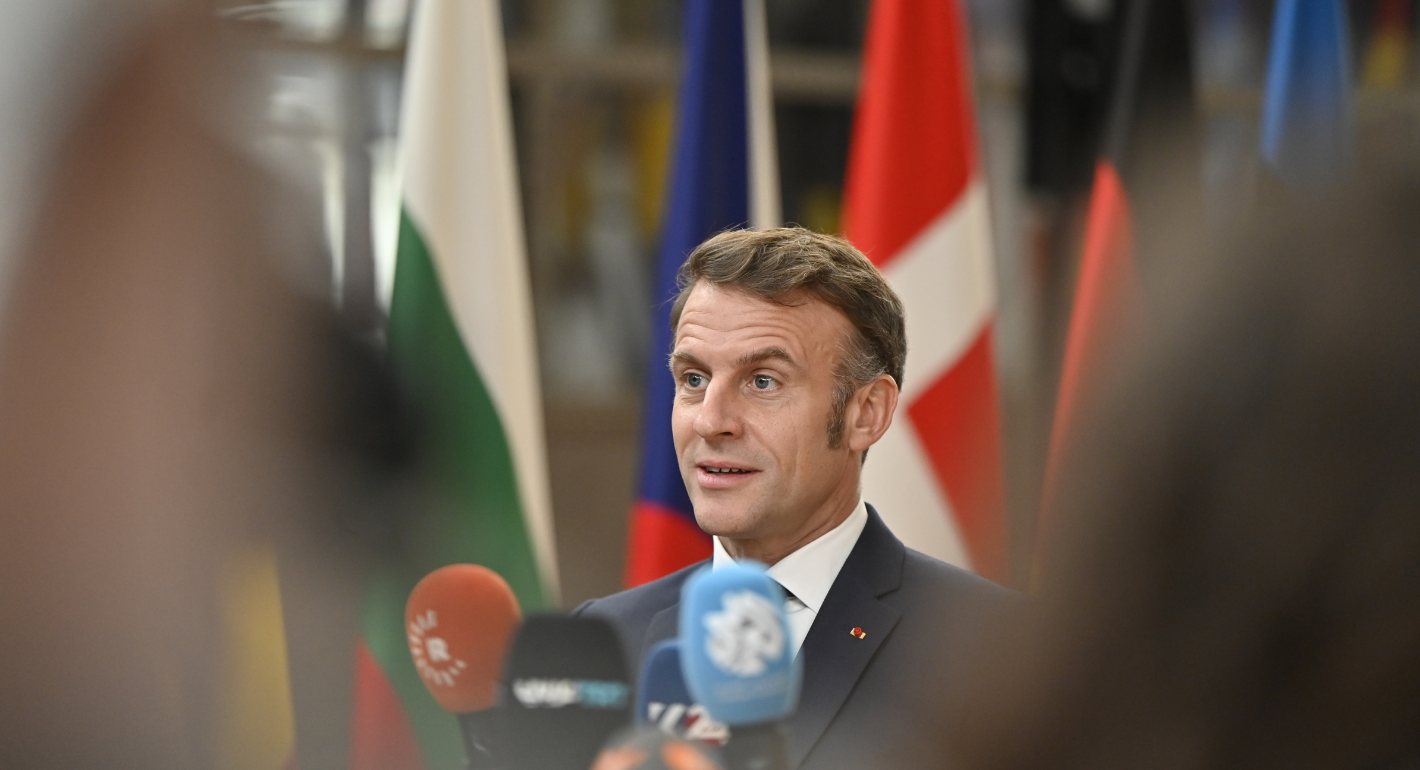
France has stopped clinging to notions of being a great power and is embracing the middle power moment. But Emmanuel Macron has his work cut out if he is to secure his country’s global standing before his term in office ends.
Rym Momtaz

Despite offering security benefits to candidates and the EU alike, the enlargement agenda appears stalled. Why is progress not being made, and is it time for Europe to rethink its approach?
Sylvie Goulard, Gerald Knaus
Over the past two decades, regional collaboration in the South Caucasus has intensified. Turkey and the EU should establish a cooperation framework to accelerate economic development and diversification.


Feride İnan, Güven Sak, Berat Yücel