Source: Bulletin of the Atomic Scientists
Complete nuclear disarmament is a dangerous chimera. For three fundamental reasons, pursuing this theoretically laudable goal would likely produce a more dangerous world.
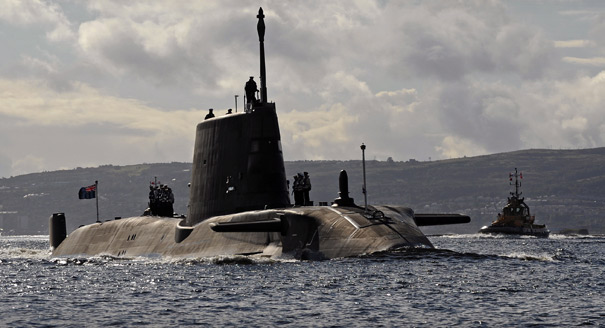
First, as a means for maintaining security, it is difficult to identify a credible alternative to nuclear deterrence. Simply put, nuclear deterrence has worked. Even at the height of the Cold War's ideological polarization, the world never witnessed the sort of large-scale wars that, in the absence of a nuclear deterrent, were fought in the first half of the 20th century. Policy makers fully recognize the destructive capability of nuclear weapons and have come to understand the complexities inherent in a nuclear world. The concept of mutually assured destruction has provided, and continues to provide, a sound basis for limiting the scope and scale of confrontations between nuclear weapon states.
Devoid of a nuclear deterrent, the world would immediately become more dangerous. If military assets were limited to conventional weapons, nations would experience fewer inhibitions against armed conflict. This would hold true even for the major powers. With disincentives to conflict reduced, the renewal of conventional arms races would likely be unstoppable. Among other things, this would have an important effect on national budgets. Today, at least for nuclear weapon states, the existence of a nuclear deterrent allows for drastic reductions in defense spending during times of austerity. In a similar vein, countries that fall under another nation's extended nuclear deterrence can spend less on conventional military capabilities than they otherwise would; they benefit from a nuclear dividend. So overall, though it may sound paradoxical, nuclear weapons are a force for stability. It is hard to imagine how similar levels of stability could be achieved through any means other than nuclear weapons.
Second, how would a world without nuclear weapons be managed? If the world were essentially one big "peace cartel," this cartel would be very fragile indeed. Economic theory indicates that members of a cartel become more likely to engage in cartel-busting behavior as the rewards for doing so increase and the penalties decrease. A similar logic would pertain where nuclear weapons are concerned. In a world without nuclear weapons, breaking one's cartel commitments by developing a nuclear deterrent would seem to have enormous security benefits. And as for penalties, nothing short of a sanctioned military attack intended to destroy the country in question would change the calculus of a rogue regime intent on acquiring nuclear weapons. In other words, ensuring that the world remained free of nuclear weapons would require the establishment of a universal regime devoted to that purpose, backed by the unambiguously credible use of force. The world has never witnessed the emergence of such an institution, and likely never will.
The third factor agitating against total disarmament is the difficulty of effecting a transition to a nuclear-free world. States have developed nuclear deterrents for a variety of reasons, but chief among these—whether for the great powers, or for middle powers such as India, Pakistan, and Israel—has been threat perception. Until the threats that have led these powers to acquire nuclear weapons are permanently eliminated, it is difficult to envision them agreeing to disarm completely. For example, Pakistan's security and policy establishment will never agree to total disarmament until Pakistan feels secure vis-à-vis India, its more powerful neighbour and its geopolitical rival. A similar argument could be made about Israel. The world will have to become much more adept at peacefully solving or at least managing its regional conflicts, whether through a universal security architecture or a multiplicity of regional architectures, for the middle powers in particular to perceive complete disarmament as safe.
Eliminating nuclear weapons, though a lofty goal, is a difficult proposition. But this is not to say that disarmament efforts should be abandoned. To the contrary, the nuclear weapon states (with the United States and Russia in the lead) should move forward with reducing their arsenals. Otherwise, the consensus that underlies the entire nonproliferation regime will be increasingly open to challenge. But there is a limit to what nuclear disarmament can accomplish without introducing new security risks.
Nuclear deterrence has served the world well for many decades. It would continue doing so even if arsenals were much smaller. Stability could be maintained if arsenals approached—but did not reach—zero. Indeed, that should be the goal of the global nuclear community.
This article was originally published in the Bulletin of the Atomic Scientists.