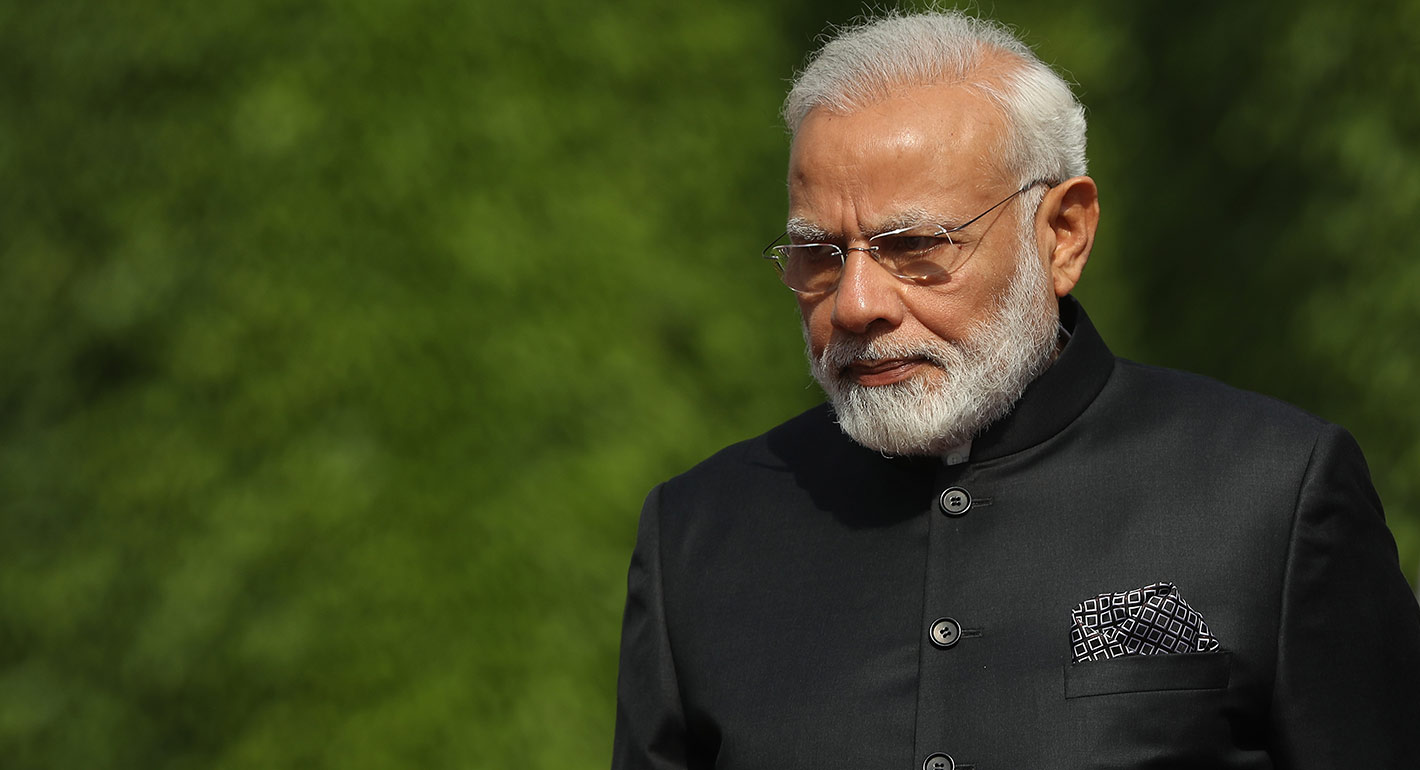
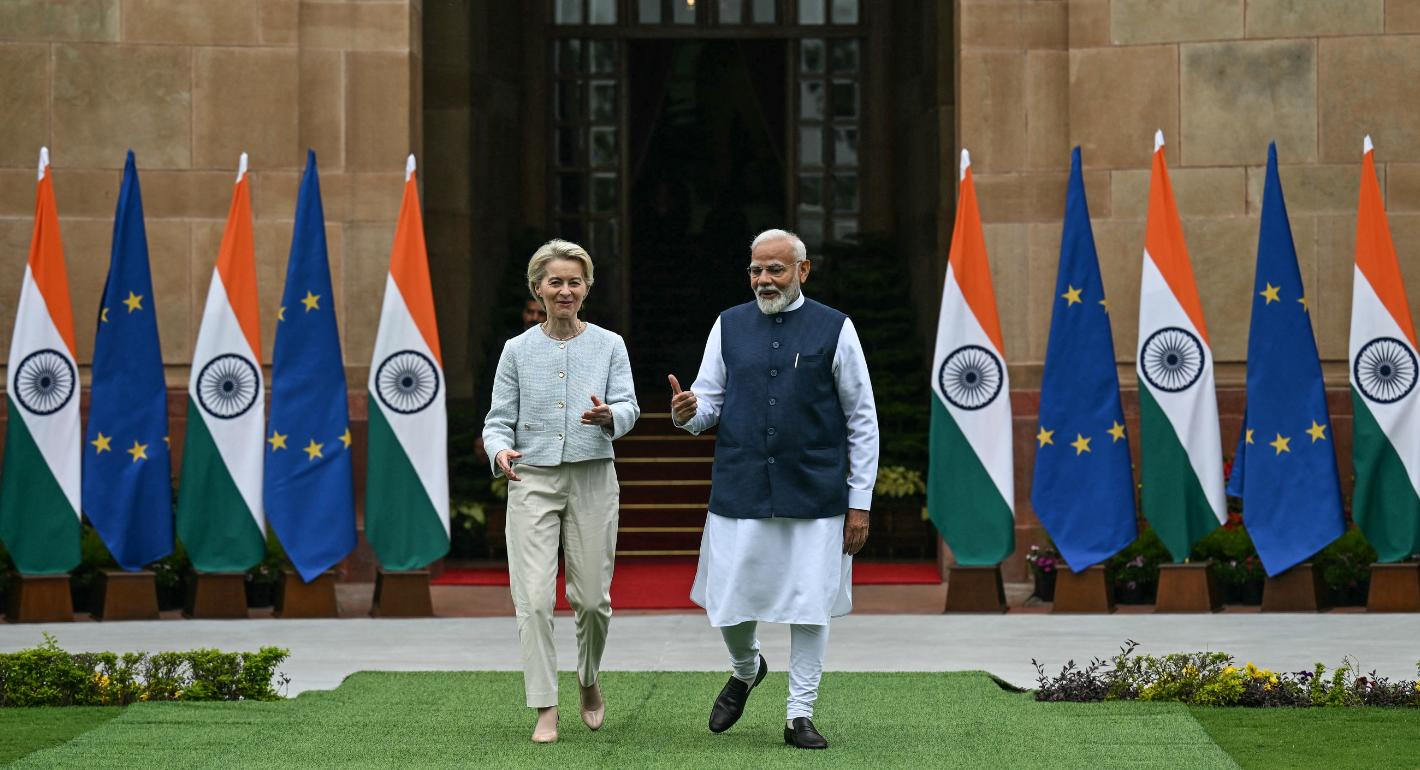
Narendra Modi’s foreign policy style during the last five years has been dizzying. From whirlwind visits around the globe to stadium-packed appearances abroad to selfies and bear hugs with business glitterati and world leaders alike, he has left a distinctive mark on the international stage. Not bad for a former chief minister who had little foreign policy experience and whose first national campaign barely mentioned world affairs.
Yet, for all the histrionics that have marked Modi’s term in office, three achievements, however incomplete, are likely to make a real difference to India’s strategic fortunes over time.
The first is India’s bold outreach to Saudi Arabia and the United Arab Emirates. For far too long, the Persian Gulf did not receive the attention it deserved. Many countries there were viewed as overly supportive of Pakistan for religious reasons and hence left outside of India’s priorities, which focused on secular states such as Egypt and Iraq in the past. That the smaller countries in the Gulf were overly beholden to Saudi Arabia did not help either, especially when Riyadh was zealously exporting Wahhabi Islam with its trail of destruction, plain for all to see.
Recognising, however, the political changes in the Arab world, Modi moved unexpectedly to engage Saudi Arabia and the UAE in ways that promise important political and economic benefits. The weakening of the traditional, knee-jerk support for Pakistan is already in evidence, but the longer-term gains derive from the Gulf monarchies’ deepening opposition to Islamist terrorism as India continues to struggle against this threat.
The growing interest in India as an economic opportunity further suggests that the wealthy Arab states will increasingly acquire a stake in New Delhi’s success. India already remains a major customer of Gulf energy, but as India rises internationally, it will become more important to the region’s strategic interests.
Modi’s ability to jumpstart this transformation, while avoiding enmeshment in the current intra-Gulf rivalries and while preserving good relations with Iran, demonstrates an agility that has eluded even the United States.
An equally momentous renovation has been the upswing in ties with Japan. Early steps towards a partnership with Tokyo began under Manmohan Singh, but an unimaginable acceleration has occurred more recently due to the close personal ties between Modi and Shinzo Abe.
Their relationship is hard to explain: the backgrounds of the two men are vastly different as is their leadership style. Nor can it be accounted for merely by the common concerns about China, although Beijing is never far from their minds. Whatever the reasons, that Japan and India have become indispensable partners in the “free and open Indo-Pacific” is enormously valuable for both (and for Washington).
Tokyo seeks to increase its economic involvement in India, deepen its defence and security cooperation further and collaboratively strengthen the liberal order in Asia and globally. The US-Japan alliance, obviously, remains the bedrock of Japanese security, but Japan now views India as a vital complementary partner in balancing China.
India, however, has not yet moved far and fast enough to realise this promise. Modi exudes enthusiasm, but his government appears unable to respond nimbly. Between India’s labyrinthine bureaucracy, its still inhospitable business environment and its nervousness about China, India could still fail to realise the comprehensive partnership sought by Tokyo. Whether Modi returns to power or not, India has its work cut out.
China is not going away, and India too needs other allies beyond the United States. Finally, sustaining the US-India relationship remains a vital even though an incomplete Modi achievement. The heavy lifting here was done by Manmohan Singh despite the hostility of his own party, government and coalition partners, not to mention the then Bharatiya Janata Party in opposition.
That Washington remains New Delhi’s most important strategic partner should be self-evident, even if it is disconcerting to some in India. When Modi came into office, he — quickly appreciating this — moved boldly to charm a sceptical Barack Obama and resume the upward trajectory in bilateral relations. More recently, however, his engagement with Washington has been tempered by Donald Trump’s new transactionalism, a self-defeating protectionist turn in his trade policies and an awkward hesitation in standing up to China despite its continuing hostility — all of which have taken the oomph out of his audacious embrace of the United States.
Surprisingly, Washington remains more supportive of India than might have been expected, given Trump’s “America First” ideology. So the bilateral relationship has thankfully survived, which is more than can be said of even some US alliance ties. The first order of business for Modi — should he return to power — or his successor, accordingly, is to get things off the current plateau and into the takeoff witnessed during the late Obama years. India cannot afford an indifferent or, worse still, an oppositional United States.
That Washington is not so today is a tribute both to India and to Modi. But it is now time to make this strategic partnership robust for good. As India goes into another national election, the early din of Modi’s arrival on the world stage will be eclipsed by the raucous politics of democratic contestation.
Yet these three achievements remain important works-in-progress for a successful Indian foreign policy, first in its own neighbourhood and then in the world.
This article was originally published in the Economic Times.