This piece is part of a series on the Gaza ceasefire.
Whether the ceasefire agreement between Israel and Hamas is permanent or a mere pause in hostilities is not yet clear. But one aspect of the conflict is indisputable: the enormity of Gaza’s humanitarian crisis and the task ahead. In the coming weeks, humanitarians must surge delivery of aid to a population in desperate need to reverse widespread malnutrition and signs of famine, as well as nearly collapsed water, sanitation, and healthcare systems. All of this will be essential not just for progress during the ceasefire, but for long-term and sustainable recovery.
Addressing Food Insecurity
In the past, Gaza’s agricultural sector served as a vital safety net against hunger. But farmlands, greenhouses, and irrigation systems have been largely destroyed in the conflict, and livestock populations have been decimated. Farmers have been unable to access seeds or animal feed due to Israeli entry restrictions. Local food production has collapsed, causing prices to skyrocket: Vegetable prices in northern Gaza went up to as much as $100 per kilogram. Approximately 345,000 people are experiencing catastrophic food insecurity this winter, as aid access has been extremely limited for most of the war, and cooking gas has been unavailable since October in northern Gaza. Malnutrition is widespread, with an estimated 60,000 children requiring urgent treatment and all of Gaza confronting acute food insecurity.
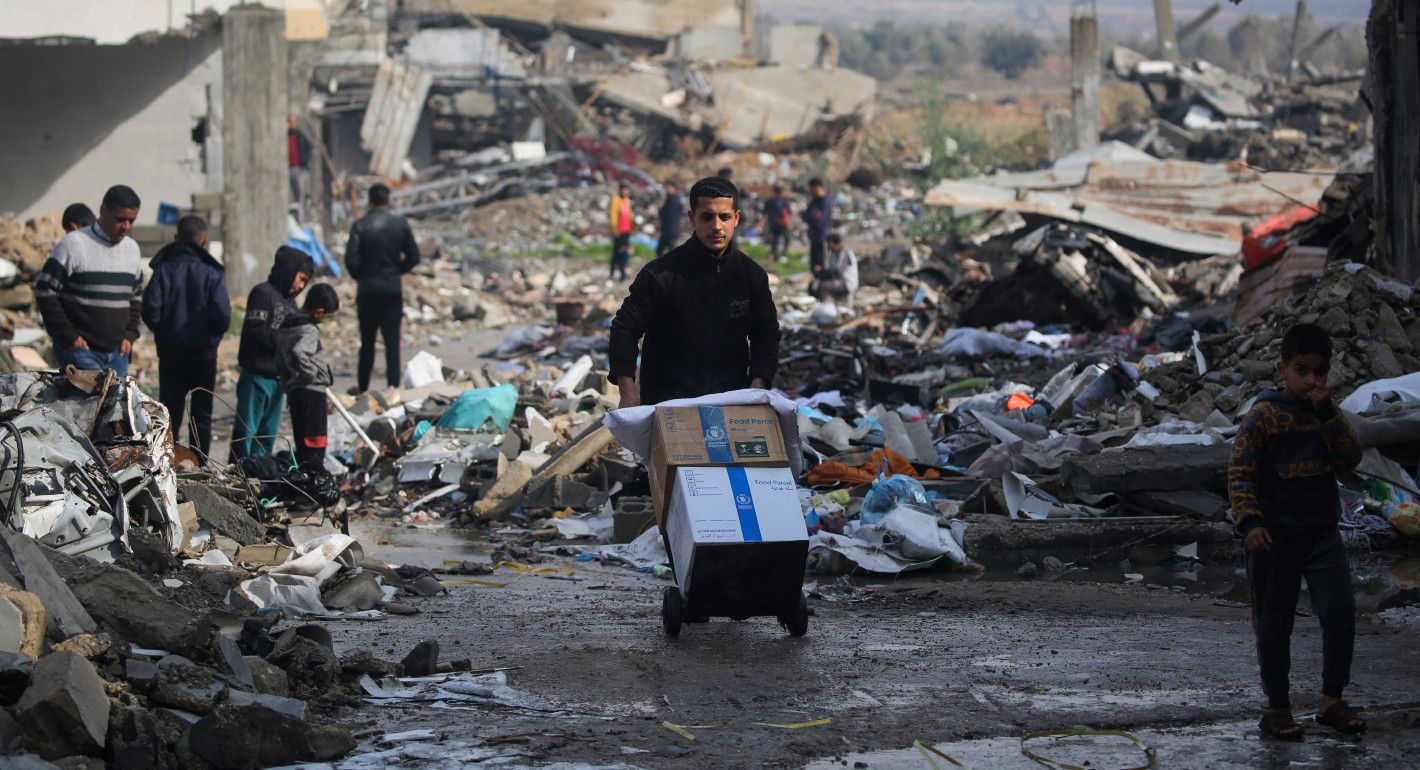
With the destruction of agricultural lands and disrupted supply chains, the fragility of Gaza’s food security has been exposed. Humanitarian assistance will be required in Gaza for some time to come until the agricultural sector can be rebuilt and food security restored. A surge in aid should reduce looting, as goods become more widely available and prices fall, but a professional civilian police presence will be vital to ensure aid is delivered to those in need. Israel has mandated that supply trucks entering Gaza must be open-bed, but they are particularly vulnerable to theft, so closed trucks should be permitted to better ensure aid delivery. Trucks should also be allowed to enter, after inspections, directly to Gaza, rather than offloading and reloading at the border crossings, which delays deliveries.
Rebuilding Essential Infrastructure
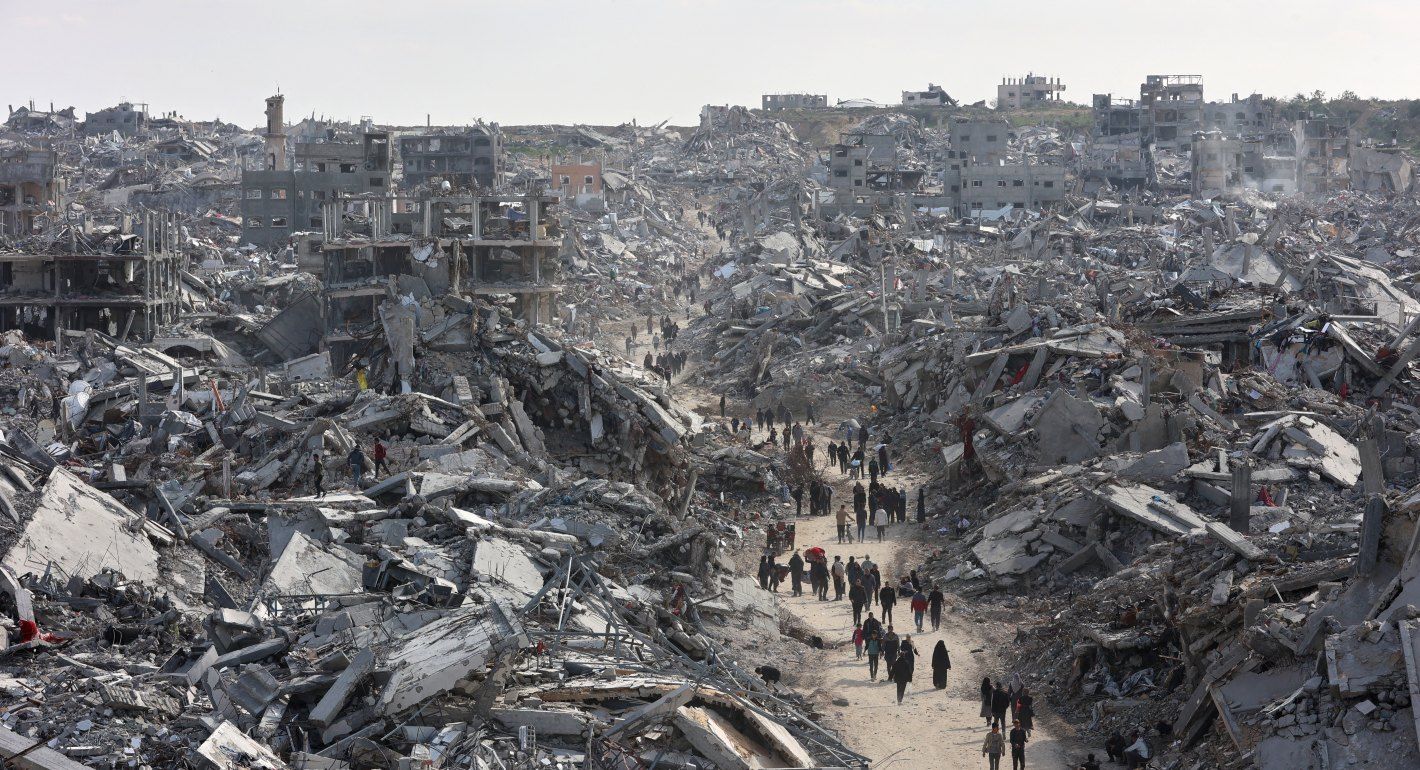
Gaza has suffered one of the most devastating bombing campaigns in history, leaving its infrastructure nearly completely destroyed. With the implementation of the ceasefire restoring some freedom of movement, people are returning to their neighborhoods—only to find their homes reduced to rubble or too badly damaged to be safely habitable.
An estimated 92 percent of houses and apartment buildings are damaged or destroyed, along with at least 88 percent of schools. Only sixty-eight of Gaza’s 564 prewar school buildings are believed to be unscathed.
The UN estimates that 90 percent of Gaza’s population—1.9 million people—is displaced. Hundreds of thousands of families are living in inadequate tents and makeshift shelters that are exposed to the elements and lack sanitation, increasing the risk of diseases that often result from such conditions. Inadequate protection from winter weather has killed a number of people—primarily infants—in the past month. Some 450,000 people currently reside in areas at risk of flooding. Restoration of stormwater drainage systems to minimize flooding needs to be an urgent priority.
Despite large humanitarian provisions of bottled and tanker water, almost half of people in Gaza are unable to access the minimum recommended quantities of water needed for drinking, cooking, and basic hygiene. According to the UN, the average person in Gaza is getting 3 liters of water a day, compared with the recommended 15 liters. Across the Gaza Strip, wells have been destroyed. The Rafah Governorate in the south, where roughly half of Gaza’s prewar population was pushed to relocate, has particularly limited water access. Meanwhile, much of the water is lost before reaching anyone—a consequence of the damage from intense Israeli bombardment.
Coordination and Logistical Chokepoints
The initial surge in truck entries following the ceasefire is a positive sign, but sustaining this flow will be critical. All border crossings must remain open and operational to meet the immense needs in Gaza. During the war, severe shortages of fuel, trucks, spare parts, and vetted drivers severely hindered distributions. Whether these logistical chokepoints will persist—or be reimposed when politically expedient—remains to be seen.
Compounding these challenges is the complexity of coordination. Every shipment must receive approval from Israel before it can proceed, further slowing the process. Streamlining these approvals and scaling up infrastructure will be critical to ensure that the aid reaches those who need it most.
Heavy restrictions on the importation of essential supplies could once again severely limit the restoration of civilian infrastructure in Gaza. Gaza needs an estimated 70,000 liters of fuel daily just to operate minimal water, sanitation, and public health services—but only has about 28 percent of that amount. Mobile desalination plants, solar panels, pipes, pumps, cement, and agricultural supplies must also be prioritized and readily permitted to be imported.
Officially, Israel continues to maintain the same dual-use list of restricted goods that it has imposed since 2008. This list is far more extensive than the international standard reflected in the Wassenaar Arrangement, a global benchmark for controlling transfers of dual-use goods and technologies. In practice, since October 2023, many items have been arbitrarily rejected, including water filters, small solar desalination units, tents with metal poles, maternity kits with scissors to cut umbilical cords, among hundreds of other items. This process will need to be re-examined to enable vital recovery and reconstruction operations.
From Destruction to Dignity
The ceasefire offers a desperately needed respite from the trauma and violence of war. But without sustained international support, the relief brought by this pause will be fleeting. The strain on Gaza’s food systems, healthcare, and housing underscores the urgent need for extended unimpeded aid delivery and the lifting of unduly restrictive measures.
Gaza’s future hinges on rebuilding not only its infrastructure but also its food sovereignty and new local governance structures. Addressing the vast humanitarian needs, ensuring safe and efficient aid distribution, resuming health and educational services, and laying the groundwork for a more sustainable recovery should be top priorities—ones that can help to set Gaza and the region on a more hopeful path.
Read more from this series: