

Commentary
Carnegie scholars examine the crucial elements of a document that’s radically different than its predecessors.
- +18
James M. Acton, Saskia Brechenmacher, Cecily Brewer, …
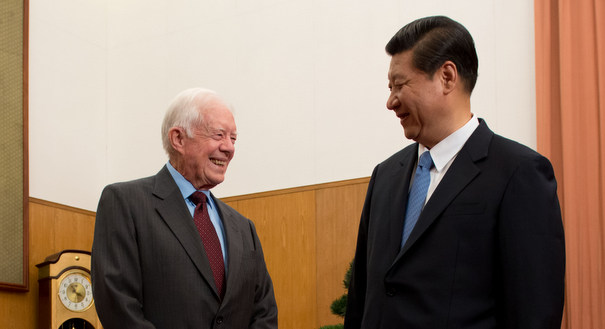
Source: Getty
The fundamentals of U.S. policy toward Asia will stay the same in the second Obama term, but Washington and Beijing should still work to overcome their mutual distrust.
Preparing for his second term as U.S. president, Barack Obama has reshuffled his cabinet, bringing on new secretaries of state and defense. But despite the personnel changes in the second Obama administration—as well as in China following its recent once-in-a-decade leadership transition—the fundamentals of U.S. policy toward Asia will not change. Yet, that does not mean the two sides should not work to overcome the strategic distrust that plagues them.
It was just four years ago that strategists such as Zbigniew Brzezinski floated the idea of a Group of 2 (G2). And people’s expectations for U.S.-China cooperation ran high when President Obama went on a state visit to China in October 2009, as the two countries declared in a joint statement that they would endeavor to build a “positive, comprehensive, and cooperative” relationship. That partly reflected the strong sentiment at the time that common threats ranging from climate change to financial crisis to nuclear proliferation would bind the two countries together.
But many analysts now agree that increasing strategic distrust between China and the United States in recent years has posed significant challenges not only to U.S.-China relations but also to regional peace and security at large. Since the end of 2009, the United States and China have drifted apart. The two powers are increasingly trapped in an action-reaction cycle, so much so that many lament that the United States and China are doomed for a “strategic collision.”
Underlying the growing strategic distrust is an emerging security dilemma—a situation in which one state’s efforts to enhance its own security will lead others to feel less secure—between Beijing and Washington. Both the Chinese public and elite believe that the Obama administration’s pivot or rebalancing to Asia is a thinly veiled attempt to restrain and counterbalance, if not encircle or contain, a rising China. And many U.S. officials and analysts perceive an increasingly assertive China that does not shy away from flexing its muscles, “bullying” its neighbors, and pursuing its “narrow” interests relentlessly.
Numerous moves by the Obama administration have all been perceived in China as evidence of U.S. hostility toward Beijing. These moves have included deploying U.S. Marines to Darwin, Australia; asserting U.S. interests in freedom of navigation in the South China Sea; bolstering military alliances with the Philippines, Japan, and Australia; enhancing security cooperation with Vietnam and India; improving bilateral relations with Myanmar; and beefing up the United States’ ballistic missile defense systems in East Asia.
Going forward, the United States will continue to hedge against the rise of China and perceived Chinese assertiveness. It will strengthen its deterrence posture, build up its forward deployment, and reinforce military alliances and security partnerships in Asia. Yet, because of the almost-inevitable shrinking of the U.S. defense budget, it remains to be seen whether Washington can match its rhetoric with action.
Interestingly, quite a number of American analysts have become critical of the Obama administration’s handling of the U.S. pivot or rebalancing to Asia, particularly of the way it was rolled out. Now, even the administration officials have acknowledged that too much emphasis was initially put on the military and security aspects of the pivot. In that sense, the U.S. rebalancing strategy itself needs to be “rebalanced.” It is likely that the second Obama administration will recalibrate its approach by putting more emphasis on economic cooperation and people-to-people exchanges in the Asia-Pacific, including with China.
The way the Chinese leadership transition is structured and institutionalized ensures continuity and predictability in China’s foreign policy. Around the time President Obama was elected to a second term, the Chinese leadership too changed. At the 18th Congress of the Communist Party of China, a new Standing Committee of the Politburo was elected. Xi Jinping, who has been China’s vice president since 2008, assumed the positions of general secretary of the Central Committee and chairman of the Central Military Commission. He and Executive Vice Premier Li Keqiang, respectively, will almost certainly assume the presidency and premiership at the National People’s Congress meeting next March.
Both men have been in senior leadership positions for many years. Other members of the top leadership have also been in senior posts for quite some time. The new Chinese leadership will maintain strong consensuses on major domestic and foreign policy agendas, which prioritize the continuation of deeper reform and China’s peaceful development.
Looking ahead, the U.S.-China relationship is entering a challenging period. How the relationship between China and the United States is to be managed is a question that will define the strategic landscape of the Asia-Pacific in the twenty-first century. China and the United States should not allow themselves to be engulfed by mutual hostility and suspicion, blindness to the effects their actions have on the relationship, misperceptions, and the fatalistic pessimism inherent in a hardcore realist mentality. Rather, they should accurately gauge each other’s strategic intentions and try to increase mutual strategic understanding and trust through candid discussion and exchanges at the highest level of leadership.
To mitigate the emerging security dilemma between the two countries, military-to-military exchanges and cooperation are critical. The recent development in military-to-military relations—including a joint counter-piracy exercise in the Gulf of Aden, a joint disaster-relief simulation and exercise, and the United States inviting China to participate in the 2014 Pacific Rim Exercise—are all signs that the U.S.-China relationship is moving in a positive direction. Increasing these exchanges will gradually build mutual understanding and trust.
In the medium-to-long run, both countries also need to gradually develop a shared vision of global affairs through genuine dialogue and cooperation. And to reverse the trend in both countries to view the other as “the enemy,” people-to-people exchanges, particularly exchanges among young generations and at local levels, need to be strengthened.
The Chinese leadership has now proposed a “new type of great-power relationship” as the vision and intellectual framework for resolving a century-old puzzle in international history: whether it is possible for rising powers and established powers to break away from a destiny of conflict. The concept has been well received in the United States. Now more creative and forward thinking is needed to further substantiate the conceptual framework.
The two sides must work together to draw a roadmap for building a new type of great-power relationship between China and the United States—one that transcends the logic of the security dilemma and great-power conflict and that makes the world a safer and better place to live.
Wang Dong is an associate professor of School of International Studies and director of the Center for Northeast Asian Strategic Studies at Peking University.
This article was published as part of the Window into China series
Carnegie does not take institutional positions on public policy issues; the views represented herein are those of the author(s) and do not necessarily reflect the views of Carnegie, its staff, or its trustees.
Carnegie scholars examine the crucial elements of a document that’s radically different than its predecessors.



James M. Acton, Saskia Brechenmacher, Cecily Brewer, …
The hyper-personalized new version of global sphere-of-influence politics that Donald Trump wants will fail, as it did for Russia. In the meantime, Europe must still deal with a disruptive former ally determined to break the rules.

Thomas de Waal

Between Greenland and U.S. interference in Europe’s democracies, transatlantic relations risk rising to an unprecedented level of crisis. Amid continued arguments on how Brussels should react, tough times lie ahead for European leaders.

Marc Pierini
2026 has started in crisis, as the actions of unpredictable leaders shape an increasingly volatile global environment. To shift from crisis response to strategic foresight, what under-the-radar issues should the EU prepare for in the coming year?
Thomas de Waal
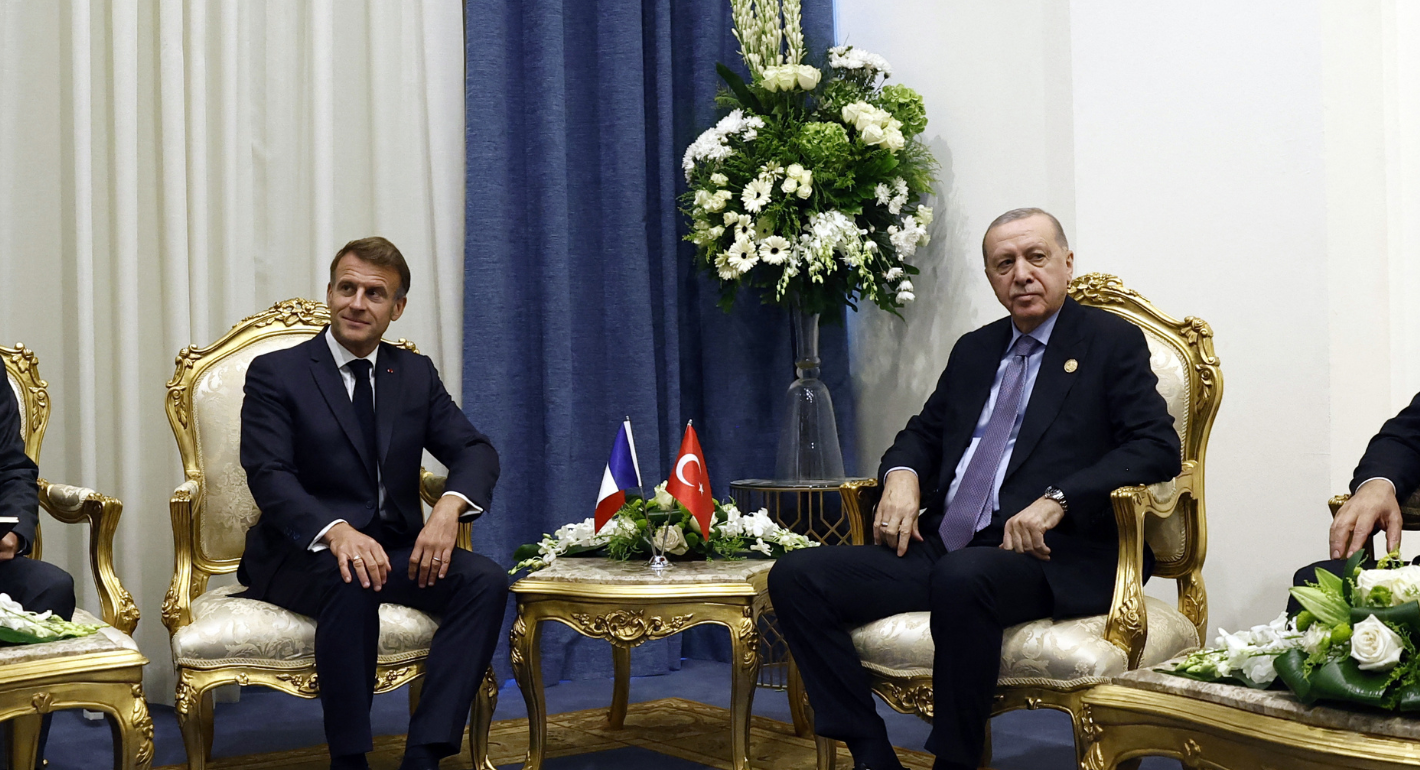
A renewal of relations between France and Turkey is vital to strengthen European strategic autonomy. To make this détente a reality, Paris and Ankara should move beyond personal friction and jointly engage with questions of Black Sea security.

Romain Le Quiniou