

Commentary
Carnegie scholars examine the crucial elements of a document that’s radically different than its predecessors.
- +18
James M. Acton, Saskia Brechenmacher, Cecily Brewer, …
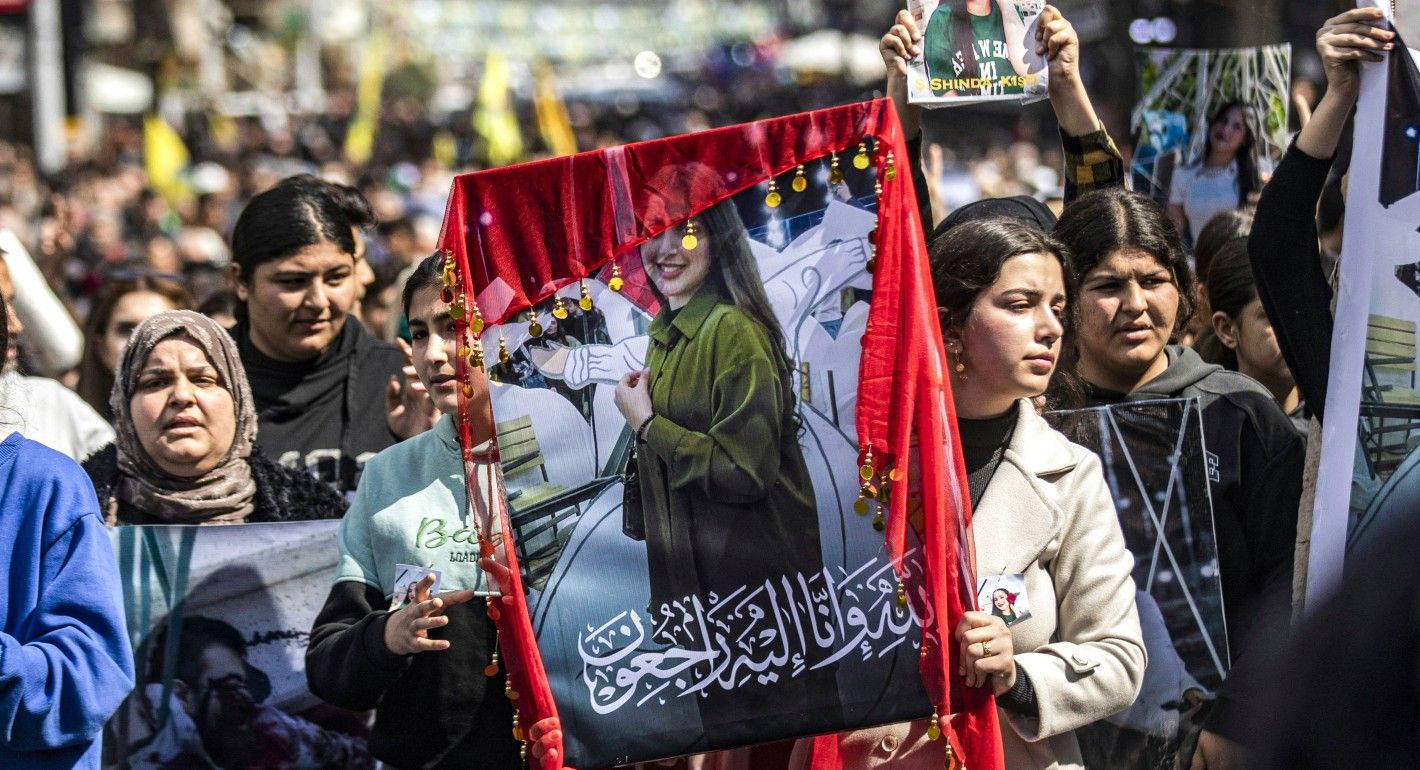
People gather for a mass demonstration in Syria's northeastern city of Qamishli on March 11, 2025, protesting against a recent wave of sectarian violence targeting Syria's Alawite minority in the west of the country. (Photo by DELIL SOULEIMAN/AFP via Getty Images)
As Syria's interim government establishes its rule, the protections it affords minorities including Alawites will set the course for Syria's pluralistic future.
Syria’s prospects for improved security and solidarity after the fall of former president Bashar al-Assad remain uncertain, though there are grounds for optimism, including histories of religious coexistence and the multifaceted nature of Syrian identities. The long-term success of Syria’s regime change will depend on the transitional government’s ability and willingness to forge a shared national identity and to protect the rights of minorities, including those regarded as Assad loyalists. However, its unclear commitment to these goals generates considerable uncertainty for Alawites and other vulnerable groups. The security and political inclusion of Alawites will be critical for fostering stable, multiethnic governance in the Levant.
To this end, this paper outlines risks facing Syrian Alawites. Taking a comparative and historical approach, it emphasizes the compounded nature of these risks due to years of war and decades of minority rule. It groups the risks under two themes: (1) insecurity, driven not only by fragile and predatory security forces but also by Alawites’ historical ties to the Assad regime and their demographic vulnerabilities, and (2) polarization, fueled by mass grievances and the paucity of strong, moderate organizations, among other factors. Syria’s civil war both deepened insecurity and polarized much of society along sectarian lines. Meanwhile, Alawites are perceived as the enforcers of an extremely repressive regime, making them the target of reprisals.
Bashar al-Assad’s ousting marks a critical juncture in Syrian history, ending one of the world’s most brutal and enduring regimes. Not only have the Syrian people withstood over five decades of dynastic dictatorship, but also, the last fourteen years of Assad’s rule were marked by one of the worst civil wars and humanitarian disasters of the twenty-first century. With Assad in exile, his successors in the transitional government—primarily leaders of the now-defunct Hay’at Tahrir al-Sham (HTS) Islamist rebel group—face many challenges in rebuilding Syria’s polity, economy, and society.
A central challenge concerns the security and political inclusion of Syria’s minority groups. Syria is a remarkably plural society, home to Levantine and Najdi Arabic speakers, Indigenous Kurds, Palestinian refugees, and many religious minorities, including various Shia sects and splinters as well as Eastern and Oriental Orthodox Christians. Each of these groups now faces specific challenges, with much attention focused on the prospects for demobilization and regional autonomy in Syrian Kurdistan.
A central challenge concerns the security and political inclusion of Syria’s minority groups.
Perhaps no Syrian minority has garnered as much notoriety as the Alawites, an ethnoreligious Islamic sect that has continuously been linked to the state since 1963,1 the year that a committee of Ba’athist army officers including Hafez al-Assad—himself an Alawite—launched a coup d’état. Alawites make up about 10 percent of Syria’s population, Sunnis 70–75 percent, Kurds around 10 percent, and Christians about 10 percent.2 Especially after Hafez’s (intra-Ba’athist) Corrective Movement coup in 1970, Alawites were overrepresented in key organs of the state, Ba’ath party, and military. The Assad dynasty was widely perceived as being enforced by and ruling for the benefit of Alawites, a perception that must be seriously qualified. However, both the regime and opposition weaponized these perceptions during the 2011 uprising, which played a key role in transforming it into an increasingly sectarian war.3
Alawites face uncertainty as Syria undertakes a regime change, or a transition from autocracy (which is not the same as a transition to democracy). This paper takes a comparative and historical approach to highlight risks that regime change is posing for Alawites. These risks—grouped under the themes of insecurity and polarization—have been compounded by years of war, which degraded Syria’s security institutions and militarized much of its society. Meanwhile, decades of minority rule have placed Alawites in an especially precarious position given their historical ties to the Assad state, putting them at risk of scapegoating and reprisals.
As the new Damascus government attempts to stabilize its rule, serious threats to minorities have emerged—most notably, in the March massacres in Latakia Governorate and elsewhere of Alawites and Christians.4 After Bashar’s departure, some observers were optimistic that the professed commitments to inclusion made by Ahmed al-Sharaa’s government would herald a more secure and solidaristic Syria. And indeed, the government has taken steps to address minority concerns, for example by integrating Kurdish forces into the military. Yet efforts to broadly actualize these commitments and address ongoing threats remain tentative, increasing minority distrust of the government and its allies.
In spite of these serious risks, there are prospects for the building of a more secure and solidaristic Syria. These stem from broad agreement about the Assad regime’s brutality, collective exhaustion with violence and external intervention, prewar and wartime precedents of sectarian coexistence, and the multifaceted nature of Syrian identities—shaped by overlapping sectarian, regional, and national components. The long-term success of Syria’s transition will depend on the Damascus government’s ability to forge a shared national identity and its willingness to protect the rights of minorities, including those regarded as Assad supporters.
The situation of Syrian Alawites demands attention not only because of the tremendous security risks they face but also because of the challenges of ensuring their political inclusion after any violence has dissipated. These challenges are accentuated in a country with a history of exclusion and minority rule. Because Syrian Alawites are the Middle East’s largest non-Sunni, non-Twelver Muslim group, their fair treatment will be pivotal in fostering stable, multiethnic governance in the Levant.
Misconceptions about Alawites have fueled centuries of discrimination and violence.5 Briefly, Alawites are an ethnoreligious Shia offshoot whose beliefs draw upon Islam, Christianity, and Gnosticism. They are so named because of their veneration for Ali, the Prophet Muhammad’s first cousin and the first Shia imam. However, Alawites do not venerate Ali as God but rather as personifying an abstract, eternal god of light called “the Essence.” Alawites consider other such personifications to include the figures Joshua and Peter the Apostle. By contrast, the prophets Moses, Jesus, and Muhammad are seen as personifying “the Name,” a manifestation of the Essence. Alawites have historically concealed their beliefs, in part out of fear of persecution.
The risks facing Alawites differ depending on the governorate, city, or town they are in. As such, Alawite geography is commonly divided into the sahel, the coastal, mountainous, Alawite-majority areas of the Latakia and Tartus Governorates, and the dakhel, the hinterland, urban-adjacent areas, especially the Sunni-majority governorates of Hama and Homs, as well as Aleppo and Damascus.6 The sahelis the Alawites’ historical homeland, whereas migration to the dakhelin recent decades has been primarily driven by employment—especially in the military and civilian public sector—as well as by environmental hardships like agricultural decline and droughts in the sahel. At the same time, the sahelbenefited from infrastructural development and employment opportunities, decreasing Alawites’ incentives to migrate by the 1990s.
Resentment toward Alawites has grown, especially since the 1970s, owing to their allegedly uniform support for and benefits derived from the Assad regime.7 However, Alawites are heterogeneous in terms of political allegiance, socioeconomic standing, and tribal affiliation, to name just a few factors.8 For example, sahelAlawites have often been perceived by their dakhel counterparts as the true beneficiaries of the Assad regime. The sahelwitnessed far fewer protests against Assad’s rule than the dakhelin the wave of protests beginning in 2011. Yet so too did the Sunni-majority cities of Damascus and Aleppo, whose middle classes feared instability and benefited from Bashar’s neoliberal economic policies. These latter cities were quiet for the first few months of the uprising, more often hosting proregime counterprotests.
Alawites are heterogeneous in terms of political allegiance, socioeconomic standing, and tribal affiliation, to name just a few factors.
In spite of their heterogeneity, Alawites have shared sources of solidarity, or asabiyya.9 These stem from a common lineage in the sahel, a historically low status, insecurity about their position as minorities in a Sunni-majority country, and years of war, which led many dakhel Alawites to move back to the sahel. The Assad dynasty regularly manipulated the insecurities of Alawites and other minorities about their future in a post-Assad Syria.
Much as perceptions of Alawite homogeneity are misleading, so too are perceptions of their privilege. On the one hand, Alawites close to the Assads wielded considerable political, military, and economic power, especially while Hafez invested disproportionately in Alawite areas.10 On the other hand, the Assads built complex support coalitions that included Sunnis across classes and regions, as well as non-Alawite minorities. Alawite integration into the Assad state was variable and shaped by class and tribe. Many experienced only modest gains or persistent hardship despite the regime’s Alawite background.
For many Alawites—as well as other minorities, for example, Orthodox Christians11—loyalty to the Assads stemmed not from privilege but from their belief that alternatives to the status quo were more threatening. These beliefs were not eternal, but rather strengthened after key historical events, like the 1973 riots following Hafez’s removal of the requirement that the president be a Muslim. Many Alawites came to perceive Sunnis as intolerant and as hindering their integration into Syrian society as equals, reinforcing their allegiance to the Assads.
Syria’s 2011 uprising began as a largely cross-sectarian movement, as Sunnis, Alawites, and others joined together in opposition to Bashar’s dictatorship.12 However, regime propaganda increasingly portrayed the opposition as composed solely of Sunni jihadists intent on massacring minorities. Meanwhile, sectarian opponents increasingly portrayed Alawites as heretics who were impeding Syria’s revolution and committed to defending Assad at any cost. Alawites suffered a disproportionate number of deaths, both in combat—given that the core of the army is estimated to have been 90 percent Alawite13—and as victims of targeted killings.14 Their distinctive religiosity as well as their imbrication within the Assad regime has thus placed Alawites in a vulnerable position over recent decades, heightening the risks they now face.
This paper is informed by scholarship on regime changes and their attendant risks,15 which proliferated after the fall of Eurasian communism. Observers hoped these transitions would herald stable democracy,16 yet in several cases the result was continued autocracy, widespread insecurity, and the victimization of minorities deemed outside of the nation-state.17 Unfortunately, regime changes often entail transitions from one form of autocracy to another, for example from single-party to military rule or from hereditary to nonhereditary rule.18 These historical patterns of regime change offer insights into Syria’s transition, though they may fail to capture its complexity.
Syria has already made some democratic gains since Bashar’s ousting, for example in the mass freeing of political prisoners.19 Yet there have been serious violations of the rule of law, as is discussed below. Meanwhile, the new constitution was forged in a highly exclusionary manner: A small committee drafted it, power is now further concentrated in the executive, and religious recognition is limited to Abrahamic faiths, among other provisions.20 The transitional government has said that democratic elections will have to wait for several years. On the one hand, what one study calls “rushing to the polls” after war may indeed present risks; for example, elections could be dominated by combatants who have not yet demobilized.21 On the other hand, the authoritarian quasi-state that HTS ruled in Idlib Governorate casts doubt on the willingness of the group’s former leaders to accept electoral challenges to their power.22
This section focuses not on what kind of regime Syria is becoming, but rather on what risks the ongoing transition is posing for minorities, especially Alawites. Unfortunately, these risks have compounded over the past fourteen years, placing Syria in the midst of a precarious dual transition from autocracy and war.23Meanwhile, five decades of minority rule have made Alawites especially vulnerable as the focus of mass grievances. Previously favored or dominant minorities have been scapegoated and attacked during several significant regime changes, from Chinese merchants in Southeast Asia during the 1990s24 to Tigrayans in Ethiopia after 2018.25
The insecurities faced by Alawites are multiple, owing to the weaknesses and predations of state security forces, the dismantling of state institutions that once employed Alawites and afforded them a sense of communal protection, widespread perceptions of Alawite privilege, and the demographic challenges they face in specific areas of Syria.
Syria’s transitional government has inherited a patchwork of security institutions that are fragile, predatory, or both. Its forces are not well-positioned to contain social unrest, which is often targeted at minorities during regime changes.26 As is well known, regime forces suffered over 100,000 deaths and hundreds of thousands of defections during the war.27 Many forces, both formal and informal, were unable or unwilling to counter powerful, well-resourced jihadist groups like Jabhat al-Nusra (JN) or its successor, HTS.28
Against this backdrop, the Damascus government now confronts a host of armed actors that are operating or provisioning security across Syria, from non-HTS Islamist groups toDruze militias and the Kurdish-led Syrian Democratic Forces.29 Surviving forces are uncertain about their responsibilities or even their existences, rendering security in minority areas at best unreliable. The March massacres in Latakia and elsewhere have seriously undermined the new military’s credibility, reminding ordinary Syrians that it is composed of a fragmented set of groups loyal to their leaders, as opposed to a cohesive national force.
Because of its diminishing wartime manpower, the Assad regime delegated extensively to militias and paramilitary groups. Alawites, Christians, Druze, and Shias were more likely to join or form such groups, which came to rival the Syrian army in number.30 For many minorities, wartime militia involvement was a source of both security and income. Militias were often led by predatory warlords and smugglers as well as trained and funded by foreign powers like Iran and Türkiye.
Militias have continued to defy central control since Assad’s departure.
Unsurprisingly, militias have continued to defy central control since Assad’s departure. Many of these forces—being designed to protect the old regime and profit from the war economy—lack the capacity or incentive to disarm and demobilize. Indeed, the March atrocities were, in part, related to the unwillingness of armed Assad allies to disarm.31 During regime changes, the incentives to remain armed are especially strong for those uncertain about their position in the new order, as well as for those seeking to protect their privileges derived from violence.32 Meanwhile, efforts to demobilize unofficial paramilitaries have been gradual and have produced uneven results, overstretching more reliable forces that must pick up the slack as additional forces are created or reformed.33
Among the most notorious prewar and wartime militias were those known as the shabiha,34 many of which were composed of Alawites. Some shabiha forces committed grave human rights abuses against Assad opponents, such as during the 2012 Battle of Tremseh in Hama and the 2013 Houla massacre in Homs.35 The shabihawere eventually reorganized by the regime as Popular Committees, which became even more violent and decentralized. In turn, the Popular Committees were reorganized as the National Defence Forces, which grew increasingly fragmented, often violently competing with each other for territory.
Syrian security forces have not only displayed signs of acute fragility since the fall of Assad but also have behaved in predatory ways, including looting, car theft, and targeted killing. Similarly, they have tolerated predations by nonstate or social actors, which have become increasingly common in the Middle East since the Arab Spring.36 An especially worrying violation is the extrajudicial targeting of real and suspected shabiha members, both by security forces and by unidentified groups.37 Similarly, reports have emerged of narrowly targeted raids on allegedly pro-Assad neighborhoods, including the mass detention of young male residents.38 Thousands of former army officers have been detained for months without trial.39
In addition to the regime’s heavy wartime reliance on militias, Syrian security forces were deeply linked to the person of Bashar.40 The Assad dynasty worked to consolidate power and safeguard against potential coups via its control over multiple overlapping security agencies, like the Military Intelligence Directorate and Fourth Armored Division. Many of the top agencies were controlled by Alawites, whose leaders enjoyed privileged access to the regime and its disbursement of state patronage. Bashar’s ousting has thus created a security vacuum, which is common in collapsed personalist regimes.41
As wartime insecurity grew, ordinary Syrians came to more closely identify with their substate groups, whether sectarian, regional, or otherwise. In turn, the regime’s inability or unwillingness to protect vulnerable groups generated security dilemmas—each group mobilized to defend itself and perceived the other’s efforts to do the same as threatening.42 Alawites and Sunnis each came to see themselves as fighting for their own collective survival.43 In the face of violence, displacement, and ethnic cleansing, Syria’s demography was dramatically reshaped. Wartime security dilemmas were made all the more acute by the availability of weapons, territorial homelands like the Alawite coast, and shared group symbols like Sunni religiosity or Alawite accents.44
Some security dilemmas have resurfaced or intensified during Syria’s transition, resembling cases like Yemen and Libya after the Arab Spring, where local militias mushroomed to ensure communal security.45 Presently, Alawites in the sahel who refuse to disarm cite the reciprocal lack of disarmament by non-HTS Islamist groups and others.46 Especially after the March massacres, this refusal has extended to Druze, Kurds, and even Sunnis in the Damascus hinterlands, who have become more distrustful of the new regime.47 These defensive measures risk being perceived as offensive to rival groups, encouraging each group to stockpile weapons and carry out preemptive attacks.
The transitional government has moved to not only overhaul the security sector but also dismantle and replace the Assad state more generally, especially via purging those with ties to the old regime. This is a key source of insecurity for many Alawites, owing to their—by no means uniform—historical participation in and defense of the Assad state. Relatedly, the widespread perception that Alawites were undeserving beneficiaries under Assad has exposed them to reprisals.
To provide a few examples of how Alawites were embedded in the Assad state: By 2004, over 80 percent of employed Alawites across Syria worked in the military, civilian public sector, or a state-led industry.48 In the Alawite-majority sahel, the proportion of public sector employment was 55 percent in Latakia and 40 percent in Tartus, compared to 27 percent nationally. And of Latakia’s male workforce specifically, 80 percent of Alawites worked in the public sector, compared to 57 percent of Christians and 44 percent of Sunnis. These disparities fueled grievances in large cities like Damascus, as well as in remote areas like Deir ez-Zor, where Sunni tribes saw Alawites as taking the best jobs in oil and gas exploitation.49
Yet state embeddedness did not translate into uniform benefits or greater material prosperity for Alawites compared to the rest of the population. Instead, what Alawites came to enjoy was a sense of communal and household security. Alawite privilege was variable and structured by different identities, especially by class and tribe. Briefly charting this history is key for understanding the vulnerabilities many Alawites now face.
Alawite privilege was variable and structured by different identities, especially by class and tribe.
During the 1960s, Ba’ath party leaders mobilized poor and rural minorities, pledging to end their exploitation via a state-dominated economy.50 Especially under Hafez, many Alawites advanced within the state, party, and military, joining the upper classes. Yet many others did not. Due to low educational opportunity in the sahel, most Alawite recruits held only a high school certificate and were concentrated in lower-level civil service and security posts. This created divisions between elite Alawites at the top of the bureaucracy and those in lower ranks. To address this, Hafez expanded educational opportunities in Alawite regions, spurring the sahel’s transformation into one of Syria’s most literate areas.
Syria’s so-called military mercantile complex (MMC)—a corrupt, interdependent linkage between state, military, and private enterprise—was a key source of upper-class wealth and privilege.51 Yet the MMC’s beneficiaries were not solely Alawites. Indeed, “corruption, at least, was an area where the regime’s non-sectarian pretensions often coincided with reality.”52 Securing state patronage from the MMC required building broad clientelist networks across sectarian and regional lines, generating intra-Alawite competition. Bashar further remade the Syrian elite classes, not only purging Sunnis from his administration but also narrowing his Alawite inner circle to a set of allied tribes.
Many middle-class Alawites—such as technocrats and professionals—were employed by the Assad state and took advantage of its educational opportunities. Similarly, middle-ranking soldiers and police benefited from state welfare, especially subsidized housing.53 At the same time, government salaries were low, and the middle classes did not necessarily enjoy a high standard of living.
Finally, many Alawites remained deeply impoverished, especially those living in the Damascus shantytowns or in rural areas, where some still lacked running water in the twenty-first century.54 Like many of their Sunni counterparts, these lower classes nonetheless benefited from high state prices for their crops, infrastructural development, and the legacies of Ba’athist land reform, which included seizing large estates from Sunni and Christian urban elites and redistributing them to Alawites.
Bashar’s mid-2000s neoliberal reforms—including the cutting of state subsidies and privatization—illustrate how the Assad state enriched some Alawites and impoverished others.55 After decades of accumulating wealth via state patronage, a narrow elite championed the reforms to position themselves to compete in international markets. The reforms were enacted despite opposition from the military and Ba’ath party, two institutions with disproportionate Alawite influence.56
Far from benefiting ordinary Alawites, Bashar’s reforms were more likely to benefit urban middle- and upper-class Sunnis, especially in Damascus and Aleppo, who took advantage of new business and investment opportunities. By contrast, poor and rural Alawites were hit hard by reduced subsidies and ensuing inflation, sparking protests in the Alawite-majority Latakia and Tartus Governoratesin 2007.57 Meanwhile, cuts to military welfare benefits both widened intramilitary disparities and lowered living standards among middle- and lower-ranking officers across sectarian lines.
Given this history of uneven integration and privilege, the ongoing dismantling of the Assad state has left many Alawites uniquely vulnerable. With Assad’s departure, Alawites across the country face serious threats to their livelihoods. Efforts by the transitional government to reform the state have involved arbitrary and politically motivated purges of perceived Assad loyalists without due process.58 This has removed Alawites from the key institutions that previously integrated them in the state, especially the ministries of defense, interior, and education, as well as the state media. The erosion of state and military employment has led to a loss of stable income for many individuals and their families as well as a heightened sense of collective insecurity. More ominously, former military officers, many of them Alawites, face property seizures and evictions in major cities.59 All of this has left Alawites increasingly vulnerable to reprisals and violence.
Demography has also shaped insecurity across Syria. One key question is whether a given national minority is a local majority, for example, at the governorate level.60 On the one hand, many local majorities have historically resisted outside encroachment and may be better equipped to protect themselves, like Christians in the Mount Lebanon Governorate. And indeed, after initial wartime unrest and violence in 2012, the Alawite-majority sahelbecame one of Syria’s safest regions.61 Not only did dakhelAlawites flee there,62 but so too did hundreds of thousands of internally displaced Sunnis. There was a common sentiment among Alawites during the war—although there were exceptions63—that their remoteness and concentration in the sahel rendered them more secure.
At the same time, areas where national minorities are local majorities tend to be remote, removing these groups from the reach of the state. Syria’s transitional government has, like many new regimes, been preoccupied with stabilizing itself at the center, neglecting areas outside of national or subnational capitals.64 Accordingly, the wartime sentiment of the sahel’s relative security has been partly upended by state neglect as well as the March massacres.
Conversely, in areas where national minorities are also local minorities—as in many urban centers—insecurity may be especially dire, tempered only by informal mechanisms of group cooperation.65 And indeed, many of the worst wartime violations against Alawites occurred in heterogeneous areas like Homs, where communal security was weaker.66 Many Sunnis in Homs were unwilling to employ Alawites, while Alawites often ostracized those who maintained ties with Sunnis. Since the fall of Assad, there have been reports of kidnappings and targeted killings of Alawites in Damascus and Homs, both during and soon after the March atrocities in the sahel (which were hundreds of kilometers away).67
Another set of risks stem from the polarization of Syrian society, which has the potential to deepen conflict and violence. Some of the main drivers of polarization are closely related to the dynamics of insecurity and sectarianism discussed above. For example, the vast majority of wartime military defections were by Sunnis, both elite commanders and ordinary officers.68 Motives for defecting or remaining loyal to the regime often reflected sectarian divisions. Indeed, many Sunnis cited resentment toward Alawite favoritism in the military and the purported disdain shown by Alawites toward religiosity.69 Meanwhile, Alawites, Christians, and other minorities largely remained loyal to the regime, citing their obligation to prevent Syria from being overtaken by opposition groups who saw them as heretics and sought to turn them into second-class citizens (or worse).
Alawites suffered a disproportionate number of wartime deaths, especially since they made up a greater share of the regime’s forces after Sunni defections.70 Attacks by opposition forces and progovernment militias were also highly sectarian, from JN’s 2013 Hatla massacre of Shias in Deir ez-Zor to Alawite militias killing Sunnis in the 2013 Bayda and Baniyas massacres in Tartus.71 Massacres like these significantly heightened communal fear and distrust of the other.
The war’s internationalization—whether by foreign governments or fighters—also deepened polarization, as these actors not only committed sectarian atrocities but staked out extreme and uncompromising positions.72 Among other examples, Iranian and Hezbollah troops fueled sectarian clashes in cities like Homs, and politico-religious elites in the Gulf inspired Syrian jihadists with their anti-Shia rhetoric.73 Unsurprisingly, some of the most incendiary actors in post-Assad Syria are foreign fighters.
The Assad regime’s collapse has opened space for Syrian elites and their constituents to air grievances that had previously been suppressed, which is not uncommon during regime changes.74 Syria’s Sunni majority figures prominently in this dynamic, having been subjected to decades of repression by a non-Sunni regime. Minority rule—and the repression often employed by minority regimes—has engendered destabilizing grievances across the Middle East, from Jewish rule in Israel-Palestine to Sunni rule in Iraq under Saddam Hussein and in Bahrain under the Al Khalifa rulers.75 Stereotypes persist among Syrian Sunnis and others about Alawites’ unwavering defense of and benefits derived from the Assads—despite Alawites’ diversity and history of resistance to the regime at various points.76 These grievances have been mobilized to justify attacks on Alawites since Assad’s ousting.
Polarization can also be observed among Alawites and other minorities. During the war, Alawite leaders opposing the regime were arrested, exiled, and killed. Meanwhile, extensive recruitment into the security forces and militias hardened many Alawites against the regime’s critics.77 Although large numbers were conscripted, others—even those who previously disdained Assad’s police state—willingly enlisted to protect their community and what they saw as Syria’s future. At the same time, civilians watched videos of Alawite officers being beheaded by rebel groups calling for retribution. The war left Alawites more physically, socially, and occupationally isolated from large parts of the country that were under rebel control.78 All of this has deepened communal uncertainty, which the transitional government has struggled to address.79
The war left Alawites more physically, socially, and occupationally isolated from large parts of the country that were under rebel control.
During transitions, political, economic, and religious elites often face competition and uncertainty in the new regime regarding their own status and that of their in-group.80 For example, in Latakia, Alawite elites once allied with the Assad regime have—in the face of local crime and unrest—sought to position themselves as their community’s authentic representatives.81 Meanwhile, some clerics who have tried to reconcile with the transitional government have been rejected by segments of the Alawite community as opportunistic.82
As political competition intensifies, some elites may stand to gain by making hostile and polarizing claims about out-groups—which of these groups belong, how enemies should be dealt with, and other exclusionary governance tactics. Yet out-group leaders face similar incentives.83 This outbidding dynamic can explode in violence as radical claims become harder to back down from.84 Accordingly, as the transitional government struggles to rebuild Syria economically, there is a risk that it will single out minorities like Alawites as scapegoats. This risk is heightened by competition within al-Sharaa’s fragile coalition of moderates and hardliners. As many of Syria’s divisions are sectarian, it should be noted that religious outbidding—the reframing of political conflicts as threats to a group’s very existence—may be particularly explosive.85 The Assads excelled at this, as did their opponents, especially during periods of state violence and neglect.
The reentry onto the political scene of moderate organizations and leaders—those promoting civic and cross-sectarian agendas—may serve as a counterweight to polarization.86 Fortunately, Syrian society has been historically moderate with respect to politics and religiosity. Yet years of state repression and war had a marginalizing and discrediting effect on moderates. As the Assad regime and its opponents became more violent and exclusionary, moderates, liberals, and secularists were driven into exile or worse. Extremist opposition groups or shabiha militias increasingly provided civilians with security and governance. In turn, the moderate opposition struggled both to gain widespread support as well as to articulate a clear vision for the future. All of this has been exacerbated by militarization and communal segregation.
Evidence of polarization can be seen in the declining visibility of moderate religious groups like Sufis, who, in addition to being discredited for their prior associations with the Assad regime, lacked external funding and a coherent military presence during the war.87 Similarly, the Muslim Brotherhood party contained moderate strands within its ranks, calling at the beginning of the uprising for a “civil state.”88 Yet it too was marginalized, both by more extreme competitors as well as by Assad’s rhetoric, which exploited the brotherhood’s history of violent conflict with the regime. It is not clear whether new or reinvigorated moderate currents can currently fill this vacuum.89
Coincident with the decline of moderates was the rise of Salafi jihadis, who were more successful in attracting public support, fighters, and external funding. Many of these groups threatened to execute Assad supporters, portrayed the uprising as a holy war against Alawites, and rejected democracy as antithetical to Islam.90 Yet their military power was compelling to those who otherwise rejected Salafi ideology, especially those without alternative employment in the war economy.
Special mention should be made of Jabhat al-Nusra (JN) and, later, HTS as polarizing forces. As is well known, JN began as an offshoot of Al-Qaeda and the Islamic State but distanced itself from these groups in mid-2016 for pragmatic reasons, as international attention shifted to combat Salafi jihadi groups operating in Iraq and Syria. JN and HTS were highly successful in eliminating competitors, owing to their ideological discipline and recruitment of fundamentalists.91 Although several erstwhile jihadi groups appear to have moderated, the recent surge in sectarian violence risks creating the perfect conditions for the return of groups like the Islamic State.92
Prolonged insecurity, polarization, and communal violence are not inherent to regime changes.93 In many transitions, even within divided societies, these problems have been dwarfed by those of economic reconstruction or constitutional reform. The prospects for Syria, however, are much more uncertain, as they tend to be in dual transitions from autocracy and war. And Alawites specifically face acute vulnerabilities due to their embeddedness in a minority-dominant state. It is a source of optimism that Syrians across religious lines are in agreement about the Assad regime’s brutality and are tired of violence and external interference.94 But disagreement looms large about the future as well as who should be held responsible for the past.
Reducing communal insecurity will require religious coexistence, for which there are both prewar and wartime precedents. This has been documented not only in multiethnic governorates and cities, such as Homs, but also in more homogenous areas, such as the Alawite-majority sahel when hundreds of thousands of Sunni IDPs fled therebeginning in 2012.95 In other places, however, wartime polarization eroded many previously shared solidarities. Rebuilding these will pose a significant obstacle for the government in Damascus.
The multifaceted nature of Syrian identities offers further hope that wartime polarization can be reversed.
The multifaceted nature of Syrian identities offers further hope that wartime polarization can be reversed. Across Syrian history, sectarian, regional, national, and transnational identities have been more or less salient and have interacted with each other in nuanced ways.96 For example, sectarian identification among Alawites was much lower during the period when Hafez worked to economically integrate them into the state. Similarly, survey research between 2011 and 2015 found that Alawites in the saheland dakhelprioritized both their Syrian and Alawite identities.97 At other times, however, Alawite solidarity and fear of the other has been quite high. Fluctuations in security and prosperity deeply shape which identities are prominent.
In spite of those who see Alawites as defenders of a brutal dictatorship, Alawite religiosity itself contains grounds for optimism. Alawites believe that pluralism is God’s will—otherwise, He would have created everyone to belong to the same religion—and that democracy is essential for pluralistic life.98 Yet years of mistrust and violence have led many Alawites to see Sunnis as opponents of pluralism. At the same time, and even though Syria has a Sunni majority, this does not mean the post-Assad order will inevitably be characterized by illiberal Sunni domination. Ultimately, Alawites strive for acceptance as equals and for integration within Syria, not domination over it. In this respect, rule by the Assads hindered Alawites, generating mass grievances about their perceived privileges.99 Perhaps in the medium and long term, then, his ousting will improve their prospects for integration.
The structural prospects for pluralism are not favorable, as people in the Middle East are more likely to belong to groups excluded from political power than people in any other region.100 This has largely been driven by manipulative domestic leaders such as the Assads, as well as by insidious regional and international powers. As noted earlier, there is a risk that the forces of polarization will, in the changing space created by Assad’s departure, emerge and strengthen themselves to the detriment of ordinary Syrians. At the same time, there is space for optimism that more moderate organizations will serve as a counterweight to this.
A central task for the transitional government will thus be to help forge a common national identity grounded in democracy and equal citizenship. Such an identity could, for example, draw on Syrians’ brave, shared struggle against the Assads. The government’s rhetoric of national unity was an initially hopeful sign in this respect, but its current ability or willingness to actualize such rhetoric and foster genuine pluralism is unclear. It must not, like the Assad regime, repress identities that it finds threatening. Meanwhile, it is an open question whether the new leaders in Damascus will, given their authoritarian history in Idlib Governorate, permit steps toward democratic and inclusive governance. The exclusionary process by which it adopted the Interim Constitution was a troubling sign in this respect.
Reducing communal insecurity will be a protracted process, one that demands curbing not only disorder and violence but also poverty and unemployment. A few prescriptions are fairly straightforward, however. For one, the transitional government must decrease its reliance on foreign forces, who have less skin in the game, have promoted extreme agendas, and have engaged in serious violations of the rule of law. In addition, it is necessary to hold accountable the perpetrators of reprisals, which will send an informative signal to Alawites and other vulnerable groups that they are participants in the post-Assad order as opposed to scapegoats. However, providing security and justice in the present will be complicated by the new government’s focus on the past—exemplified by its punishing and purging of perceived Assad loyalists.
The success of Syria’s transition not only depends on whether its new government can successfully reconstruct the economy or assert itself in the regional order. It also depends on whether it can provide meaningful protection and a just political order for the groups comprising Syria’s plural society, as daunting as these challenges tend to be in postwar settings.
Carnegie scholars examine the crucial elements of a document that’s radically different than its predecessors.

James M. Acton, Saskia Brechenmacher, Cecily Brewer, …

The hyper-personalized new version of global sphere-of-influence politics that Donald Trump wants will fail, as it did for Russia. In the meantime, Europe must still deal with a disruptive former ally determined to break the rules.

Thomas de Waal
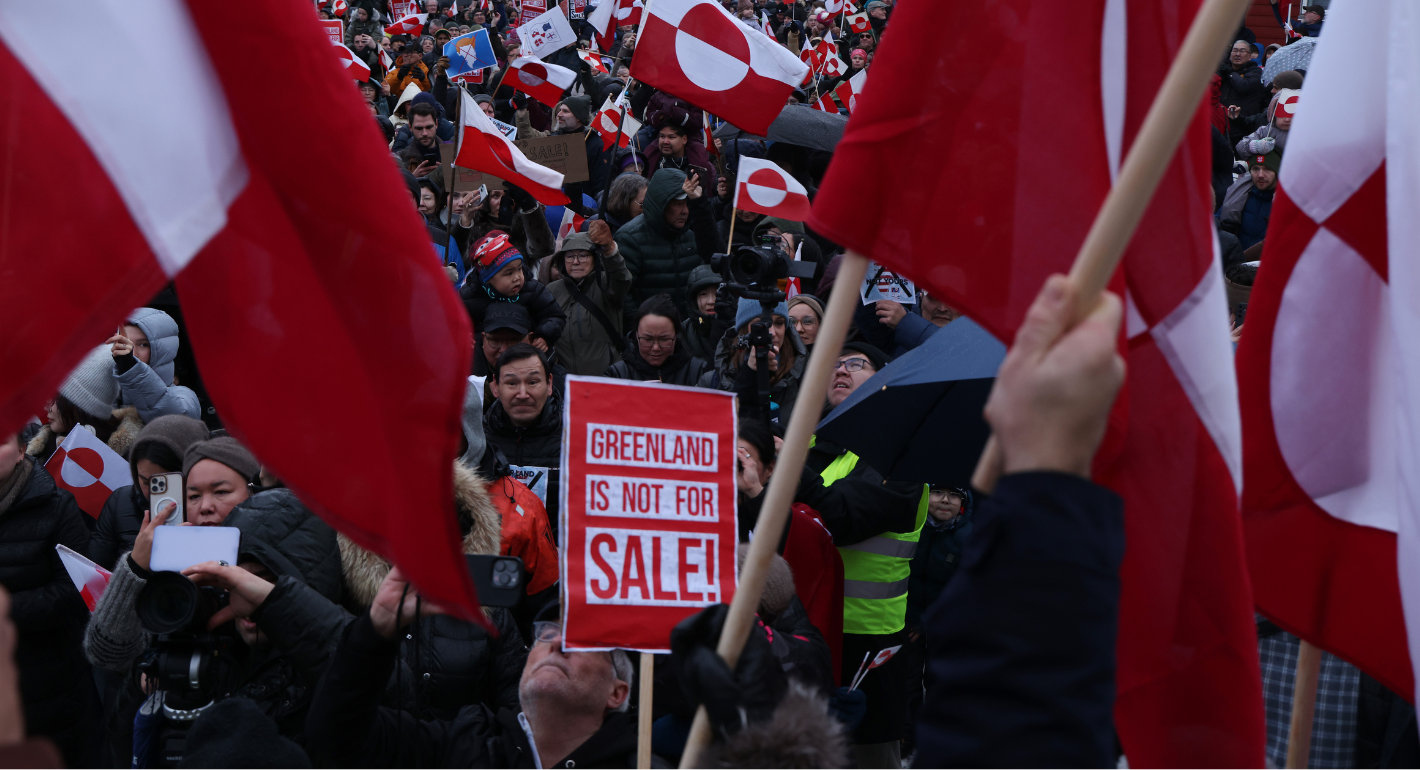
Between Greenland and U.S. interference in Europe’s democracies, transatlantic relations risk rising to an unprecedented level of crisis. Amid continued arguments on how Brussels should react, tough times lie ahead for European leaders.

Marc Pierini
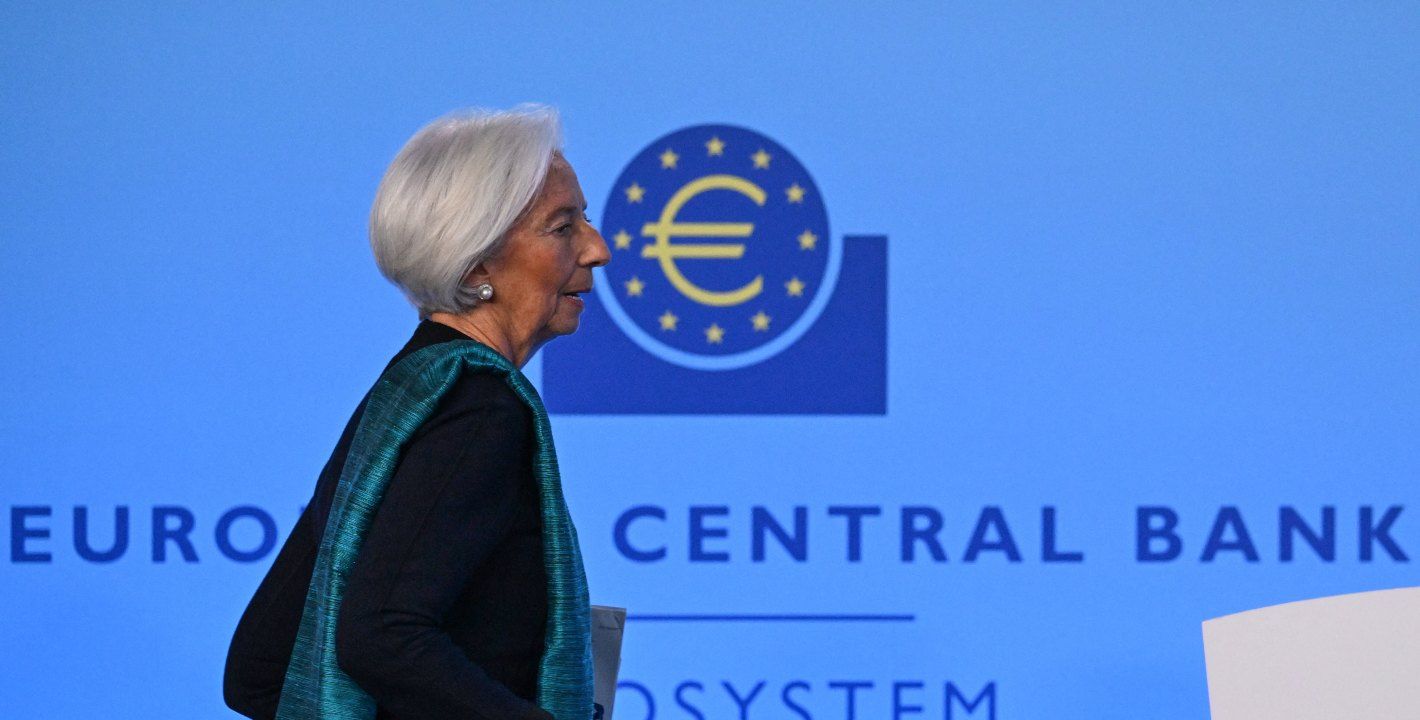
2026 has started in crisis, as the actions of unpredictable leaders shape an increasingly volatile global environment. To shift from crisis response to strategic foresight, what under-the-radar issues should the EU prepare for in the coming year?
Thomas de Waal
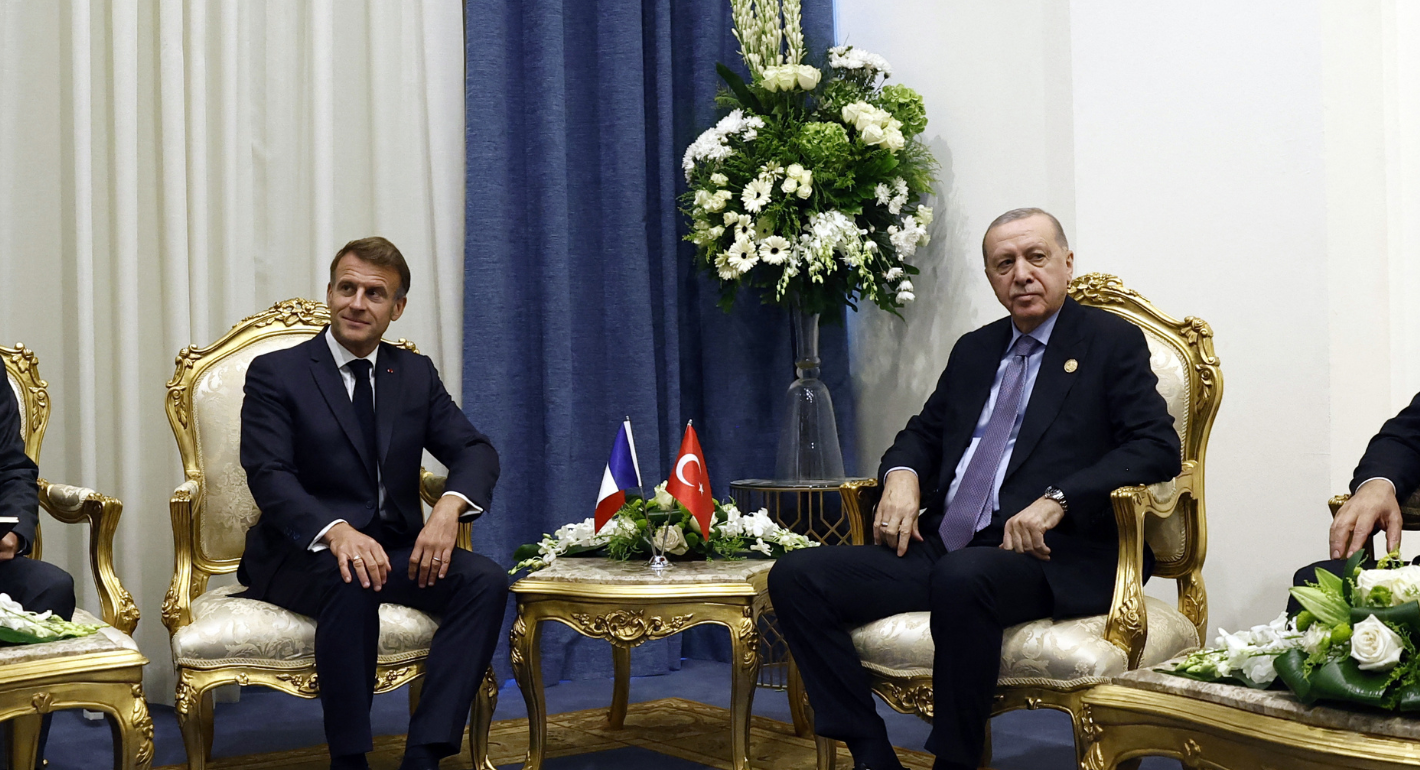
A renewal of relations between France and Turkey is vital to strengthen European strategic autonomy. To make this détente a reality, Paris and Ankara should move beyond personal friction and jointly engage with questions of Black Sea security.
Romain Le Quiniou