

Paper
The less precise our nuclear discourse, the more fear nuclear manipulators can elicit.

Source: Getty
There is an urgent need to strengthen the relevant international legal frameworks if they are to protect against threats to use nuclear weapons.
The Nautilus Institute, the Carnegie Endowment for International Peace, and the Asia-Pacific Leadership Network thank the Carnegie Corporation of New York for its support of this project and its ongoing support of public-interest work to prevent nuclear conflict.
Since the dawn of the nuclear age, states with nuclear weapons have threatened to use them.1 Some threats have been specific and tangible, such as the Soviet Union threatening to use nuclear weapons against Britain, France, and Israel during the 1956 Suez Crisis. Some have been less explicit, such as the bluster by the United States and North Korea in 2018 goading each other about the size of their respective ‘nuclear buttons’. Other threats are more general, such as the tacit threat that underpins the doctrine of nuclear deterrence, or the implicit threat that emerges when a state increases its nuclear weapon stockpile.
While it is not unusual for the target of a nuclear threat to declare that such a threat is illegal under international law, the question of whether nuclear threats breach international law is not straightforward. This paper sets out the key international laws and norms surrounding nuclear threats and explains how those laws might apply to specific examples of nuclear threats from the last eight decades. We argue that although there are various international laws and norms that address nuclear threats, they are far from comprehensive in their scope or application. This leads us to conclude that there is an urgent need to strengthen the relevant international legal frameworks if they are to protect against threats to use nuclear weapons.
The paper commences in Parts II and III by considering the extent to which the general international legal regimes that govern all threats apply to nuclear threats. Part II analyses the international law framework known as jus ad bellum, which governs when states can lawfully use force against one another. This Part engages closely with the general prohibition on threats to use force in article 2(4) of the UN Charter and assesses that while this provision outlaws some forms of nuclear threat, it fails to capture others. Part III turns to the jus in bello regime which applies to regulate the conduct of hostilities during an armed conflict (primarily, international humanitarian law (IHL)). In this Part, we discuss the difficulties in applying rules of IHL to nuclear threats made during war.
We then turn to explore a set of international laws that address nuclear threats more specifically. Part IV analyses promises—known as unilateral negative security assurances—that have been made by some nuclear-armed states not to threaten to use nuclear weapons. It explains that the ambit of these promises is frequently limited and that, for the most part, the extent to which they are accepted as binding under international law is questionable. Part V sets out prohibitions on threats to use nuclear weapons that can be found in various multilateral agreements—namely, the Treaty on the Prohibition of Nuclear Weapons (TPNW), the nuclear weapon free zone treaties and their protocols, and the 1994 Budapest Memorandum—and details the different limitations inherent in each agreement.
Before commencing our discussion, we have two brief notes on terminology. First, we use the term ‘nuclear threat’ in a broad, expansive sense to include gestures to do harm with nuclear weapons, allusions to the idea that nuclear weapons might be used and explicit statements that nuclear weapons might be used. Not all of these threats are ‘real’ threats in the sense that there is a genuine possibility that they will be carried out. However, our broader use of the term ‘threat’ allows us to consider at what point a threat to use nuclear weapons might cross a legal line.2
Second, many different terms are employed in academic literature to refer to states that have nuclear weapons. In this paper, we use the term ‘nuclear weapon states’ to refer to the five states that are permitted to possess nuclear weapons under the Nuclear Non-Proliferation Treaty (NPT) (those being China, France, Russia, the United Kingdom, and the United States);3 we use the term ‘nuclear weapon possessing states’ to refer to the four states outside the NPT framework that have nuclear weapons (India, Israel, North Korea, and Pakistan); and we employ the term ‘nuclear-armed states’ to refer collectively to all nine states that have nuclear weapons.
The UN Charter contains a general prohibition on threats to use force in international law. Article 2(4) of the UN Charter provides that ‘All Members shall refrain in their international relations from the threat or use of force against the territorial integrity or political independence of any State, or in any other manner inconsistent with the Purposes of the United Nations’. This clause essentially codifies the international jus ad bellum regime that governs the limited circumstances in which a state is legally permitted to use or threaten to use force against another state. This Part begins by explaining the scope of article 2(4). It argues that while the provision appears to offer a comprehensive prohibition on threats, there are a number of ways in which it is limited. This Part then explores how article 2(4) applies to three different examples of nuclear threats: the threats underpinning nuclear deterrence doctrines; nuclear threats made by the United States against North Korea; and threats made by Russia against NATO states since the outbreak of the Russia-Ukraine war in 2022.
It is widely accepted that a threat under article 2(4) of the UN Charter is an explicit or implicit promise to use force.4 Explicit threats include threats made in writing (for example in national legislation, policy documents, or communications between governments) or orally (for example, statements in the press or via speeches).5 Implicit threats can emerge from nonverbal sources such as a sudden build-up of weapons or troops, military demonstrations, or changes to military budgets.6 It is also accepted that threats do not have to be direct. For example, language such as ‘we will use all tools at our disposal’ can amount to threatening language.7
To come within the bounds of article 2(4), a threat must also be directed at a specific entity (it cannot be a general threat at large),8 and it must be communicated to that entity.9 Further, it must be credible. The bar for what constitutes a credible threat is relatively low.10 There is no need to show that the threat will definitely be actioned, it is sufficient to demonstrate that it might be carried out and that it ‘“would give good reason to the government of a state to believe” that aggression is being seriously considered against it’.11 This is determined by having regard to the threatening state’s capability to action the threat and the state exhibiting some level of intention or commitment to do so. Factors that can be considered when determining a state’s level of intention include the state’s previous patterns of behaviour as well as the level of public support in the state for the threat being actioned.12
As specified in the wording of article 2(4), a prohibited threat is one made ‘against the territorial integrity or political independence of any state, or in any other manner that is inconsistent with the Purposes of the United Nations’. In the nuclear context, this criterion does not pose a significant limitation as it is very difficult (if not impossible) to envisage how threatening to use nuclear weapons would not threaten the territorial integrity or political independence of a state.
The final aspect of a threat under article 2(4) is that it will only be legal if the force that is threatened would also be legal under article 2(4). This test was set down by the International Court of Justice (ICJ) in its 1996 Advisory Opinion on the Legality of the Threat or Use of Nuclear Weapons.13 Under international law, the use of force is only permissible if it is authorised by the UN Security Council acting under Chapter VII of the UN Charter or if force is employed by a state in self-defence. To date, no state has threatened to use nuclear weapons when its use of force has otherwise been approved by the Security Council, but many threats have been made under the guise of self-defence.
To determine how the prohibition on threats to use force intersects with the right to self-defence, it is first necessary to understand the scope of the right to self-defence which is set out in article 51 of the UN Charter. That clause provides that states have an ‘inherent right of individual or collective self-defence if an armed attack occurs’. It is widely agreed that this formulation of the right to self-defence has three key components. First, an armed attack must have occurred or be imminent.14 Second, the use of force in self-defence must be necessary to bring the armed attack to an end or to avert an imminent attack.15 Third, the use of force must be proportionate to the threat being faced.16
A threat will satisfy the first limb of the self-defence test if it is issued directly in response to an armed attack or imminent armed attack, or if the state making the threat is clear that it will only deploy its weapons in the event of a future armed attack or if it is at imminent risk of facing an armed attack in the future. A threat will meet the second and third limbs of the self-defence test if the type and amount of force threatened satisfies the necessity and proportionality tests.17
In drawing the above analysis together, it is apparent that a threat to use nuclear weapons will be illegal under the UN Charter when there is:
Such a threat will be legal, however, if the envisaged use of nuclear weapons would only be actioned in the event that:
Throughout the nuclear age, dozens of nuclear threats have been made in jus ad bellum contexts. In this Part, we examine whether a sample of such threats were unlawful under the prohibition in article 2(4) and not otherwise allowed in self-defence under article 51 of the UN Charter. It will become apparent that the prohibition captures some, but by no means all, nuclear threats in the jus ad bellum context.
A key part of the national security policies of many nuclear-armed states is nuclear deterrence. At the heart of the doctrine of nuclear deterrence is the threat that a state will deploy nuclear weapons if attacked. The precise parameters of states’ deterrence policies vary: some states specify that they will only use nuclear weapons in response to nuclear attacks.18 Other state policies suggest that they will also use nuclear weapons to respond to chemical and biological weapon attacks,19 conventional attacks to which they are unable to respond with conventional weaponry,20 or any attack that threatens their ‘vital interests’.21 What is key to all deterrence doctrines though is that they contain threats: states aim to deter particular attacks by threatening to use nuclear weapons in response.
As doctrines of deterrence are designed to prevent conflicts (rather than govern what happens within conflicts), the relevant international law is jus ad bellum as articulated in article 2(4) of the UN Charter. As set out above, this means there must be a credible promise to use nuclear weapons that is conveyed to a specific target state and no justification of the threat in self-defence under article 51. Whether the simple existence of a doctrine of nuclear deterrence falls foul of the prohibition on threats in article 2(4) has been a subject of debate.22 In our view, most states’ nuclear deterrence policies do not violate article 2(4). This is because although they contain explicit promises to use nuclear weapons, and those promises can be deemed credible as the states making the threats have nuclear weapons and have exhibited some intent to use them, those promises are not (for the most part) directed at a specific state. To the contrary, they are issued to the world at large, and, as discussed above, article 2(4) as it is currently understood does not prohibit generic threats. However, in cases where a nuclear deterrence policy is developed in response to concerns about a specific state, that policy may amount to a credible threat under article 2(4).23
Since North Korea first started testing nuclear weapons in 2006, the United States has issued multiple nuclear threats in a bid to get Pyongyang to cease its nuclear activities. One such example was in 2016 when, in response to a North Korean test, the United States flew a nuclear-capable B-52 bomber over South Korea flanked by two fighter planes. Simultaneously, it issued a statement which said that its military activities were ‘in response to recent provocative action by North Korea’.24
Prima facie, the actions and words of the United States violated the provisions of article 2(4). Military demonstrations alone may constitute threats to use force in the right contexts.25 Here, with the explicit, public clarification that the demonstration was in response to North Korea’s nuclear test, the United States could be perceived as threatening to use nuclear weapons against North Korea if it persisted with its nuclear activities. As noted above, it is not necessary to prove that there was a high likelihood of the United States actioning the threat. It is enough to show the United States was capable of carrying out the threat and that North Korea had serious reason to believe that the use of nuclear weapons was being considered by the United States if North Korea continued with its nuclear tests.
An argument could perhaps be made that the United States issued this threat under the doctrine of self-defence. Article 51 permits states to threaten to use force in defence not only of themselves but others as well. As such, the United States might have claimed that it was threatening to use nuclear weapons in defence of South Korea. However, the doctrine of self-defence can only be invoked when a state is under armed attack or facing an imminent armed attack. In this instance, while North Korea’s nuclear tests were deeply concerning, they did not amount to an armed attack on South Korea or evidence of an imminent armed attack. It is apparent then that the U.S. threat was a violation of article 2(4) and was not justified by article 51.
On 24 February 2022, Russia launched a full-scale invasion of Ukraine. In the context of this conflict, Russia has issued multiple threats to use nuclear weapons. Some of those threats have been targeted at NATO states to deter them from joining the war while others have been directed at Ukraine. As explained in the Introduction, different sets of international laws apply depending on whether the threat is made in the context of jus ad bellum or jus in bello. The NATO states are not parties to the Russia-Ukraine conflict, so the threats made against them are assessed under the jus ad bellum paradigm in article 2(4) of the UN Charter. As Ukraine is a party to the conflict, the threats against it are considered under the jus in bello rules of IHL. In this section, we examine one of the threats directed against NATO states in 2022 and consider whether it violated article 2(4) of the UN Charter. We discuss whether a threat made against Ukraine in September 2022 violated the rules of IHL in Part V below.
The first nuclear threat that Russia issued against NATO states was made by President Vladimir Putin on the day Russia invaded Ukraine. He said:
Russia remains one of the most powerful nuclear states. Moreover, it has a certain advantage in several cutting-edge weapons. In this context, there should be no doubt for anyone that any potential aggressor will face defeat and ominous consequences should it directly attack our country.26
In our view, this statement amounted to a threat for the purposes of article 2(4). While Putin did not explicitly threaten to use nuclear weapons, he made it clear that Russia is a powerful nuclear state, referred to the country’s ‘cutting-edge weapons’ and the fact that any aggressor would face ‘defeat’ and ‘ominous consequences’. This combination of words was widely interpreted at the time as amounting to an implicit nuclear threat.27 What is more, the threat was credible as Russia has nuclear capabilities and the public statement evidenced an openness to using them. It could perhaps be argued that the threat was not directed at a sufficiently specific target because it referred to ‘any potential aggressor’ and not particular states. However, the context in which the statement was delivered made it clear that the threat was targeted at NATO states as it was this group of states that Putin wanted to deter from coming to Ukraine’s aid.28
It is not possible for this threat to be excused under the doctrine of self-defence. While Putin’s statement indicated that he would not use nuclear weapons unless Russia had suffered an armed attack, it is highly questionable whether this threatened use of nuclear weapons would comply with the necessity and proportionality limbs of the self-defence doctrine. Putin’s statement suggested that nuclear weapons would be used in response to any form of attack. This would violate the principle of necessity as nuclear weapons would not be necessary to repel the vast majority of armed attacks, especially if they were conventional in nature. The fact that Putin referred to aggressors suffering ‘ominous consequences’ also suggests that the use of nuclear weapons would unlikely be proportionate to the scale and nature of any attack Russia faced. Russia’s nuclear threat against NATO was therefore, in our view, unlawful.
A further area of international law that is relevant for nuclear threats is IHL, which sets out the rules in relation to the means and methods of warfare that apply during armed conflict. This body of international law is also known as jus in bello. Jus in bello is not concerned with why states are using force against one another (or whether it is lawful); the rules of IHL instead regulate the conduct of hostilities once an armed conflict is underway. There are two different positions as to the application of IHL to nuclear threats made during a conflict. This Part sets out both positions and considers how they would apply to two nuclear threats that have been made during armed conflict: a threat made by the United States against North Korea in the Korean War, and a threat made by Russia against Ukraine during the Russian-Ukraine conflict in 2022. This Part concludes by explaining that there is little clarity as to which approach currently prevails and that both are difficult to apply to concrete situations, leaving great uncertainty in this area of the law.
The first approach to applying IHL to nuclear threats is the one taken by the ICJ in its 1996 Advisory Opinion. In assessing the legality of the threat or use of nuclear weapons, the ICJ held that the legality of whether one state’s threat to use a nuclear weapon against an adversary during an armed conflict turns on whether the envisaged use of the nuclear weapon would comply with the requirements of IHL.29 IHL is a vast body of rules, but it is sufficient here to set out three of the bedrock principles of the discipline with which threats to use nuclear weapons would have to comply. First is the principle of distinction, which requires that the targets of attacks must be military in nature, not civilian.30 This means that any threatened use of nuclear weapons during a war would need to be focussed on military targets and not civilians. A second fundamental principle is the principle of proportionality, which prohibits attacks that cause ‘incidental civilian casualties and/or damage to civilian objects that would be excessive in relation to the concrete and direct military advantage anticipated’.31 In a threat context, what this would mean under the ICJ approach is that it is not permissible to threaten to use a nuclear weapon if it would cause greater harm to civilians than is needed to achieve a military objective. A third rule of IHL prohibits parties to an armed conflict from using means of warfare that would cause superfluous injury or unnecessary suffering.32 If a nuclear attack would result in superfluous injury or unnecessary suffering, the ICJ approach would mean that a threat to use nuclear weapons in such a manner would not comply with this rule.
It is keenly contested whether a nuclear threat issued during a war could ever realistically satisfy the tests of legality under IHL. Some argue that nuclear weapons are indiscriminate by nature and therefore incapable of distinguishing between civilians and combatants. They contend that nuclear weapons will always cause superfluous injury and unnecessary suffering meaning it will never be lawful to threaten to use them during an armed conflict.33 Others insist that in certain situations—for example, a threat to deploy a tactical nuclear weapon against a military vessel on the high seas—it is possible that a nuclear threat could come within the rules of IHL.34 Our purpose in this Part is not to offer a view on the merits of this debate. Instead, we consider how the law as interpreted by the ICJ applies to nuclear threats made during the Korean War and Russia-Ukraine conflict.35
During the Korean War, then U.S. President Harry Truman threatened to use nuclear weapons against North Korea. At a press conference in November 1950, Truman said, ‘We will take whatever steps are necessary to meet the military situation, just as we always have’.36 When asked to clarify whether this included using atomic bombs, Truman responded, ‘That includes every weapon we have’.37 To determine whether this nuclear threat would have been legal under the ICJ’s approach, we need to assess whether the envisaged use of nuclear weapons would have violated the principle of distinction, the principle of proportionality, and the prohibition on superfluous injury and unnecessary suffering. The problem is that Truman’s threat was so vague and generic that it is nigh impossible to evaluate whether it would have satisfied these IHL tests. While one could infer that ‘meet[ing] the military situation’ might have meant that civilian and civilian objects would not have been targeted, it is a long bow to draw. Without further information about how, when, and where this threat might have been carried out (including how many and what type of nuclear weapons would have been used) there is simply not enough information to make even an educated guess as to whether such use would have complied with IHL. The fact of the matter is that threats made during armed conflict are very unlikely to ever be specific enough because there is no strategic value in providing concrete details about a potential nuclear strike to the adversary. This makes it extremely difficult to determine if the threatened use of nuclear weapons would be permissible.
The same is true of the nuclear threat Russia made against Ukraine in 2022. On 21 September 2022, Putin delivered a speech exalting the ‘liberation’ of four Ukrainian territories—Donetsk, Luhansk, Zaporozhye, and Kherson. In response to what Putin claimed was ‘nuclear blackmail’ by NATO, he said:
I would like to remind those who make such statements regarding Russia that our country has different types of weapons as well, and some of them are more modern than the weapons NATO countries have. In the event of a threat to the territorial integrity of our country and to defend Russia and our people, we will certainly make use of all weapon systems available to us. This is not a bluff.38
The fact that Putin suggested he would use ‘all weapons available to us’ in the context of a discussion about NATO nuclear weapons, and concluded that he was not bluffing, means that the statement is a clear nuclear threat. As with the Truman’s declaration during the Korean War, the lack of specificity in Putin’s threat makes assessing its legality under the principles of IHL impossible. There is nothing in his statement that gives any indication that his proposed nuclear strike would, or would not, have satisfied the principles of distinction and proportionality and the prohibition on unnecessary suffering and superfluous injury.
There is little guidance in the literature or case law as to how threats such as those made in the Korean War and Russia-Ukraine war should be evaluated for the purposes of the ICJ’s formulation of legality in a jus in bello context. Our sense is that there are three possible approaches that could be taken. The first would be to give state leaders who make general nuclear threats like this the benefit of the doubt. We could assume that Truman and Putin were only threatening to deploy nuclear weapons in a manner that would comply with IHL. Just as easily, however, we could take a different approach that assumes any vague nuclear threat would not meet the IHL requirements. This would mean that unless a threat clearly conveys that the envisaged use of nuclear weapons would comply with the principles of distinction, proportionality and the prohibition on unnecessary suffering and superfluous injury, it would be unlawful.
A third possible approach would be to require threats made during armed conflict to meet a specificity criterion before they can be considered threats for the purposes of IHL. Just as a threat can be too general to amount to an article 2(4) ‘threat’ under the UN Charter, it may be that threats such as Truman’s and Putin’s should be deemed too general to be legally assessed under IHL. However, this seems somewhat unsatisfactory. While those threats were broad and generic, they were more targeted than the general deterrence threats discussed above that fell short of engaging the rules of article 2(4). Both threats were, for example, directed at specific states and made in a context where there was active conflict between the threatening state and the state being threatened.
The second approach to threats made during armed conflict is that they are not generally prohibited under IHL. Gro Nystuen is a proponent of this approach and argues that there is no legal basis in IHL for the ICJ’s conclusion that threats to use certain weapons will be unlawful during an armed conflict if the use of those weapons would also be unlawful.39 Indeed, the ICJ did not provide any reasoning to substantiate its conclusion that threats to use weapons will be unlawful if their use would violate IHL.40 Unacknowledged by the ICJ, however, are two rules of IHL that prohibit threats in very specific situations.41 The first prohibits threatening an adversary that there will be no survivors.42 The second is that ‘threats of violence the primary purpose of which is to spread terror among the civilian population are prohibited’.43 Consequently, Nystuen asserts that a threat to use nuclear weapons during an armed conflict will only be illegal if it includes a threat that there will be no survivors or it is clear that the state making the nuclear threat is doing so to spread terror among civilians.
If we take the second approach to assessing threats in armed conflict, we have to ask whether Truman and Putin’s threats violated the two specific IHL rules against threats. It is quite clear that neither Truman nor Putin’s threats violated these specific rules. With respect to the first rule, there is nothing in either declaration to suggest that their threatened nuclear strikes would leave no survivors. In terms of the second, it is not possible to conclude that the ‘primarypurpose’ in either situation was to instil terror in civilians. Truman stated that he wanted to ‘meet the military situation’, and Putin suggested that his primary purpose in issuing the threat was to protect land he considered to be Russia’s and to safeguard the lives of its people. While it is likely that both threats incidentally caused some level of terror among civilian populations in the targeted states, this is not sufficient to breach the IHL rule.
In concluding this Part, it is apparent that there are two very different approaches to assessing the legality of nuclear threats in contexts of armed conflict and very little certainty as to which prevails. The ICJ’s determination that a general threat to use nuclear weapons would amount to a violation of international law if the use would breach key IHL principles is not supported (explicitly or implicitly) by the many rules and principles of IHL that exist. Nonetheless, in the three decades since its Advisory Opinion was issued, many commentators have uncritically accepted the ICJ’s view as the correct articulation of the law. There is very little state practice on the issue to definitely conclude one way or the other as to whether the ICJ’s formulation of the legality of threats made during armed conflict has become the accepted international position. We are thus left in a situation where the status of the law in this area is uncertain.
Adding further ambiguity into the mix is the fact that whichever set of IHL rules is adopted, there are significant difficulties with determining how the rules apply to nuclear threats in armed conflict situations. With respect to the ICJ’s approach, the principles of distinction, proportionality, and the prohibition on causing superfluous injury or unnecessary suffering are not straight forward to adapt to the vague, general threats that leaders often issue in times of war. As for the two specific prohibitions on threats that exist in IHL, they are relatively narrow in ambit and are thus unlikely to catch the vast majority of nuclear threats made during conflict.
In addition to the broad regimes of international law—jus ad bellum and jus in bello—that govern all forms of threat, there are a number of more specific bodies of international law that address, in a piecemeal way, nuclear threats: unilateral negative security assurances and specific international agreements that forbid nuclear threats. Parts IV and V consider each in turn.
Since the development of nuclear weapons, various nuclear-armed states have made verbal and written unilateral declarations that they will not use or threaten to use nuclear weapons against non-nuclear weapon states in certain circumstances.44 Many of these negative security assurances can be traced back to the 1995 NPT Review Conference, where non-nuclear weapon states were wary about indefinitely extending the treaty given that little progress had been made towards the nuclear disarmament obligations in Article VI of the treaty.45 To address these concerns and secure the NPT’s permanent extension, the nuclear weapon states each issued a negative security assurance setting out various commitments in relation to their nuclear arsenals.46 Over the years, these negative security assurances have been updated and amended, with nuclear possessing states also making unilateral promises with respect to their own arsenals.
With respect to scope and comprehensiveness of negative security assurances, we suggest that there is a spectrum: at one end there are states that have made comprehensive commitments; in the middle are those that have made a range of qualified commitments; and at the other end there are those states who have not made any commitments to refrain from threatening to use nuclear weapons. As to whether the negative security assurances are legally binding, we argue that while some do create legal obligations, there is significant disagreement about whether others have been accompanied by the requisite intention to be binding.
On one end of the negative security assurances spectrum are the only two states that have made comprehensive unilateral negative security assurances regarding threats to use nuclear weapons: China and Pakistan. China has repeatedly made public declarations that it will not use or threaten to use nuclear weapons against non-nuclear weapon states.47 Pakistan has similarly pledged not to threaten states that do not possess nuclear weapons and has long been an advocate for a multilateral treaty that contains comprehensive prohibitions on the use and threat of use of nuclear weapons against non-nuclear weapon states.48
In the middle of the spectrum are four states that have made qualified negative security assurances: the United Kingdom, the United States, India, and North Korea. The United Kingdom and United States have promised not to use or threaten to use nuclear weapons against states that are in compliance with their nuclear nonproliferation obligations under the NPT.49 The United Kingdom provides a further qualification by reserving the right to review its assurance if a future threat emerges in relation to weapons of mass destruction or new technologies.50 India’s assurance, originally articulated in a 1999 Draft Report on Nuclear Doctrine, does not apply to non–nuclear weapon states that are aligned with nuclear armed states.51 North Korea has promised not to use or threaten to use nuclear weapons against non–nuclear weapon states ‘unless they join in aggression or an attack against the DPRK in collusion with other nuclear weapon states’.52
At the other end of the spectrum are states that have not made any negative security assurances regarding nuclear weapon threats. There are three states in this category: Israel, Russia, and France. Given Israel has not formally acknowledged that it possesses nuclear weapons, it is of little surprise that it has made no commitment not to threaten to use them. France and Russia have issued negative security assurances that promise not to use nuclear weapons in particular situations, but they have not extended these commitments to nuclear threats.53
The ICJ and the International Law Commission (ILC) have held that when a state makes a public statement with the intention of being bound by the content of that statement, then it may create a legal obligation.54 Unilateral declarations can be made orally or in writing,55 and they can be addressed to the international community generally or to specific states or other entities.56 Key to determining the legally binding nature of such declarations is whether the state intends to be bound by it. The ICJ has held that ‘the intention to be bound is to be ascertained by interpretation of the act [of making the statement]’.57
While historically the extent to which negative security assurances have amounted to unilateral declarations has been contested, today it is clear that at least some negative security assurances can be interpreted as legally binding. For example, France declared in 2023 that it regarded its 1995 negative security assurance on the use of nuclear weapons (reaffirmed in 2009 and 2016) as binding. Further, China’s negative security assurance evinces an intention to be bound by its commitment, and it has been delivered consistently and decisively for decades. However, uncertainty continues to surround some of the other negative security assurances. Pakistan’s assurance, while strongly worded, is frequently followed by proposals to ‘transform this pledge into a legally binding international instrument’58 which casts doubt on the idea it considers itself bound by its negative security assurance alone.
The legal status of the United Kingdom and United States’ negative security assurances is also somewhat ambiguous. For many years, the United Kingdom maintained that its assurance was a political statement only, not to be interpreted as legally binding.59 Recently, however, both states strengthened the language of their promises, which was interpreted by some as evidence of an emerging intention to be bound by the statements.60 Muddying the waters, however, is the fact that in the 2022 P3 Joint Statement on Security Assurances, the United Kingdom and United States (and France) reaffirmed their negative security assurances, but then in the next sentence juxtaposed this with a reference to their ‘legally binding obligations’ under other international agreements.61 The conspicuous difference in how the assurances were described compared to the approach taken to the treaty commitments gives rise to doubt about the states’ intention to be legally bound by the negative security assurances.
It is thus apparent that much remains unclear about the legal status of the various negative security assurances. While it can be argued that some of the assurances are binding, there is too much ambiguity in relation to others to conclude with any certainty that they are legally binding.
There are a number of international agreements that prohibit threats to use nuclear weapons: the TPNW; the additional protocols to nuclear weapon free zone treaties; and the 1994 Budapest Memorandum. All of these, however, suffer from significant limitations.
The most recent treaty to prohibit the threat of nuclear weapons is the TPNW, which entered into force in 2021. The TPNW provides in article 1(1)(d) that ‘[e]ach State Party undertakes never under any circumstance to use or threaten to use nuclear weapons or other nuclear explosive devices’. While this is a comprehensive prohibition, its power is somewhat limited by the fact that the treaty has only been signed and ratified by non-nuclear weapon states that are party to the TPNW. To date, all of the nuclear-armed states have refused to sign or ratify the TPNW.
There are five nuclear weapon free zone treaties that address the issue of nuclear threats: the Treaty of Tlatelolco (Latin America and the Caribbean); the Treaty of Rarotonga (South Pacific); the Treaty of Bangkok (Southeast Asia); the Treaty of Pelindaba (Africa); and the Treaty on a Nuclear-Weapon-Free Zone in Central Asia. These treaties do not explicitly prohibit their states parties from threatening to use nuclear weapons. However, they in effect prevent states parties from making nuclear threats as they prohibit parties from possessing, producing, or acquiring nuclear weapons, and obviously a state cannot make a threat to use a nuclear weapon if it does not have them.62
More significantly, each nuclear weapon free zone treaty has an additional protocol that the five nuclear weapon states can sign and ratify, which prohibits them from threatening to use nuclear weapons against the states parties to the treaty and in some instances from threatening to use nuclear weapons against anyone in the nuclear weapon free zone. There are, however, three problems with the prohibition on threats in the additional protocols.
First, the extent to which the nuclear weapon states have signed and ratified the protocols varies: all five nuclear weapon states have ratified Protocol II of the Treaty of Tlatelolco; no state has ratified the Protocol to the Bangkok Treaty; and China, France, Russia, and the United Kingdom have ratified the Protocols to the other three nuclear weapon free zone treaties while the United States has signed but not ratified them. Second, none of the nuclear weapon possessing states have been invited to join the additional protocols and so are not bound by their prohibitions on nuclear threats. Third, when they have signed or ratified the nuclear weapon free zone treaties, the nuclear weapon states have frequently made notes, statements, declarations, or reservations limiting the extent of their commitment not to threaten to use nuclear weapons against non-nuclear weapon states. For example, in the protocols to the four nuclear weapon free zone treaties it has ratified, France declared that its commitment not to threaten to use nuclear weapons does not impair its inherent right to self-defence under article 51 of the Charter of the United Nations (UN Charter).63 When the United Kingdom ratified the Protocols to the Treaty of Rarotonga and Treaty of Pelindaba, it made it clear that it will not be bound by its commitment in the case of an invasion or attack on itself, its allies, or a state with which it has a security commitment, where the country carrying out the invasion or attack is in association or an alliance with a nuclear weapon state.64
A final set of international agreements that address nuclear threats are the memoranda that Russia, the United Kingdom, and the United States concluded with Belarus, Kazakhstan, and Ukraine at the end of the Cold War.65 Although commonly referred to as the Budapest Memorandum, there were in fact three separate memorandums that each set out a number of security guarantees to the former Soviet states in return for them giving up their nuclear weapons. Included in each of the memorandums was an assurance that Russia, the United Kingdom, and the United States would ‘refrain from the threat or use of force against the territorial integrity or political independence of’ the Republic of Belarus, Kazakhstan, and Ukraine.66 Whether these three memorandums created legal obligations for Russia, the United Kingdom, and the United States has been keenly contested.67 Regardless of what conclusion is reached on the overall legal status of the documents, it is clear that the specific obligation to refrain from the threat of force in each memorandum was a rearticulation of the prohibition on the threat or use of force in article 2(4) of the UN Charter. Consequently, the memorandum didnot create any new obligations for the three states.
This paper has canvassed a range of international instruments that prohibit nuclear threats and sought to explore the extent to which they apply to threats to use nuclear weapons that nuclear armed states have issued over time. Our conclusion is that the existing rules are piecemeal, lack universal coverage, and are subject to numerous limitations and uncertainties. With respect to article 2(4) of the UN Charter, certain statements or actions that appear threatening in nature will not be prohibited if they are issued to the world at large rather than to a specific entity. Turning to IHL, it is far from clear precisely which laws govern nuclear threats during armed conflicts and, regardless of which rules of IHL are selected, whether they are capable of preventing nuclear threats in times of war. The more specific legal regimes around nuclear threats are similarly indeterminate. Unilateral negative security assurances contain numerous caveats, and significant questions hover over whether most of them are legally binding. While the TPNW and protocols to nuclear weapon free zone treaties are legally binding, their ratification by nuclear weapon states remains patchy and subject to reservations.
In light of these concerns, we suggest that there is a need for the international community to engage more closely with the laws surrounding nuclear threats and consider ways that they could be developed to provide more clarity and protection. Some possibilities that could be explored include: the development of a treaty that sets out standardised negative security assurances forbidding the use of nuclear threats against non-nuclear weapon states; the development of a no-first threat norm that would see all nuclear-armed states agree not to be the first to threaten to use nuclear weapons;68 or the development of a norm that would prevent threats to use nuclear weapons in any circumstances. It is beyond the scope of this piece to explore these ideas in any detail, but we hope the explanation of the current state of the law and the difficulties with applying it provides the foundation and impetus for further work to be undertaken in this space.
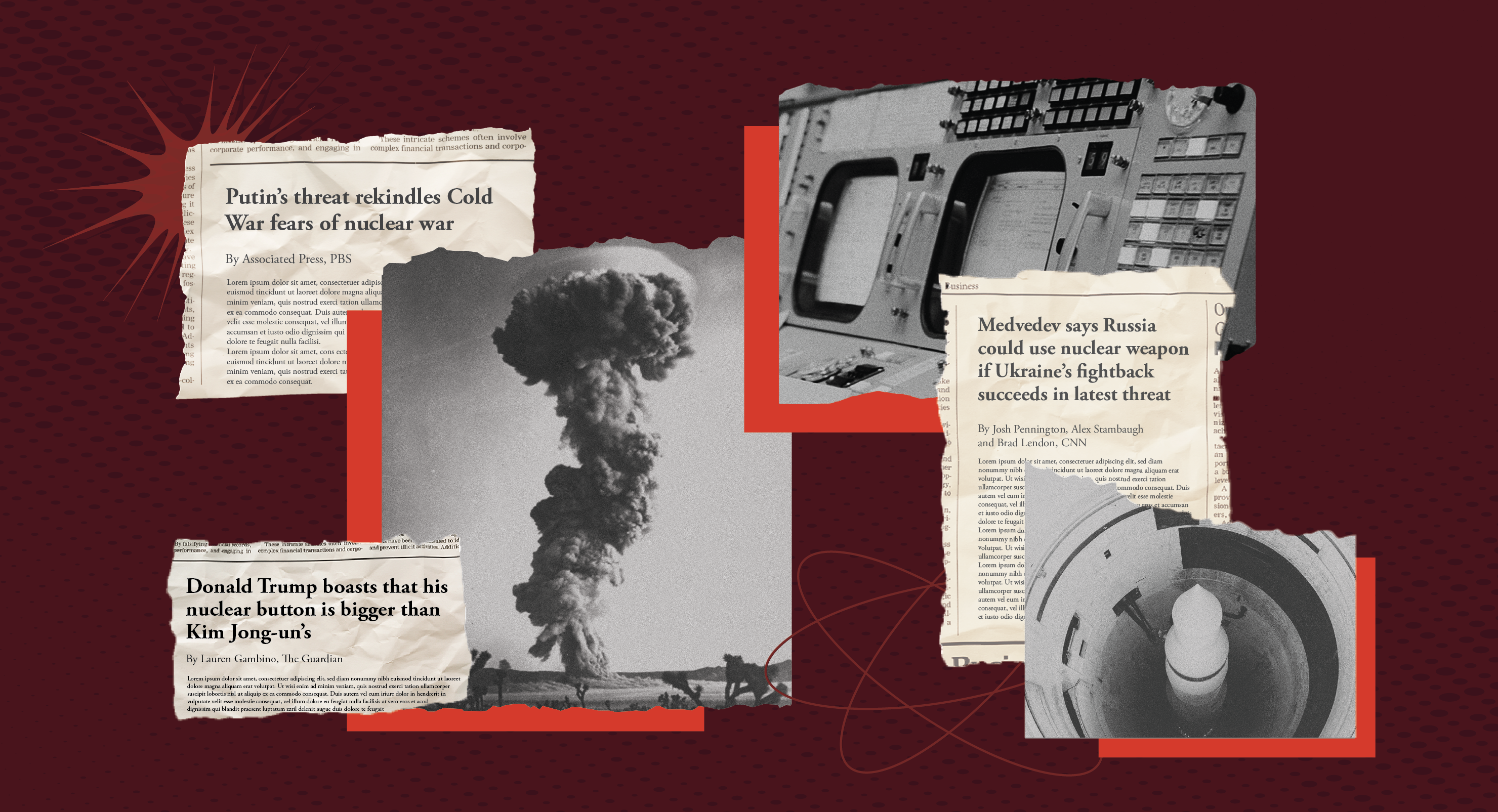
The less precise our nuclear discourse, the more fear nuclear manipulators can elicit.
Russia’s war in Ukraine and five India-Pakistan crises or conflicts suggest that nuclear signaling in the 21st century may be different than during the Cold War. Terms like ‘nuclear threat’ need to be defined with more care and nuance to enable decisionmakers to distinguish serious nuclear threats that demand a countervailing action from nuclear threats that are mere noise or allusion aiming to manipulate nuclear anxiety but do not pose a serious threat of nuclear attack. With the support of the Carnegie Corporation of New York, the Nautilus Institute and the Carnegie Endowment Nuclear Policy Program have produced four major papers and a forthcoming Adelphi book to enhance responses to attempts to manipulate fear of nuclear war in today’s environment. With the Asia-Pacific Leadership Network, they are conducting three YouTube events to foster global discussion.
Anna Hood is an associate professor at the University of Auckland. She is a public international law academic whose research focuses primarily on international disarmament law, international law and security, and the intersection between depth psychology and international law.
Monique Cormier is an associate professor at Monash University in Melbourne, Australia. She researches and teaches public international law, with a focus on the international law of nuclear nonproliferation and international criminal jurisdiction.
Carnegie does not take institutional positions on public policy issues; the views represented herein are those of the author(s) and do not necessarily reflect the views of Carnegie, its staff, or its trustees.
Carnegie scholars examine the crucial elements of a document that’s radically different than its predecessors.



James M. Acton, Saskia Brechenmacher, Cecily Brewer, …
The hyper-personalized new version of global sphere-of-influence politics that Donald Trump wants will fail, as it did for Russia. In the meantime, Europe must still deal with a disruptive former ally determined to break the rules.

Thomas de Waal
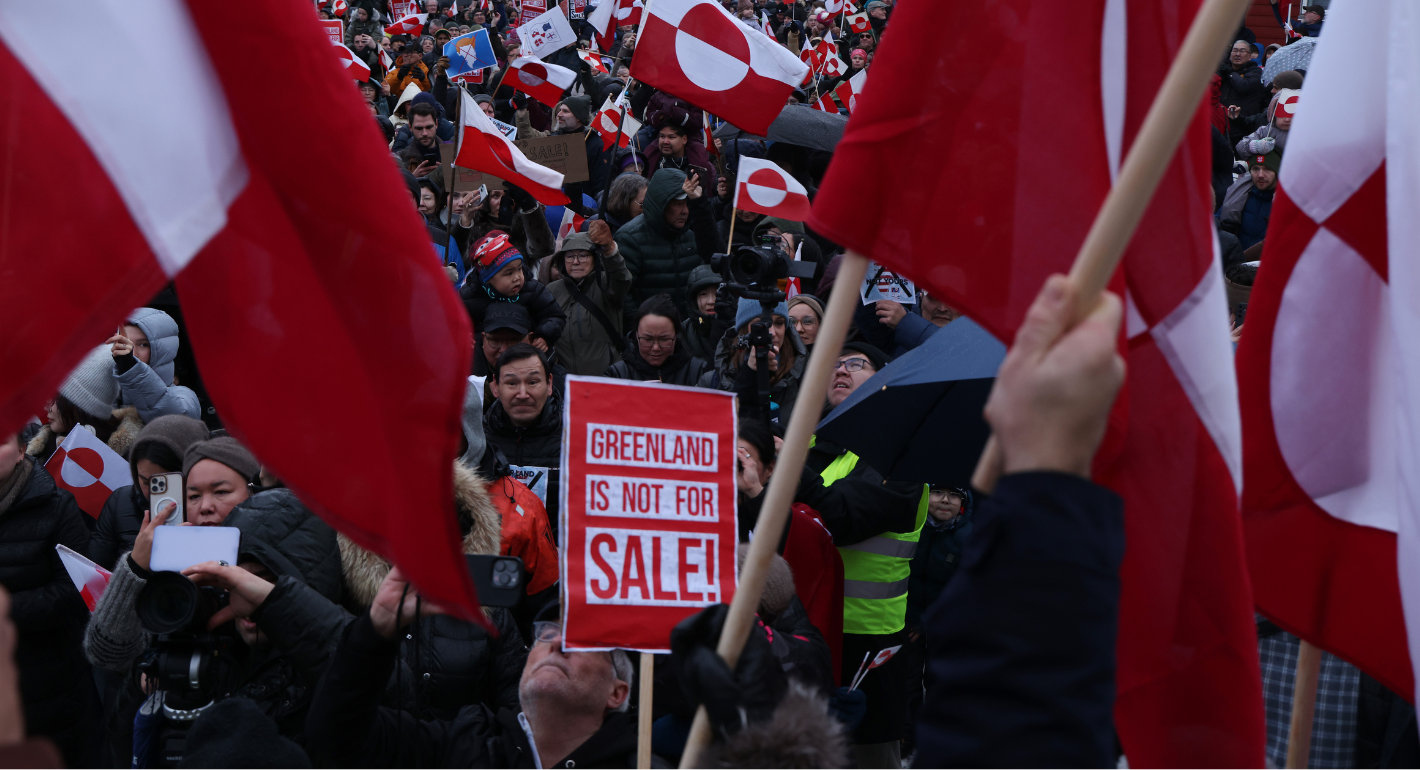
Between Greenland and U.S. interference in Europe’s democracies, transatlantic relations risk rising to an unprecedented level of crisis. Amid continued arguments on how Brussels should react, tough times lie ahead for European leaders.

Marc Pierini
2026 has started in crisis, as the actions of unpredictable leaders shape an increasingly volatile global environment. To shift from crisis response to strategic foresight, what under-the-radar issues should the EU prepare for in the coming year?
Thomas de Waal
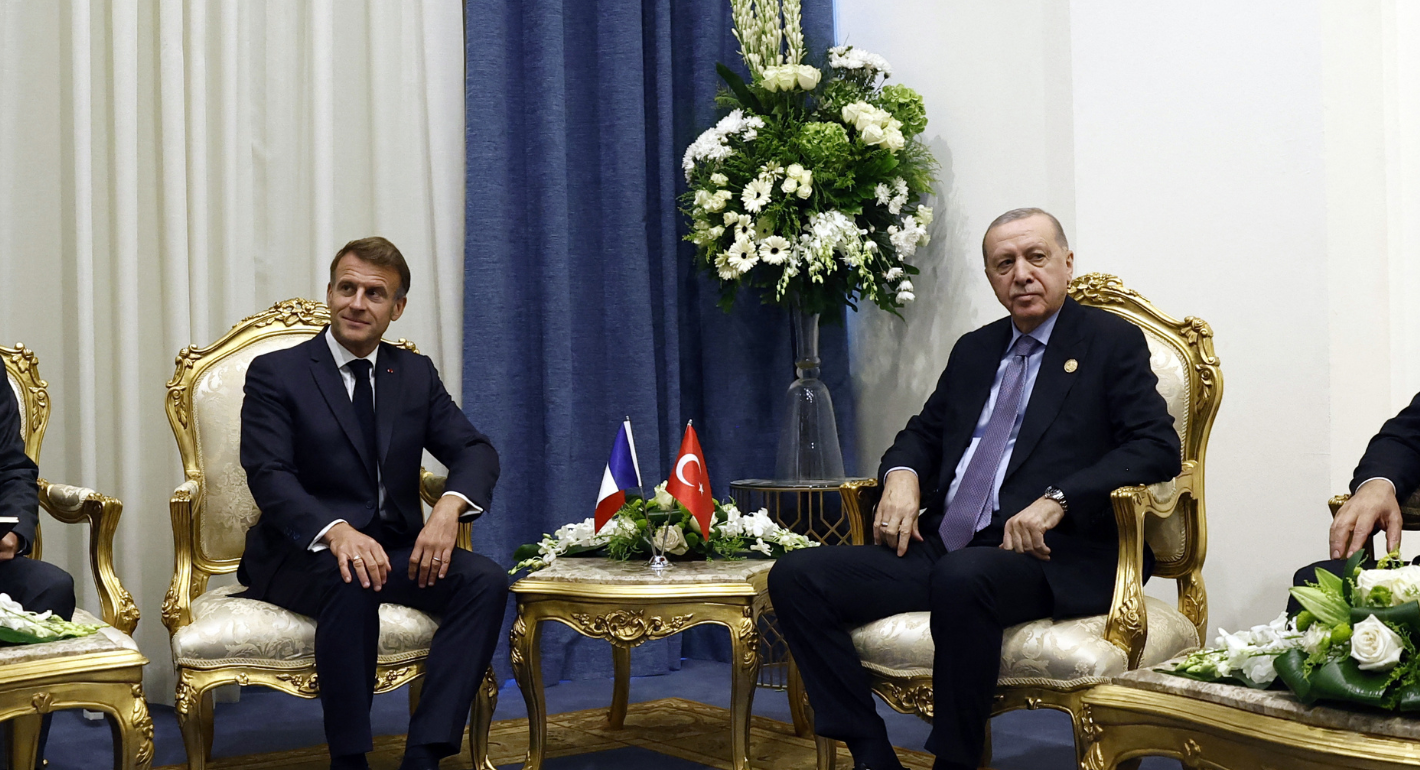
A renewal of relations between France and Turkey is vital to strengthen European strategic autonomy. To make this détente a reality, Paris and Ankara should move beyond personal friction and jointly engage with questions of Black Sea security.

Romain Le Quiniou